
 how-to
Attic Fan Installation: A Step-by-Step Guide
Table of Contents
- Understanding Attic Fan Installation Basics
- Solar Attic Fan vs Electric: Choosing the Right Type
- How to Choose the Right Attic Fan Size for Your Home
- Attic Fan Installation Cost Factors You Need to Know
- Professional Installation Process for Attic Fans
- Maintenance and Troubleshooting After Installation
- DIY vs. Professional Installation: Safety and Code Considerations
- Frequently Asked Questions
Last Updated: October 3, 2026
Understanding Attic Fan Installation Basics
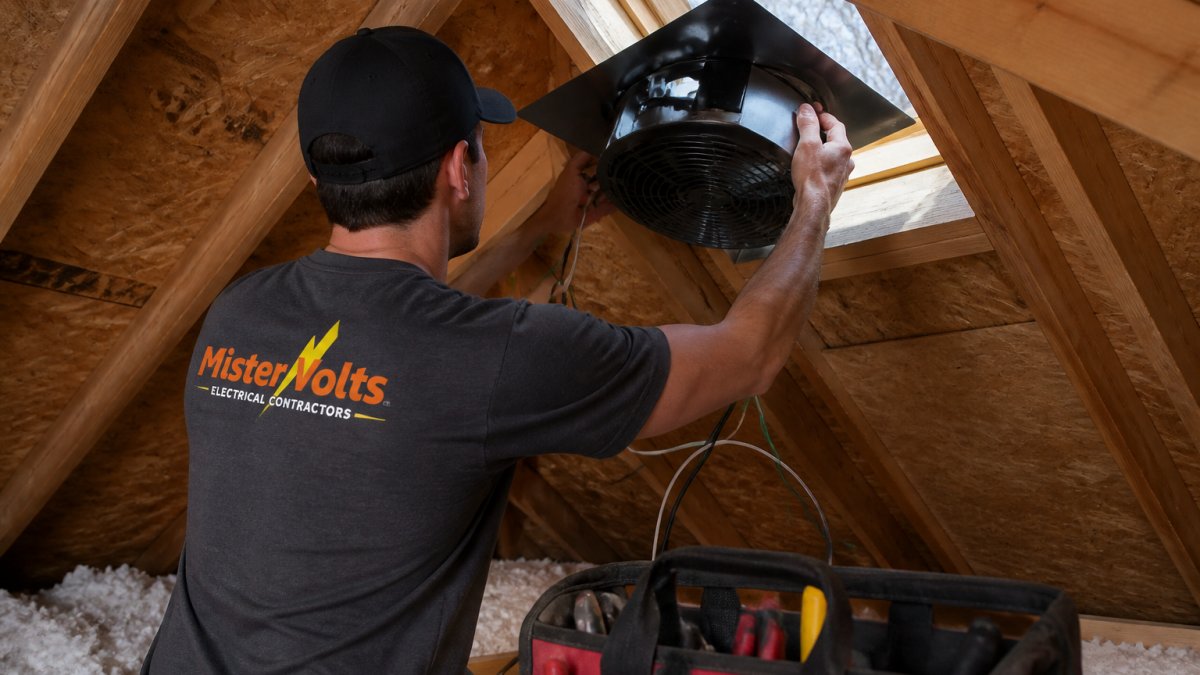
An attic fan installation regulates temperature and moisture levels, preventing heat buildup that damages roof shingles and strains your HVAC system. Proper attic ventilation protects your home's structural integrity and energy efficiency.
Why Attic Ventilation Matters
Attics without adequate ventilation reach 130°F+, accelerating roof shingle deterioration, reducing insulation effectiveness, and forcing your AC to work harder. Excess moisture promotes mold growth and wood rot, compromising structural safety.
Proper ventilation maintains consistent temperature and humidity, reducing cooling costs and extending roof longevity.
How Attic Fans Work
An attic fan pulls hot air out while drawing cooler outside air through existing vents, preventing heat and moisture buildup that damages roofing and structural components.
Most attic fans include a thermostat control that activates automatically when temperature reaches 85°F, then cycles off as temperature drops.
Solar Attic Fan vs Electric: Choosing the Right Type
The choice between solar and electric attic fan installation depends on your budget, roof exposure, and long-term energy goals. Both options effectively reduce attic heat and moisture, but they operate differently.
Electric Attic Fans
Electric attic fans connect to household current, offering consistent performance and higher air volume than solar alternatives.
Installation requires proper electrical wiring and code-compliant connection to your circuit breaker. Improper wiring creates fire hazards and voids warranties. Mister Volts ensures every connection meets NEC standards.
Electric fans consume modest electricity.
Solar-Powered Attic Fans
Solar attic fans use photovoltaic panels to eliminate operating costs and work best in climates with consistent sun exposure.
Solar installation requires no wiring to your electrical panel, but solar fans move less air than electric models and perform poorly on cloudy days.
How to Choose the Right Attic Fan Size for Your Home
Attic fan sizing determines whether your installation effectively removes heat and moisture or merely circulates stagnant air. An undersized fan leaves hot spots; an oversized fan wastes energy without additional benefit.
Calculating CFM Requirements
CFM (cubic feet per minute) measures airflow. Calculate attic volume (length × width × average height ÷ 60) to determine minimum CFM needed.
Building codes recommend one air change per minute. A 2,000 cubic-foot attic requires a 2,000 CFM fan.
Add 10-15% to your calculation to account for ductwork friction and vent restrictions.
Matching Fan Size to Attic Space
A 1,500 sq ft home typically needs 2,500-3,500 CFM; smaller homes need 1,500-2,000 CFM.
Hot, humid climates benefit from slightly oversized fans for aggressive moisture removal.
Recalculate CFM if you plan future attic renovations or insulation additions.
| Attic Size | Recommended CFM Range | Fan Type Suitable |
|---|---|---|
| Under 1,000 sq ft | 1,500-2,000 CFM | Solar or electric |
| 1,000-1,500 sq ft | 2,000-2,500 CFM | Electric preferred |
| 1,500-2,500 sq ft | 2,500-3,500 CFM | Electric required |
| Over 2,500 sq ft | 3,500+ CFM | Multi-fan setup |
Attic Fan Installation Cost Factors You Need to Know
Multiple variables affect the total cost of attic fan installation. Understanding these factors helps you budget accurately and avoid unexpected expenses.
Labor and Installation Complexity
Professional labor is the largest cost component. Straightforward installations require 3-4 hours; complex situations extend labor time significantly.
Roof penetration difficulty varies by material and pitch. Steep pitches require additional safety precautions and may require roofer-electrician coordination.
Homes with adequate soffit and gabled vents require minimal ductwork; others need additional vent installation.
Electrical Work and Code Compliance
Electrical work is the second major cost factor. Running new circuits requires wall penetration, wire routing, and proper conduit installation per local codes.
If your panel lacks breaker space, a panel upgrade may be needed. Mister Volts handles assessment and upgrades to ensure NEC compliance, and we can discuss electrical maintenance contracts to keep your system operating safely long-term.
Thermostat installation adds modest cost; smart models with remote monitoring cost more than basic units.
Professional Installation Process for Attic Fans
Understanding the installation sequence helps you prepare for the work and know what to expect when your contractor arrives.
Pre-Installation Assessment
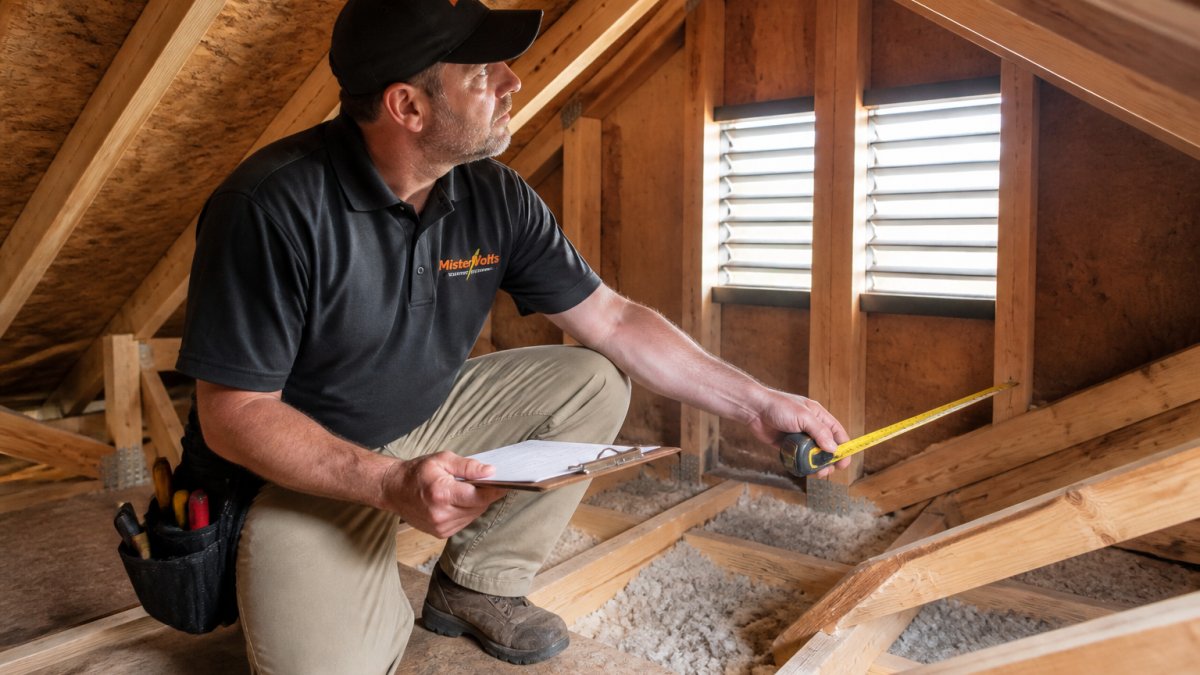
A professional installer inspects the attic to identify obstacles, existing ventilation, electrical panel location, and optimal fan placement, verifying CFM calculations.
The assessment determines if existing soffit and gabled vents provide adequate intake air. Undersized vents restrict airflow; additional vents may be recommended.
Electrical Wiring and Safety Compliance
The installer routes wire from your breaker panel to the attic, installing proper conduit and securing all connections per NEC standards.
The installer connects the motor, installs thermostat control, and tests operation. All work receives inspection and code approval.
Fan Mounting and Ventilation Setup
The fan mounts to roof framing with proper flashing. Ductwork connects to vents and is sealed to prevent air leakage.
The installer tests airflow to confirm rated CFM operation and verifies thermostat activation.
Maintenance and Troubleshooting After Installation
Regular maintenance keeps your attic fan operating efficiently for decades. More importantly, recognizing early warning signs prevents catastrophic failures and expensive emergency repairs.
Regular Cleaning and Preventative Maintenance
Inspect quarterly for dust on blades and motor housing. Clean with a soft brush or vacuum to restore performance.
Check vents seasonally for debris, bird nests, or insects. Test thermostat activation by setting it 5 degrees below current temperature; the fan should activate within 30 seconds.
Lubricate motor bearings annually if required. Most modern fans have sealed bearings requiring no lubrication; applying lubricant damages sealed bearings.
Inspect the thermostat sensor annually to ensure it's not covered by insulation or debris.
Identifying Common Issues and Noises: Diagnostic Guide
High-pitched squeaking: Indicates motor bearing wear 4-8 weeks before failure. Contact a professional electrician for motor replacement.
Rattling or vibration: Indicates loose mounting bolts, ductwork connections, or damaged blades. Tighten fasteners and check ductwork connections.
Grinding or scraping noise: Indicates blade striking housing or internal obstruction. Stop immediately and call a professional electrician.
Humming without airflow: Indicates jammed blade or seized bearing. Turn off at breaker immediately. Do not manually spin the blade.
Intermittent operation or thermostat not activating: Clear any insulation or debris blocking the sensor. If the fan still doesn't activate, check your circuit breaker.
Weak airflow despite thermostat activation: Clean blades and inspect intake vents for debris or blockage.
When to Call a Professional
Contact a licensed electrician immediately if you observe:
- Any grinding, scraping, or mechanical noise
- Continuous squeaking that worsens over days
- Breaker tripping repeatedly
- Visible damage to blades or housing
- Burning smell or smoke from the fan
- Electrical shock or tingling when touching the fan housing
These symptoms indicate problems beyond basic maintenance and require professional diagnosis and repair. Attempting DIY repairs on electrical components creates safety hazards and voids your warranty.
DIY vs. Professional Installation: Safety and Code Considerations
The decision between DIY and professional installation hinges on three factors: electrical code requirements, personal skill level, and liability exposure. Understanding these distinctions helps you make an informed choice rather than defaulting to either option.
When Professional Installation Is Legally Required
Attic fan installation involves electrical work that falls under the National Electrical Code (NEC). Most jurisdictions require a licensed electrician to perform any work involving new circuit installation, breaker connections, or permanent wiring modifications. This isn't arbitrary, it's a safety mandate enforced through building permits and inspections.
Specifically, NEC Article 210 governs branch circuits and requires proper wire gauge selection, overcurrent protection, and grounding. Article 300 mandates correct conduit installation and wire routing. A licensed electrician understands these requirements; a homeowner typically does not. When your local building department issues a permit for attic fan installation, they expect a licensed professional to pull that permit and sign off on the work.
If your installation requires any of these elements, professional installation is not optional, it's code-mandated:
- Running new circuits from your main electrical panel
- Installing a new breaker or upgrading breaker capacity
- Routing wire through walls, attics, or conduit
- Connecting to existing circuits without a licensed electrician's assessment
- Installing in jurisdictions requiring electrical permits for fan installations (most do)
When DIY Might Be Feasible (Rare Cases)
In rare situations, a homeowner with electrical experience might handle non-electrical portions of installation. This includes:
- Mounting the fan housing to roof framing (carpentry only, no electrical work)
- Installing ductwork and sealing connections (HVAC-adjacent but not electrical)
- Preparing the attic space and intake vents
However, even these tasks require the electrical work to be completed by a licensed professional. You cannot legally energize the fan without proper electrical connections. Attempting to wire the fan yourself, even if you've done electrical work before, exposes you to several risks:
Fire hazard: Improper wire gauge, loose connections, or incorrect breaker sizing can cause overheating and electrical fires. The National Fire Protection Association (NFPA) attributes thousands of home fires annually to faulty electrical installations.
Electrical shock: Improper grounding or insulation failures create shock hazards during operation or maintenance. This risk persists for years after installation.
Code violation and inspection failure: Your local building inspector will reject any installation that doesn't meet NEC standards. You'll be required to hire a licensed electrician to redo the work at additional cost.
Insurance exclusion: Most homeowner insurance policies exclude coverage for injuries or property damage resulting from unlicensed electrical work.
Warranty void: Fan manufacturers require installation by a licensed electrician to honor warranty coverage. If the motor fails or the fan malfunctions, you'll pay for repairs out of pocket.
The Real Cost-Benefit Analysis
Homeowners often consider DIY to save labor costs. However, the actual savings are minimal when you account for tool rental, permit fees, and the high probability of code violations requiring professional rework.
A licensed electrician's labor is a factor in the overall cost, with most attic fan installations requiring several hours of electrical work. If your installation requires breaker panel work or extensive conduit routing, costs climb higher.
Compare this to the cost of a code violation: rework by a licensed electrician, potential fines from your local building department, and the risk of insurance denial on future claims.
Mister Volts handles the complete installation process, from initial assessment through final inspection.
Frequently Asked Questions
How much does professional attic fan installation cost?
Installation costs depend on several factors, including the type of fan (electric or solar), the complexity of your electrical wiring, roof structure, and local labor rates. For accurate pricing, contact Mister Volts for a free estimate. Our licensed electricians will assess your attic space and provide a detailed quote based on your specific installation requirements.
Do attic fans help reduce energy bills during summer?
Yes, attic fans can reduce cooling costs by removing excess heat buildup from your attic space, which decreases the thermal load on your HVAC system. This is especially effective in hot climates where attic temperatures can reach 140°F or higher. Proper attic ventilation also protects roof shingles from premature deterioration caused by heat exposure.
What's the difference between solar and electric attic fans?
Electric attic fans require a dedicated electrical circuit and thermostat control to operate, drawing power from your home's electrical system. Solar-powered attic fans operate independently using sunlight and require no wiring, making them easier to install. However, solar fans depend on daylight and may be less powerful than electric models, while electric fans offer consistent performance and thermostat-controlled operation.
Do I need a licensed electrician to install an attic fan?
Yes, professional installation by a licensed electrician is highly recommended. Attic fan installation involves electrical wiring, circuit breaker connections, and code compliance with the National Electrical Code (NEC). A licensed electrician ensures proper installation, safe operation, correct grounding, and compliance with local electrical codes, protecting both your home and family from electrical hazards.
Attic fan installation protects your home's structural integrity while reducing cooling costs throughout summer months. Proper sizing, electrical code compliance, and professional installation ensure your ventilation system performs reliably. Contact Mister Volts for a free assessment of your attic ventilation needs and a detailed estimate for your installation project. Our licensed electricians deliver the expert electrical maintenance and safe, reliable installations your home deserves.