
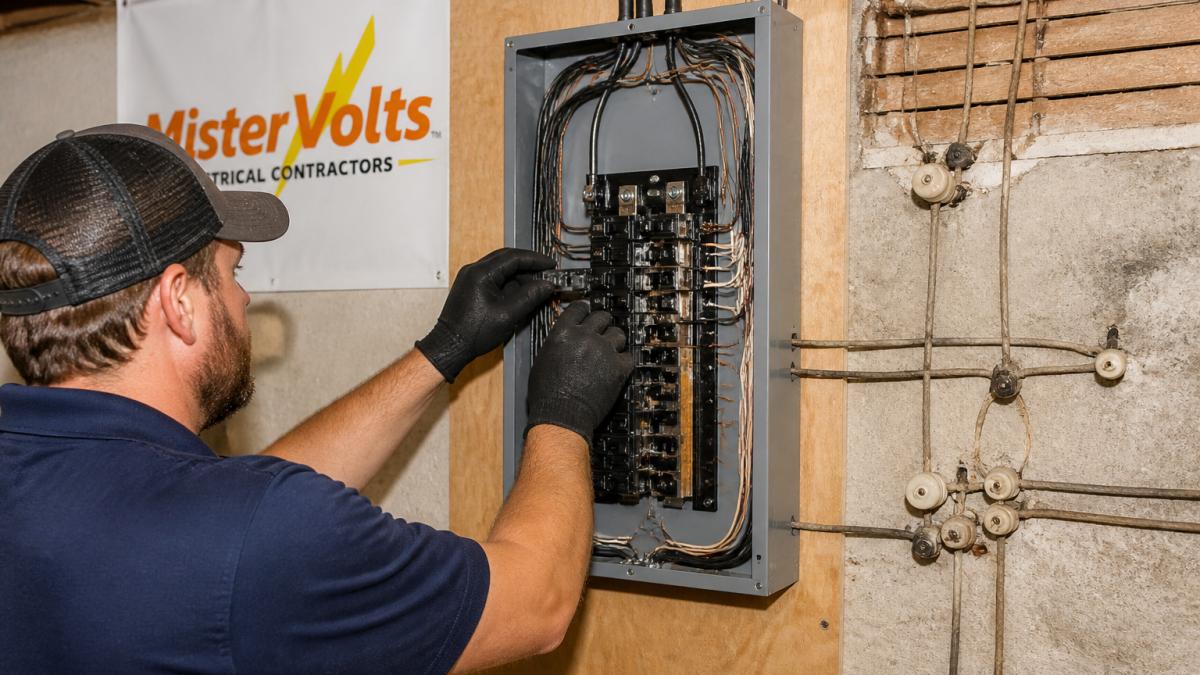
 ultimate-guide
Electrical Panel Upgrade With Knob and Tube: Cost Guide
Table of Contents
- What Is Knob and Tube Wiring and Why It Matters for Panel Upgrades
- Knob and Tube Wiring Replacement Cost: Breaking Down the Expenses
- Factors That Influence Your Total Project Cost
- How Long Does a Whole House Rewire Take
- NEC Electrical Code Requirements for Old Homes
- Insurance and Mortgage Contingencies With Old Wiring
- Phased vs. Full Rewire: Which Strategy Fits Your Budget
- Electrical Panel Upgrade With Knob and Tube: Next Steps
- Frequently Asked Questions
Last Updated: October 2, 2026
What Is Knob and Tube Wiring and Why It Matters for Panel Upgrades
Knob and tube wiring, used from the 1880s through 1940s, supported bare copper wires on ceramic knobs and insulated them with ceramic tubes.
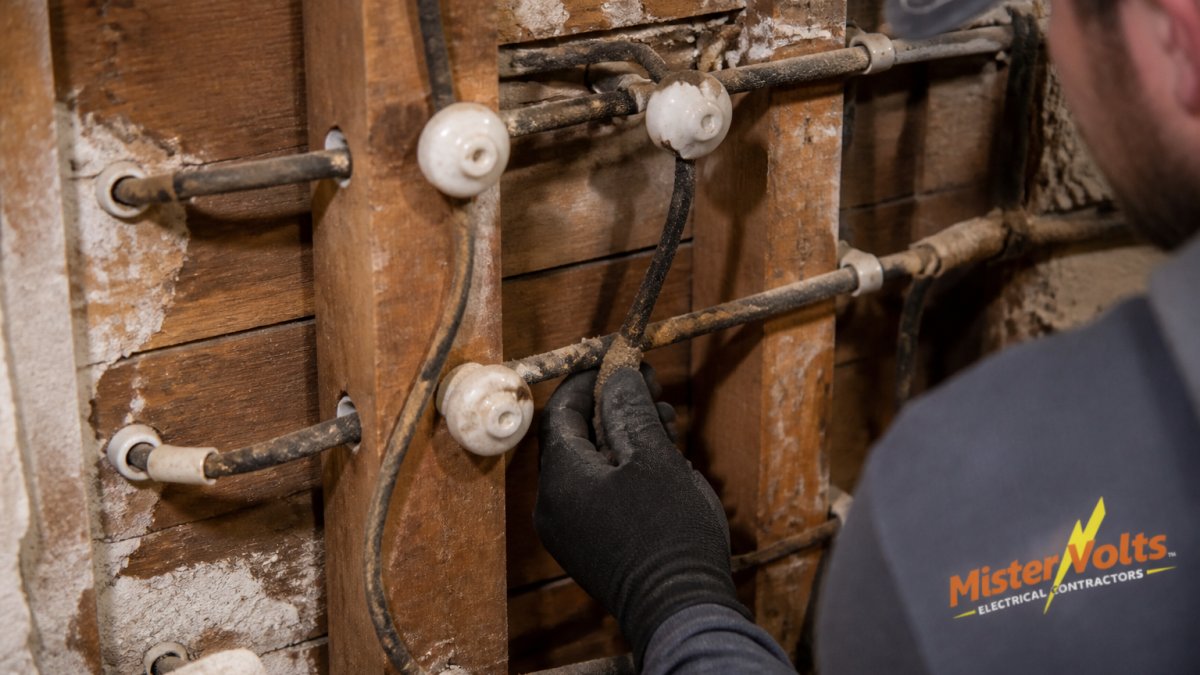
Though simple and affordable when new, decades of use and insulation degradation have made knob and tube a liability.
Knob and tube systems lack grounding and expose bare wires to dust, moisture, and rodent damage. The cloth insulation becomes brittle and flakes away, creating fire hazards.
Knob and Tube Wiring Replacement Cost: Breaking Down the Expenses
Knob and tube wiring replacement involves labor (largest cost), materials, permits, and drywall repair. Drywall repair is the most frequently underestimated expense, often adding 30-50% to the total project cost.
Primary Cost Categories
Labor costs dominate the budget for an electrical panel upgrade with knob and tube replacement. Licensed electricians typically charge hourly rates or flat fees.
Material costs cover new copper wiring, circuit breakers, conduit, junction boxes, outlets, switches, the new electrical panel, and service entrance equipment.
Electrical permits are required by code and typically range from $300 to $1,500.
Building inspections are included in the permit process and typically include rough-in and final inspections.
The Hidden Cost: Drywall Repair and Restoration
A full rewire of a 2,000-square-foot home typically requires opening 200-400 linear feet of wall, creating dozens of patches. Each patch requires cutting, installation, taping, mudding, sanding, priming, and painting.
Texture matching adds complexity: Textured walls (popcorn, orange peel, knockdown) require specialized equipment and skill to match.
Plaster homes cost more: Homes built before the 1950s often have plaster walls requiring specialized repair skills.
How Drywall Costs Are Quoted
When requesting quotes for your electrical panel upgrade with knob and tube replacement, drywall repair may be included in the electrician's quote, quoted separately by a drywall contractor, or not quoted at all. Always clarify drywall responsibility before signing a contract.
Cost Integration Strategy
When comparing quotes for your electrical panel upgrade, request itemized breakdowns that separate labor, materials, permits, inspections, and drywall repair. This transparency helps you understand where your money goes and compare quotes accurately across different contractors.
A complete cost estimate should look like this:
- Electrical labor: $X
- Electrical materials: $X
- Permits and inspections: $X
- Drywall repair labor: $X
- Drywall materials (compound, tape, primer, paint): $X
- Texture matching (if applicable): $X
- Total project cost: $X
If a quote doesn't break down drywall costs separately, ask the contractor to provide a detailed estimate that does. This prevents surprises and ensures you're comparing apples to apples across multiple bids.
Real-World Example
Consider a 2,000-square-foot, single-story home built in 1935 with knob and tube wiring throughout. The home has drywall walls (not plaster) and smooth finishes (not textured). A full rewire requires:
- Electrical labor: 80 hours at $100/hour = $8,000
- Electrical materials: $2,500
- Permits and inspections: $800
- Drywall repair labor: 40 hours at $75/hour = $3,000
- Drywall materials: $400
- Total: $14,700
Now consider the same home but with textured walls and plaster in some areas:
- Electrical labor: 80 hours at $100/hour = $8,000
- Electrical materials: $2,500
- Permits and inspections: $800
- Drywall repair labor (drywall areas): 30 hours at $75/hour = $2,250
- Plaster repair labor (plaster areas): 20 hours at $120/hour = $2,400
- Texture matching: $600
- Drywall and plaster materials: $600
- Total: $17,750
The difference can be significant, driven entirely by wall type and finish complexity. This is why understanding your home's construction is critical to accurate cost estimation.
Factors That Influence Your Total Project Cost
Square footage and wire routing
Your home's square footage and wire routing complexity both impact labor and materials. Single-story homes with accessible attics are cheaper to rewire than multi-story homes. A full electrical panel upgrade with knob and tube replacement typically involves upgrading from 60-amp or 100-amp service to 150-amp or 200-amp service.
Drywall repair and restoration
Drywall damage is a hidden cost that catches many homeowners off guard. Running new wiring requires opening walls to remove old knob and tube and install new conduit or wire.
https://mistervoltsusa.com/contact →
A full rewire of a 2,000-square-foot home might require opening 200-300 linear feet of wall. That translates to dozens of patches ranging from small outlet boxes to longer runs where wiring was routed.
Some contractors include drywall repair in their electrical quote. Others subcontract it separately.
Electrical panel capacity and service entrance requirements
Upgrading from 60-amp to 200-amp service requires new service entrance wiring from the utility meter to the main breaker. Utility companies may charge fees for upgrading the meter and service connection, and some jurisdictions require separate utility inspection and approval.
How Long Does a Whole House Rewire Take
A complete whole house rewire typically takes two to four weeks depending on your home's size and complexity. This timeline assumes full-time crews working on the project.
The first few days involve detailed planning. Your electrician maps out existing knob and tube locations, plans new wire routes, and identifies obstacles.
New wire installation follows removal.
NEC Electrical Code Requirements for Old Homes
Current NEC standards require grounding, GFCI protection on bathroom and kitchen outlets, and AFCI protection on bedroom circuits. Knob and tube lacks grounding and has cloth insulation that fails modern standards. Local building departments enforce code compliance through inspections before granting final approval.
Insurance and Mortgage Contingencies With Old Wiring
Most homeowners insurance companies refuse to insure homes with knob and tube wiring. Understanding how insurance and mortgage contingencies work is critical because they create hard deadlines and financial penalties that make an electrical panel upgrade urgent.
How Insurers Handle Knob and Tube Wiring
If knob and tube is discovered during underwriting, insurers typically respond with denial of coverage, conditional coverage with electrical damage exclusions, or premium surcharges above standard rates.
After your electrical panel upgrade and rewiring are complete, a licensed electrician or electrical inspector issues a letter of compliance confirming code compliance. Insurance companies require this letter before they'll issue or renew your policy.
Mortgage Lender Requirements
Lenders require an electrical inspection and issue a contingency requirement if knob and tube is discovered: the borrower must replace the wiring before closing. For sellers, this can derail transactions; buyers often negotiate price reductions exceeding the actual rewiring cost. For refinancers, contingencies delay access to funds and favorable interest rates.
The Real Cost of Delay
The cost of not upgrading often exceeds the cost of the work: high-risk insurance premiums are higher than standard rates; real estate transactions can incur price reductions; refinance delays can cost money in lost savings; and insurance policy renewals create narrow windows to complete work before surcharges apply.
Documentation and Compliance
Ensure your electrician provides a detailed inspection report and letter of compliance upon completion. Verify your electrician is licensed and understands local building department requirements for permits and final inspection. If you're planning to sell or refinance within 12 months, prioritize completing the electrical panel upgrade now to maintain control over timing and cost.
Phased vs. Full Rewire: Which Strategy Fits Your Budget
A phased rewire spreads costs over months or years, prioritizing high-risk areas first. A full rewire completes all wiring in one project, faster but more disruptive. Choose based on your financial situation, home condition, and timeline: phased for long-term owners with limited budgets; full for sellers or refinancers.
| Strategy | Timeline | Cost Spread | Best For | Disruption |
|---|---|---|---|---|
| Phased Rewire | 6-12 months | Multiple payments | Long-term owners, limited budgets | Minimal, spread out |
| Full Rewire | 2-4 weeks | Single large expense | Sellers, refinancers, urgent safety needs | Concentrated but faster |
Electrical Panel Upgrade With Knob and Tube: Next Steps
If your home has knob and tube wiring and you're planning an electrical panel upgrade, start with a professional inspection. A licensed electrician can assess the condition of your existing wiring, identify safety hazards, and provide a detailed cost estimate for replacement.
Mister Volts delivers professional, code-compliant electrical services throughout Georgia, including comprehensive panel upgrades and complete rewiring for homes with outdated systems. Our licensed electricians provide detailed inspections, transparent cost estimates, and expert guidance on phased versus full rewiring strategies. We handle everything from knob and tube removal to new panel installation, ensuring your home meets current electrical code and insurance requirements.
Get a detailed assessment of your home's electrical needs and a comprehensive cost estimate. Contact Mister Volts today to discuss your electrical panel upgrade and learn how we can safely modernize your home's electrical system with expert workmanship and competitive pricing.
Frequently Asked Questions
How much does it cost to upgrade from knob and tube wiring?
The total cost depends on your home's square footage, the complexity of wire routing, whether drywall must be opened, and your electrical panel's current capacity. Labor, materials, and permits make up the expense. Homes with extensive knob and tube systems requiring full rewiring and panel upgrades generally face higher costs than those needing partial replacement. Contact a licensed electrician for a detailed quote based on your specific situation.
Does homeowners insurance cover knob and tube wiring?
Most insurers will not renew or will charge significantly higher premiums for homes with active knob and tube wiring due to fire hazard risk. Some carriers may drop coverage entirely. Many lenders also require replacement before approving a mortgage. Upgrading to modern wiring often qualifies you for lower insurance rates and removes mortgage contingencies, making it a financial priority for homeowners planning to sell or refinance.
How long does a whole house rewire take?
A complete rewire typically takes a few weeks depending on your home's size, the existing wiring layout, and whether walls must be opened for wire routing. Smaller homes or phased rewires may take less time, while large homes with complex layouts can extend the timeline. The timeline also depends on permit approval, drywall repair scheduling, and inspector availability. Your electrician can provide a more precise estimate after assessing your home's condition.
What electrical code requirements apply to replacing old wiring?
The National Electrical Code (NEC) requires that all replacement wiring meet current safety standards, including proper grounding and bonding, arc-fault circuit interrupters (AFCIs) on branch circuits, and ground-fault circuit interrupters (GFCIs) in wet areas. Your electrical panel must have adequate amperage capacity for your home's load, typically 100-200 amps for modern residences. All work requires an electrical permit and inspection to ensure compliance. Your licensed electrician will handle code compliance and permitting as part of the project.