
 ultimate-guide
Knob and Tube Wiring Insurance: 2026 Homeowner Guide
Table of Contents
- Why Insurers Flag Knob and Tube Wiring as a Fire Risk
- Common Knob and Tube Wiring Insurance Requirements for Homeowners
- Can You Get a Policy With Only Partial Knob and Tube Wiring?
- How an Electrical Safety Inspection for Older Homes Affects Coverage
- Knob and Tube Wiring Replacement Cost and Coverage Timelines
- NEC Compliant Electrical Upgrades That Satisfy Insurers
- When Standard Carriers Say No: Surplus Lines Insurance and Closing Delays
- Frequently Asked Questions
Last Updated: September 13, 2026
Why Insurers Flag Knob and Tube Wiring as a Fire Risk
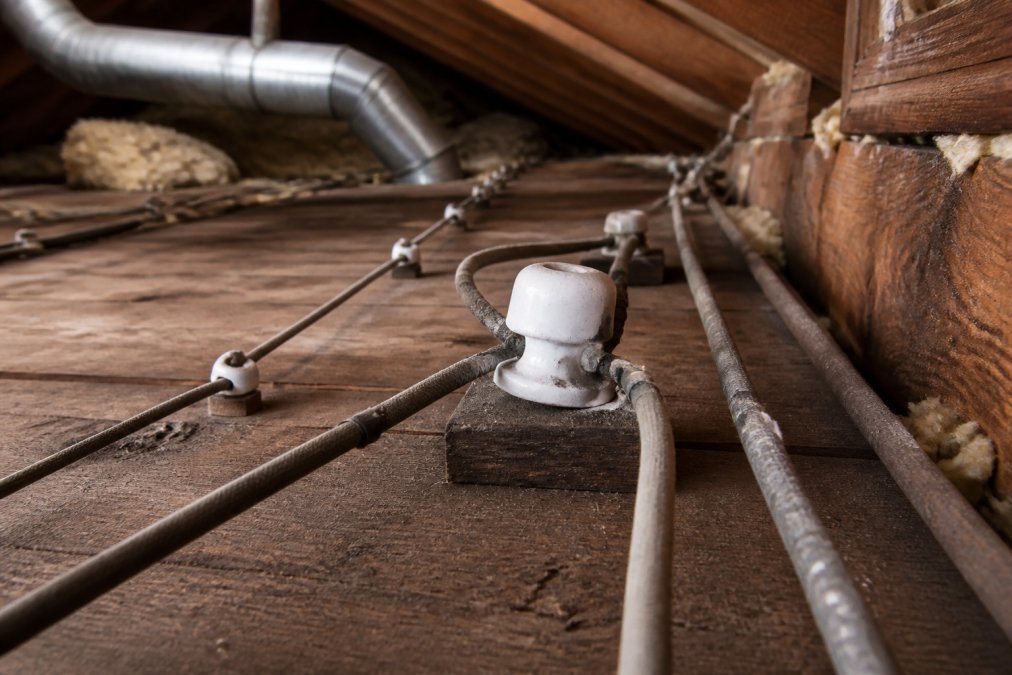
Knob and tube wiring insurance starts with understanding the system itself: an early electrical setup, common in homes built before 1950, that runs single-insulated conductors through ceramic knobs and tubes instead of modern cable sheathing. It has no ground conductor, brittle insulation after decades of heat cycling, and was engineered for a fraction of a modern household's load (osha.gov).
Insurance carriers treat it as an active hazard, not a historical curiosity. Exposed conductors, brittle insulation, and overloaded circuits raise the odds of an electrical fire, and underwriters know these systems are often modified without a permit, making the true condition impossible to verify from the street (usfa.fema.gov).
Common Knob and Tube Wiring Insurance Requirements for Homeowners
Most carriers will not issue a standard homeowners policy on a home with active knob and tube wiring until specific conditions are met. Requirements vary by insurer, but the pattern is consistent: proof of remediation, a timeline, or both.
Typical requirements include:
- A licensed electrician's inspection report documenting the current condition of the system
- A written plan and timeline for rewiring or deactivating the knob and tube circuits
- Evidence that a circuit breaker panel and grounded outlets have been installed
- An electrical permit pulled for any completed work
- Documentation that all knob and tube wiring has been removed from the active system
Some carriers accept a partial solution; others will not bind until the system is fully replaced, depending on underwriting guidelines and how much of the home is affected.
How Carriers Actually Apply These Requirements
The underwriting decision is driven by three variables most homeowners never see spelled out:
- Percentage of active knob and tube. A common threshold is whether it is confined to a small, non-living area (a basement portion, an attic run, a detached garage circuit) versus distributed through bedrooms, kitchens, and living spaces. Carriers that write a policy on a small residual often will not when the wiring feeds habitable rooms.
- Whether the wiring is energized. Deactivated knob and tube disconnected at the panel is treated very differently from wiring that still carries current. A licensed electrician can document the difference with photos of panel terminations and a circuit-by-circuit inventory.
- Whether the rest of the system can carry the load. A 100-amp panel with grounded circuits and AFCI/GFCI protection reads very differently to an underwriter than a 60-amp fuse box feeding ungrounded two-prong outlets.
Partial vs. Full Rewiring: How Insurers View Each
Underwriters generally fall into three postures:
- Full replacement required. The carrier will not bind until every knob and tube circuit is removed from the active system and the work is permitted and inspected. Most common where knob and tube serves living areas.
- Partial accepted with conditions. The carrier will write the policy if the knob and tube is limited to a defined area and a licensed electrician certifies the remaining circuits are not overloaded or spliced into modern wiring. Kitchen, bath, and laundry updates alone rarely satisfy this, those are the highest-load rooms.
- Deactivation accepted. Some carriers will accept a policy when the knob and tube has been fully disconnected at the panel and the home is served entirely by new circuits, even if the old wiring remains in the walls. This is the cheapest path to coverage because it avoids opening finished walls.
If you are buying an older home and the inspection flags partial knob and tube wiring, get clarity before closing. Ask the seller for the electrician's report, confirm what is active, and get an estimate for full remediation. That estimate becomes part of your negotiation, not a surprise after you move in.
Underwriter Checklist: What Carriers Look For
When an underwriter reviews an older home, they are not just asking whether knob and tube wiring exists. They are asking how much is still active, whether it has been tampered with, and whether the rest of the system can carry the load safely.
| What Underwriters Check | Why It Matters | What Satisfies Them |
|---|---|---|
| Percentage of active wiring | More active knob and tube means higher fire risk | Full removal or documented deactivation |
| Panel capacity and amperage | Old panels cannot support modern load | Electrical panel upgrade with adequate amperage |
| Grounding and outlets | No ground path increases shock and fire risk | Grounded outlets throughout |
| Permit history | Unpermitted work hides defects | Electrical permit on file for all work |
| Inspection report | Confirms current condition | Licensed electrician's written report |
| Splices and extensions | Knob and tube spliced into modern cable is a common defect | Documentation that no knob and tube ties into new circuits |
| Insulation contact | Buried knob and tube in thermal insulation overheats | Evidence wiring is clear of insulation or has been deactivated |
A carrier is not evaluating your wiring in isolation, but whether the whole electrical system, from the meter to the last outlet, meets modern safety standards.
Can You Get a Policy With Only Partial Knob and Tube Wiring?
Yes, in many cases, but partial systems are where the process gets murky. Some carriers will write a policy if the knob and tube wiring is limited to a small, low-risk area, such as a portion of a basement or an unused circuit. Others treat any active knob and tube as a disqualifier, however little remains.
The deciding factor is usually whether the remaining wiring is still energized. Deactivated knob and tube disconnected from the panel is not the same as wiring that still carries current. A licensed electrician can document the difference, and that documentation often moves an application forward.
If you are buying an older home and the inspection flags partial knob and tube wiring, get clarity before closing. Ask the seller for the electrician's report, confirm what is active, and get an estimate for full remediation. That estimate becomes part of your negotiation, not a surprise after you move in.
How an Electrical Safety Inspection for Older Homes Affects Coverage
An electrical safety inspection for older homes is the single most important document in the underwriting process. It tells the carrier what is installed, its condition, and what work has been done. Without it, most underwriters default to the worst-case assumption.
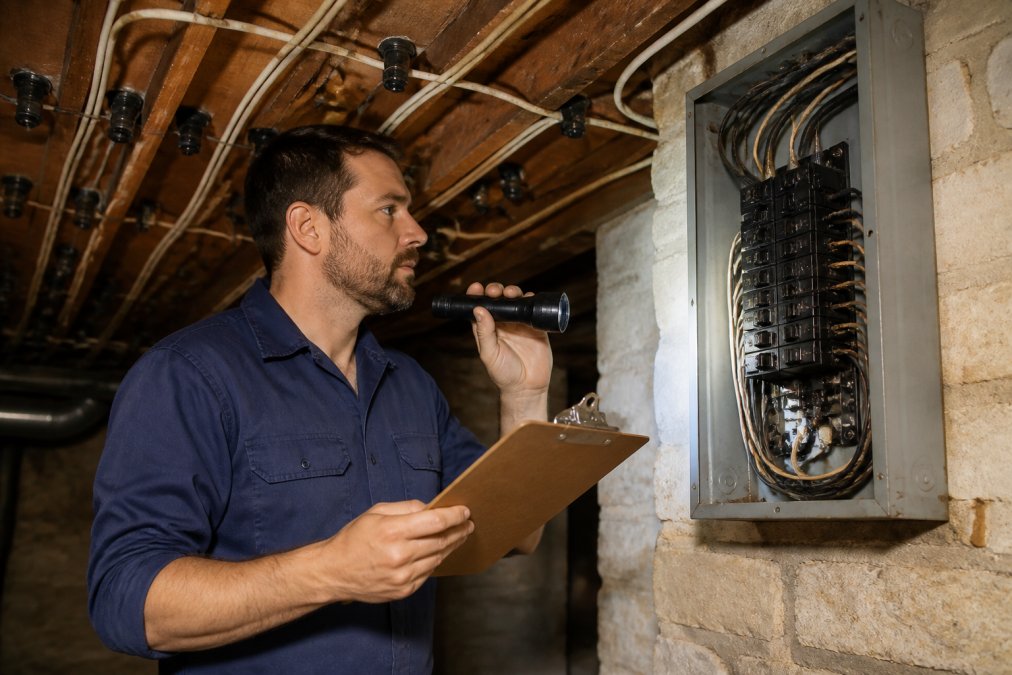
A thorough inspection covers the panel and its amperage capacity, grounded outlets, insulation condition on older conductors, junction box connections, and whether prior modifications were made without a permit. The inspector should also check each circuit's load to confirm nothing is overloaded.
What most homeowners miss is that the inspection report is not just a pass-fail document. It is a roadmap. A good report identifies exactly which circuits are knob and tube, which have been updated, and what remains before the system meets modern safety standards. That specificity lets an underwriter approve a policy with conditions instead of denying it outright.
Knob and Tube Wiring Replacement Cost and Coverage Timelines
Knob and tube wiring replacement cost depends on the size of the home, how much wiring is accessible, and how much of the system needs rebuilding. The only reliable number is a quote based on an on-site inspection.
Typical Cost Ranges
- Deactivation only (disconnect knob and tube at the panel, run new circuits to affected rooms): the lower end, because it avoids opening finished walls. Often paired with a panel upgrade.
- Partial rewiring (kitchen, bath, laundry, or a single floor): mid-range, driven mostly by how much wall and ceiling must be opened.
- Full house rewiring: the highest end, and the number most carriers are implicitly asking about when they require remediation. A finished home with plaster walls costs materially more than an unfinished basement-and-attic home of the same square footage, due to labor to open and repair surfaces.
- Electrical panel upgrade (often required alongside any of the above): a separate line item. A 200-amp panel replacement is commonly quoted as its own scope.
Two cost drivers homeowners consistently underestimate:
- Wall and ceiling repair. The electrical work is only part of the invoice. Patching plaster, repainting, and restoring trim after new cable is run can add significantly to the total.
- Knob and tube hidden in finished spaces. Wiring through an unfinished basement or attic is fast to replace; the same wiring buried behind plaster in a finished second floor is not.
For current pricing on a replacement or panel upgrade, get a quote from Mister Volts rather than relying on a national average.
Coverage Timelines: What Carriers Actually Write
A small home with accessible attic and basement runs can be rewired faster than a finished home where every wall is closed, which is why most coverage timelines are written as milestones rather than fixed dates.
https://mistervoltsusa.com/contact →
A typical underwriting timeline looks like this:
- Policy issued with a condition requiring remediation within a set window
- Inspection and remediation plan submitted to the carrier
- Work completed and inspected, with the permit closed
- Updated documentation sent to underwriting
- Condition removed and full coverage confirmed
Common windows are measured in weeks to a few months, not days. What matters more than the exact deadline is that you communicate before it passes.
If you cannot meet the timeline, tell your agent before the deadline passes. A missed deadline can trigger a premium surcharge or policy cancellation.
Documentation for Claims: Build the File Before You Need It
This step protects you at claim time. Underwriters approve policies; claims adjusters pay them, and the adjuster will ask for proof the electrical work was done to code and permitted. Without that file, a covered loss can turn into a disputed one.
Keep these documents together, ideally in a single folder and a cloud backup:
- The original inspection report identifying which circuits were knob and tube
- The electrical permit number and final inspection sign-off from the local authority having jurisdiction
- The licensed electrician's invoice and scope of work
- Dated photographs of new cable, panel terminations, and grounded outlets before walls were closed
- Any correspondence with the carrier removing the remediation condition
If You Cannot Meet the Timeline: Surplus Lines as a Bridge
When a standard carrier will not bind because of knob and tube wiring, a surplus lines policy, coverage written by a non-admitted carrier approved to write certain risks, can keep a closing on track while the rewiring is completed. These policies cost more and offer narrower terms, often with a condition that the work be finished within a set period.
The trade-off is real. Non-admitted carriers are not backed by the same state guaranty fund protections as admitted carriers, and coverage terms can be stricter. Use a surplus lines policy as a bridge, not a permanent solution.
If you are facing an underwriting deadline or a stalled closing, a licensed electrician can inspect the system, document what is active, and give you a written scope of work. Mister Volts handles residential and commercial electrical work, including panel upgrades and full rewiring, with NEC-compliant installations and competitive quotes.
NEC Compliant Electrical Upgrades That Satisfy Insurers
NEC compliant electrical upgrades are the clearest way to close out an underwriting condition. The National Electrical Code sets the baseline for safe installation, and carriers look for work that meets it. The National Fire Protection Association's overview of NFPA 70 explains how the code is structured and why grounding and overcurrent protection are central to it.
The upgrades that most reliably satisfy insurers include:
- Replacing the electrical panel with a modern breaker panel sized for the home's amperage capacity
- Installing grounded outlets on all updated circuits
- Running copper wiring to replace aging conductors
- Adding arc-fault and ground-fault protection where the code requires it
- Removing or fully deactivating all remaining knob and tube circuits
The goal is not just to pass an inspection, but to give the underwriter a documented, permitted, code-compliant system with no unknowns. When that documentation is clean, the underwriting conversation gets much shorter.
When Standard Carriers Say No: Surplus Lines Insurance and Closing Delays
A surplus lines insurance policy, sometimes called a non-admitted carrier policy, is coverage written by an insurer not licensed in the state but approved to write certain risks. Homeowners with older electrical systems are a common fit. These policies cost more and offer narrower terms than a standard policy, but they keep a closing on track when a standard carrier declines.
That matters most during a home closing. If the buyer's lender requires proof of insurance and the carrier will not bind because of knob and tube wiring, the deal stalls. A surplus lines policy can bridge that gap while the rewiring is completed, often with a condition that the work be finished within a set period.
The trade-off is real. Non-admitted carriers are not backed by the same state guaranty fund protections as admitted carriers, and coverage terms can be stricter. Use a surplus lines policy as a bridge, not a permanent solution.
If you are facing an underwriting deadline or a stalled closing, a licensed electrician can inspect the system, document what is active, and give you a written scope of work. Mister Volts handles residential and commercial electrical work, including panel upgrades and full rewiring, with NEC-compliant installations and competitive quotes.
An older home with knob and tube wiring is not uninsurable, but it does require a documented plan. The homeowners who move through underwriting fastest get an inspection early, understand what is active, and complete permitted, code-compliant upgrades on a clear timeline. Mister Volts provides licensed electricians, residential and commercial electrical services, and competitive quotes for the full scope of the work, from minor repairs to major renovations. Get started with Mister Volts and replace the uncertainty with a documented, insurable electrical system.
Frequently Asked Questions
Will insurance companies insure homes with knob and tube wiring?
Many standard carriers will insure a home with knob and tube wiring only if you meet specific conditions: a licensed electrician certifies the system, you agree to a rewiring timeline, and the panel and outlets meet current code. Some carriers decline outright. Others offer coverage with a premium surcharge or exclude electrical fire claims. The outcome depends on the insurer's underwriting guidelines, the amount of active knob and tube wiring, and whether the home has a 60-amp or 100-amp service.
Can I sell my house if it has knob and tube wiring?
Yes, but the sale often stalls at the buyer's loan and insurance stage. Lenders require proof of insurability, and a home inspection will flag knob and tube wiring. Buyers may ask you to cover the cost of replacement or accept a price reduction. Some sales close when the buyer secures a surplus lines policy or the seller provides a licensed electrician's certification with a scheduled rewiring date.
Does replacing knob and tube wiring lower my insurance premiums?
A full replacement with copper wiring, grounded outlets, and an upgraded panel removes the risk surcharge many carriers apply to older electrical systems. Premiums may drop, but the exact savings depend on your carrier, home age, and claims history. The bigger benefit is keeping your policy active and avoiding a coverage denial at renewal. Partial rewiring may satisfy some underwriting guidelines, but full replacement gives you the strongest position.
What documentation do insurance carriers require to verify electrical safety?
Carriers typically ask for a licensed electrician's inspection report, a copy of the electrical permit, and photos of the panel and wiring. Some require a signed statement confirming the remaining knob and tube circuits will be replaced within a set timeline, often 30 to 90 days. If you have already completed NEC compliant electrical upgrades, keep the invoices and inspection sign-offs. Missing paperwork is one of the most common reasons applications get delayed or denied.