 How-to
5 Signs Knob and Tube Wiring Is a Fire Hazard
Quick Summary
Knob and tube wiring is not automatically a fire hazard, but it becomes one when its insulation is cracked, brittle, or buried in insulation that traps heat. Its lack of a ground wire and its age also mean it can be overloaded by modern appliances. A licensed electrician can assess the actual condition of your wiring.
- Live, exposed wires near insulation are the main fire concern with knob and tube wiring.
- Cracked or brittle insulation can expose live conductors to each other or nearby materials.
- Wires buried in loose-fill or batt insulation may run hot because heat cannot escape.
- Knob and tube systems usually have no ground wire, unlike modern wiring.
- Check for three or more warning signs, then schedule a professional inspection.
Table of Contents
- Is Knob and Tube Wiring Inherently Dangerous?
- How Aging and Damaged Insulation Increases the Risk
- How Does Knob and Tube Wiring Work and Why Is It Different?
- How to Identify Knob and Tube Wiring in Your Home
- Is Knob and Tube Wiring Up to Code?
- Can You Get Homeowners Insurance With Knob and Tube Wiring?
- What to Do If You Find Knob and Tube Wiring and Replacement Cost Factors
- Booking a Professional Inspection With Mister Volts
- Frequently Asked Questions
5 Signs Knob and Tube Wiring Is a Fire Hazard
Last Updated: November 17, 2026
Is Knob and Tube Wiring Inherently Dangerous?
Knob and tube wiring is not automatically a fire threat just because it is in a home. Many older houses still have it, and the wiring can keep working safely for decades when it is in good shape. The danger depends on the conditions around the wires.
Home inspectors point to a few specific problems. Live wires that are exposed or touching insulation are the main concern. Minnesota Center for Energy and Environment guidance on knob-and-tube wiring explains that live, exposed wires can pose a fire hazard when they sit near insulation.
Condition matters more than age. Old wiring that is intact and well protected is a very different situation from wiring that has been buried in blown-in insulation or spliced by an untrained hand.
How Aging and Damaged Insulation Increases the Risk
The insulation on old wiring is often the weak point. Over time, the rubber and cloth coverings can dry out, crack, or crumble. Once that happens, bare conductors can touch each other or nearby materials.
InterNACHI article on knob-and-tube wiring warns that insulation packed around these wires can trap heat. Heat that cannot escape raises the risk of overheating.
- Cracked or brittle insulation can expose live conductors
- Wires buried in loose-fill or batt insulation may run hot
- Attic spaces with poor airflow make heat buildup worse
If you see any of these conditions, have a licensed electrician look at the wiring soon.
How Does Knob and Tube Wiring Work and Why Is It Different?
Knob and tube wiring runs on ceramic knobs and porcelain tubes. The knobs hold wires along framing, and the tubes carry wires through holes in studs and joists. Each wire is separated from the others, so the system does not rely on a grounding conductor.
That lack of grounding is a key difference from modern wiring. Today's systems include a ground wire that gives fault current a safe path. Knob and tube systems were built before that standard, so they usually have no ground at all.
The system also was not designed for today's electrical loads. Modern appliances, electric heaters, and home office equipment can overload old circuits. Adding new loads like EV charging stations to an old circuit is generally not advisable without a full evaluation first.
The main differences between knob and tube wiring and modern wiring come down to grounding, insulation, and the loads each system was built for.
| Feature | Knob and tube | Modern wiring |
|---|---|---|
| Support | Ceramic knobs and porcelain tubes | Sheathed cable and boxes |
| Grounding | Usually none | Includes a ground wire |
| Designed for | Pre-modern, lighter loads | Today's appliances and loads |
| Risk factor | Insulation that dries out or gets buried | Not covered in this article |
How to Identify Knob and Tube Wiring in Your Home
You can often spot this wiring from the attic, basement, or unfinished spaces. Look for these features:
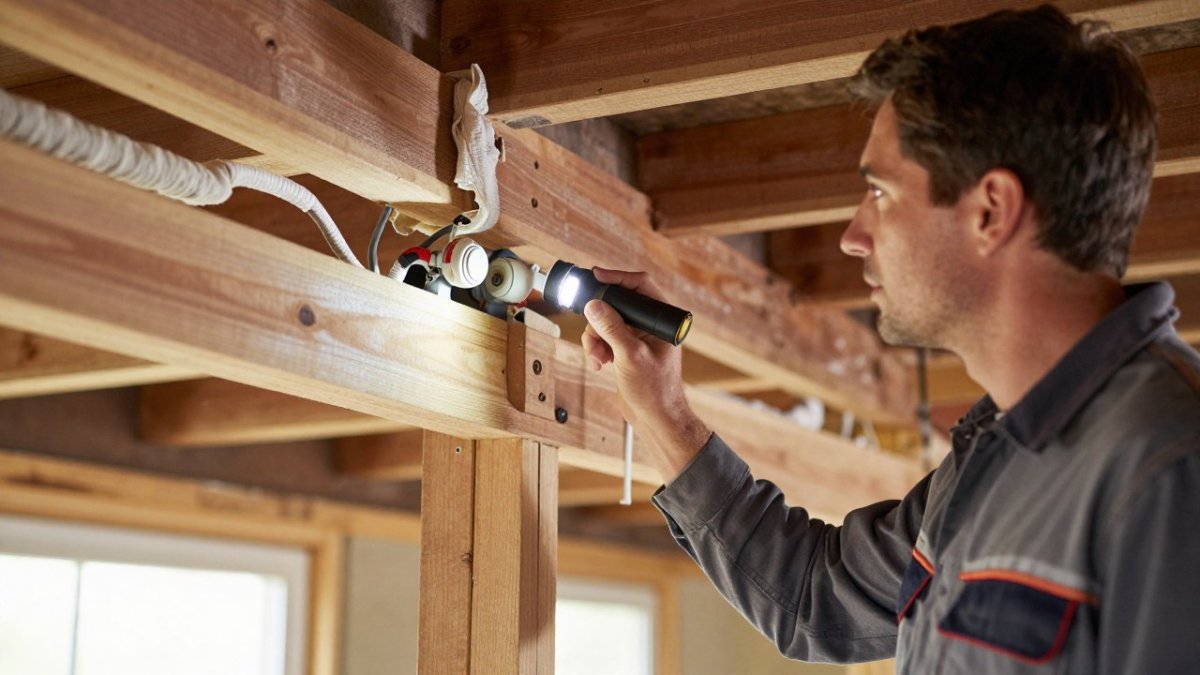
- Two separate single-conductor wires running parallel, not bundled in a sheathed cable
- Ceramic knobs holding wires to joists or rafters
- Porcelain tubes where wires pass through framing
- Cloth or rubber insulation that looks dark, cracked, or brittle
- Wires that run loose and unprotected across open spaces
Do not touch exposed wires or open junction boxes. If you are not sure what you are seeing, call a licensed electrician rather than testing it yourself.
Numbered Checklist: Signs of Knob and Tube Wiring
Use this checklist during a walk-through:
- Ceramic knobs and tubes visible in the attic or basement
- Two separate wires running side by side without a ground wire
- Cloth or rubber insulation that is cracked or crumbling
- Wires buried in attic insulation
- Old outlets with two prongs and no grounding hole
- Warm outlets, buzzing switches, or a burning smell
If you check three or more of these, schedule a professional inspection.
Is Knob and Tube Wiring Up to Code?
This is where homeowners most often get confused, because three separate questions get blended into one. Whether knob and tube wiring is legal, whether it is code-compliant, and whether it is safe are not the same thing, and the answers can point in different directions.
Legal status. Local rules vary, but many jurisdictions prohibit installing new knob and tube wiring while not forcing removal of existing systems. Your local building department can confirm how the rules apply where you live. That does not mean a building official has certified it as safe; it usually means the code in force when it was installed permitted it and no rule retroactively bans it.
Code compliance. The model electrical code most states and cities adopt is published by the National Fire Protection Association. Adoption is local, and so are amendments, so the version in force in one town can differ from the next. Common code concerns with older systems include ungrounded receptacles, unprotected splices outside boxes, and wiring run through or buried in thermal insulation. A system can be legal and still fail a current-code review on one or more of those points.
Safety. Safety is a condition question, not a paperwork question. Intact, undisturbed knob and tube in open framing is a different risk profile from the same wiring buried under blown-in insulation or spliced with tape. No code citation settles that; an electrician's inspection does.
A common pattern is that a home inspector flags the wiring, the buyer's lender asks for documentation, and the seller points to the fact that it was legal when installed. All three can be true at once. The practical takeaway: ask your local building department which code edition applies, ask a licensed electrician to assess condition, and treat the two answers as separate inputs rather than assuming one settles the other.
Watch out: a passing inspection or a grandfathered status is not a warranty that the wiring is safe today, and a code citation is not automatically a mandate to rewire the whole house.
Can You Get Homeowners Insurance With Knob and Tube Wiring?
Insurer requirements vary, and some carriers may decline or add conditions for homes with knob and tube wiring. Ask your insurer what documentation it requires.
If your current policy has a condition tied to the wiring, read the terms closely. Ask your agent what documentation they need. A professional inspection report often helps.
What to Do If You Find Knob and Tube Wiring and Replacement Cost Factors
Start with the urgency question, because the right response depends on what you are seeing.
Emergency warning signs. If you smell burning, hear sizzling or buzzing at an outlet or switch, see sparks, find an outlet or switch plate warm to the touch, or see exposed bare conductors, treat it as an active hazard. Shut off the affected circuit at the panel if you can do so safely, keep people away from the area, and call 911 if there is smoke, flame, or a burning smell you cannot trace. Then call a licensed electrician. Do not reset the breaker repeatedly to 'see if it holds.'
Non-emergency findings. If you simply spot ceramic knobs and tubes in the attic or basement with no heat, smell, or damage, you have time to schedule an inspection rather than an emergency call. In the meantime: do not add space heaters, window air conditioners, or other high-draw appliances to those circuits; do not cover the wiring with more insulation; do not attempt splices or 'clean up' loose wires yourself; and do not open junction boxes.
What a professional inspection actually checks. A licensed electrician can evaluate the wiring's condition, including accessible runs, buried wiring, receptacles, splices, and overcurrent protection. Ask for the findings in writing so you have a record to share with insurers or buyers.
Repair versus replace. The right answer depends on the inspection rather than the age of the house alone, and the scope of any repair or replacement depends on the condition found. You can also learn whether partial rewiring is a viable alternative to a full replacement. The right answer depends on the inspection, not on the age of the house alone. If the panel itself is outdated, a service panel upgrade is often part of the conversation.
What drives replacement cost. There is no universal price, and any single number quoted online should be treated with suspicion. The factors that move the scope are the size of the home, how accessible the runs are (open basement and attic versus finished walls), the condition of the framing, whether walls or ceilings must be opened and patched, whether the panel needs upgrading, and how much of the system is actually knob and tube versus already updated. Because those factors vary so widely, contact Mister Volts for a quote based on your property rather than relying on a general estimate.
Watch out: adding a heavy load to an old circuit, or covering knob and tube with insulation to 'improve efficiency,' are two of the most common ways homeowners turn a manageable situation into a hazardous one.
Booking a Professional Inspection With Mister Volts
A professional inspection tells you what condition your wiring is in and what to do next. Mister Volts provides licensed electrical services for residential clients throughout Macon, Perry, Warner Robins, and surrounding Georgia communities.
If you have seen any of the warning signs above, contact Mister Volts to schedule an inspection and talk through your options.
Mister Volts helps Georgia homeowners find out whether their knob and tube wiring is a fire risk and what to do about it. Our licensed electricians can inspect your home, explain the results in plain terms, and recommend the right repair or rewiring plan. Reach out through our contact page to get started.
Frequently Asked Questions
Does knob and tube wiring cause fires?
Knob and tube wiring is not automatically a fire risk, but its condition matters a great deal. The system can become hazardous when insulation has aged, cracked, or been packed around the wires, because heat cannot escape and can build up. Live, exposed conductors, poor splices, and unauthorized modifications also raise the risk. A licensed electrician can evaluate the actual condition of the wiring in your home and recommend whether repair or replacement makes sense.
Is it okay to buy a house with knob and tube wiring?
Many homes built before the 1950s still have knob and tube wiring, and buying one is not automatically a mistake. The key questions are the wiring's condition, whether it has been partly updated, and how the electrical load compares with what the home needs today. Get a professional inspection before closing so you know whether the wiring is safe to keep, needs targeted repairs, or should be replaced. Use that information in your negotiation.
Is knob and tube wiring up to code?
Knob and tube wiring was standard before modern grounding and insulation requirements existed, so it generally does not meet current National Electrical Code requirements for new installations. Existing systems may be allowed to remain in service depending on local rules. Your local building department or a licensed electrician can tell you how the rules apply where you live.
Can you get homeowners insurance with knob and tube wiring?
Insurance requirements differ by carrier and state, so ask your agent before you buy. Documenting a recent electrical inspection and any completed repairs or partial rewiring can make it easier to obtain coverage.