 how-to
Can You Partially Rewire Knob and Tube Wiring?
Table of Contents
- Can You Partially Rewire Knob and Tube Wiring? The Short Answer
- Is Knob and Tube Wiring Dangerous? Know the Real Risks
- NEC Requirements for Old Wiring: What a Partial Rewire Must Meet
- Partial vs. Full Rewiring: Pros, Cons, and the Decision Framework
- How to Plan a Phased Upgrade: A Step-by-Step Approach
- Knob and Tube Wiring Replacement Cost: Budgeting for a Phased Project
- How a Partial Rewire Affects Insurance and Home Resale Value
- The Bottom Line: Work With a Licensed Electrician
- Frequently Asked Questions
Last Updated: September 8, 2026
Can You Partially Rewire Knob and Tube Wiring? The Short Answer
Yes, you can partially rewire knob and tube wiring, and for many homeowners it is the most practical first step. A partial rewire means replacing the obsolete wiring in specific areas, circuits, or rooms while leaving other sections intact. This guide from Mister Volts explains when that approach is safe, what the National Electrical Code requires, and how to budget a phased upgrade.
The strategy works best when a licensed electrician first isolates which circuits still carry knob and tube and assesses their condition. Homes built before 1950 commonly contain this wiring. A partial rewire is not a permanent solution for the entire house, but it can eliminate the most dangerous exposure points right away.
Is Knob and Tube Wiring Dangerous? Know the Real Risks
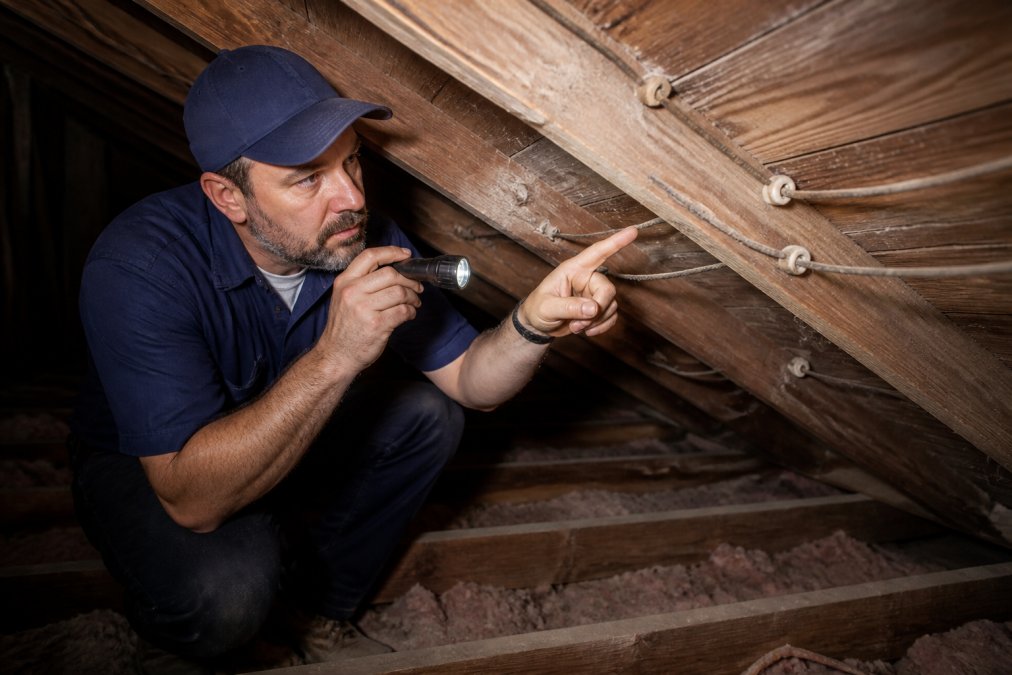
Knob and tube wiring is an early form of electrical wiring that lacks the grounding and insulation capacity required by modern electrical code. The system uses individual copper wires supported by ceramic knobs and tubes, standard in homes built between the 1880s and the 1940s.
The genuine dangers emerge with age and modification. Decades of attic insulation can surround the wires, trapping heat and accelerating insulation degradation that creates a fire hazard. Splices made by past homeowners without junction boxes expose connections to damage. And because the system has no grounding conductor, it cannot support three-prong outlets or protect sensitive electronics from surges. Many insurers now flag knob and tube as a fire hazard, which directly affects your policy options.
The wiring itself is not inherently unsafe when untouched and in good condition. The risk multiplies when modern loads, added insulation, or amateur modifications interact with it. That distinction shapes whether your home needs urgent attention or a planned, staged approach.
NEC Requirements for Old Wiring: What a Partial Rewire Must Meet
Any partial rewire must comply with the National Electrical Code (NEC), which governs how old wiring can be extended, spliced, or left in service. The NEC does not require you to rip out every foot of knob and tube the moment you begin work, but it strictly limits how new work connects to old circuits. The code requires that all new wiring use approved modern methods, typically Romex nonmetallic sheathed cable with a grounding conductor. Where knob and tube remains, it must be free of insulation contact, accessible for inspection, and properly supported.
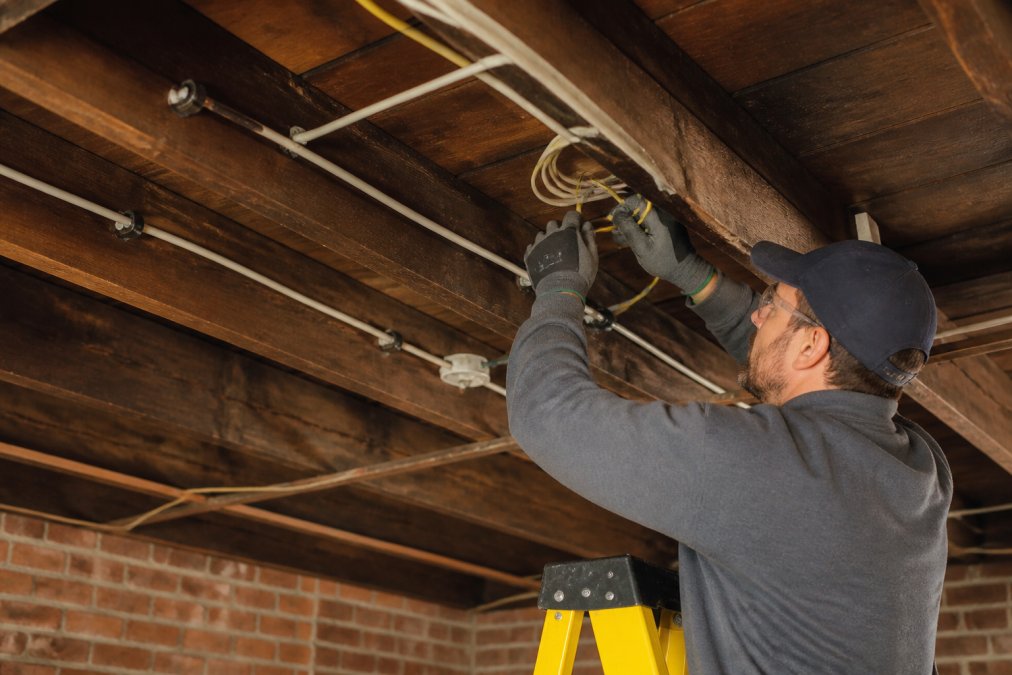
The technical challenge is the physical act of splicing modern Romex to legacy K&T wiring. The two systems are fundamentally incompatible in several ways beyond just connecting copper to copper.
Conductor and insulation mismatch. Knob and tube wiring typically uses single-conductor, rubber-insulated wire with a cloth outer braid (osha.gov). Romex is a multi-conductor cable with a thermoplastic (PVC) sheath. When you splice them, you are joining a conductor rated for 60°C (140°F) with one rated for 90°C (194°F). The NEC requires that the lowest temperature rating of any component governs the entire circuit's ampacity, so a licensed electrician must recalculate the circuit's allowable load based on the older, lower-rated wire.
The grounding problem. This is the most significant hurdle. Romex includes a bare copper grounding conductor; knob and tube has none. When you splice new Romex to old K&T, you are extending an ungrounded circuit. The NEC permits this in limited circumstances, but the new portion cannot have three-prong outlets unless they are GFCI-protected and labeled "No Equipment Ground." The grounding conductor in the Romex cannot connect to anything on the K&T side, it must terminate at the first junction box on the new side.
Junction box requirements. The NEC mandates that all splices be contained in accessible junction boxes. The electrician must locate or install a junction box at the exact point where the Romex meets the K&T, often requiring cutting an access hole in finished walls. The box must remain accessible, you cannot bury it behind drywall or insulation. A common pattern is to place these transition boxes in attics, basements, or closets.
Splice connectors. You cannot use a standard wire nut to join a solid copper K&T conductor to a solid copper Romex conductor if the K&T wire is brittle or has degraded insulation. The electrician must first inspect the old conductor for flexibility and insulation integrity. Many electricians prefer a splice kit rated for aluminum-to-copper transitions even when joining copper-to-copper, because these kits provide a more robust mechanical connection that accommodates different thermal expansion rates.
Load calculation and circuit tracing. Before any splice is made, the electrician must trace the entire circuit to identify every outlet, light fixture, and appliance it serves. Knob and tube circuits were often daisy-chained through multiple rooms, and past modifications may have added unexpected loads. The electrician must perform a load calculation per NEC Article 220 to determine whether the existing breaker or fuse can safely protect the combined circuit. If the circuit serves a kitchen countertop or bathroom, the load may exceed what the old wiring can safely carry, forcing the electrician to abandon the K&T portion entirely.
Insulation contact and derating. The NEC requires that knob and tube wiring not be in contact with thermal insulation. If the old wiring runs through an attic where blown-in insulation has settled over it, the insulation must be pulled back from the K&T conductors, which is often impractical in a finished attic. In this case, the only code-compliant option is to abandon that section and run new Romex along a different path.
The practical takeaway: A partial rewire is not a simple "cut and splice" operation. It requires a licensed electrician to make technical judgments about conductor temperature ratings, grounding continuity, junction box placement, and load calculations. When you interview contractors, ask specifically how they handle the transition point between Romex and K&T. A qualified electrician will describe the junction box strategy and grounding limitations without hesitation. A handyman who says "we just wire-nut them together" is not offering a code-compliant solution.
A licensed electrician will also verify that the existing breaker or fuse panel can handle the load calculation for whatever remains on the old system. Some runs of knob and tube will be abandoned entirely, some will be cut back and capped at junction boxes, and only the portions feeding areas you are not yet updating can stay live. This is where the phrase "partial rewire" gets its real meaning: it is a code-compliant reduction of the old system, not a permanent coexistence.
Partial vs. Full Rewiring: Pros, Cons, and the Decision Framework
Choosing between a partial and full rewire depends on your budget, the condition of the existing wiring, and your long-term plans for the home. The table below summarizes the trade-offs.
| Option | Cost Impact | Safety Level | Best For |
|---|---|---|---|
| Partial rewire | Lower upfront | Removes highest-risk areas | Budget staging, single renovations |
| Full rewire | Higher upfront | Complete modernization | Older homes, major additions |
When a Partial Rewire Is a Safe Option
A partial rewire is safe when the remaining knob and tube is in good condition, free of insulation, and serving low-demand circuits such as lighting in rooms you rarely use. It is also appropriate when you are renovating one floor or one addition and the rest of the house will be addressed later. The electrician will disconnect and abandon the circuits feeding the renovated area, install modern wiring with proper grounding, and confirm the panel has capacity for the new branch circuits.
When You Need a Full Rewire
A full rewire becomes necessary when insulation has been blown over the wiring, when splices are hidden and unserviceable, or when you are upgrading to high-demand appliances like an electric range or a modern HVAC system. Homes with cloth-insulated wiring that shows cracking or brittleness also warrant complete replacement. If your insurance carrier refuses coverage due to knob and tube, that external pressure often forces a full rewire sooner than planned.
How to Plan a Phased Upgrade: A Step-by-Step Approach
A phased upgrade lets you spread the cost of a full rewire across multiple years while improving safety incrementally. But a phased plan only works if you prioritize circuits based on a clear framework, not just on what is easiest to access. The goal is to eliminate the highest-risk scenarios first while maintaining a livable home and keeping your insurance policy active.
Step 1: Get a Circuit-by-Circuit Assessment
Begin with a whole-home assessment by a licensed electrician who can identify every circuit, its condition, and its load. Ask for a written report that lists each knob and tube circuit, what it serves, and a condition rating (good, fair, poor). This report becomes your roadmap and your documentation for insurance renewals.
Step 2: Prioritize by Risk, Not by Convenience
The most common mistake homeowners make is rewiring the rooms they are renovating first, rather than the circuits that pose the greatest fire risk. Use this prioritization framework:
Tier 1: Immediate hazards (address in Phase 1).
- Any knob and tube circuit that is buried in attic insulation. This is the single highest fire risk because the insulation traps heat and accelerates insulation degradation.
- Circuits with visible splices outside junction boxes or with frayed, brittle cloth insulation.
- The main service panel if it still uses fuses or has been modified improperly. Upgrading the panel to circuit breakers is often a prerequisite for any other work.
Tier 2: High-use, high-demand areas (address in Phase 2).
- Kitchen countertop circuits. These must meet modern code requirements for GFCI protection and dedicated small-appliance circuits. A knob and tube circuit cannot safely handle a microwave, toaster, and coffee maker simultaneously.
- Bathroom circuits. GFCI protection is mandatory, and the combination of water and ungrounded wiring is a shock hazard.
- Laundry room circuits. Modern washers and dryers draw far more current than the original K&T was designed for.
- Any circuit that powers a window air conditioner, space heater, or other high-wattage device.
Tier 3: Low-demand circuits (address in Phase 3 or later).
- Lighting circuits in bedrooms and living rooms that serve only a few fixtures.
- Outlets in rooms used for light-duty electronics (phone chargers, lamps) where you can accept GFCI protection instead of full rewiring.
Step 3: Sequence the Work to Maintain Insurance Coverage
Before you schedule any work, call your insurance provider and ask two questions: (1) Does your policy exclude coverage for homes with active knob and tube wiring? (2) What documentation will they accept to maintain coverage during a phased rewire? Some carriers accept an electrician's certification that the remaining system is safe and code-compliant after each phase. Others require a full rewire within a set timeframe, typically 30 to 90 days after a policy is issued. If your carrier is in the second group, a phased plan may not be viable.
If your carrier accepts phased work, ask for the requirement in writing. After each phase, have your electrician provide a signed certification letter describing what was replaced, what remains, and why the remaining system is safe. Send this letter to your insurer immediately.
Step 4: Budget Per Phase with a Contingency
A phased approach helps because you can budget per phase rather than facing a single lump sum. But plan for cost overruns, when the electrician opens walls or accesses the attic, they may discover hidden splices, rodent damage, or insulation contact not visible during the initial assessment. Set aside a 15% contingency for each phase.
Step 5: End Each Phase with an Inspection and Documentation
Each phase should end with a home inspection documenting what was completed. Take photos of the new junction boxes, the abandoned K&T runs that were cut back and capped, and the panel changes. Keep these records alongside the electrician's invoices and certification letters, this matters for insurance renewals and resale.
Step 6: Reassess Before Each New Phase
Do not assume that the plan you created in Phase 1 is still valid a year later. Before you start Phase 2, have the electrician re-inspect the remaining knob and tube. Conditions change, insulation can shift, rodents can damage wiring, and a new appliance may increase the load on a circuit you planned to leave untouched. A 15-minute re-inspection before each phase is cheap insurance.
A phased upgrade is not a way to avoid a full rewire forever. It is a way to manage the financial burden while systematically reducing risk. The homeowners who succeed treat it as a multi-year project with a defined endpoint, not an open-ended deferral. If you are not prepared to complete all phases within three to five years, a full rewire may be the more honest and cost-effective choice.
Knob and Tube Wiring Replacement Cost: Budgeting for a Phased Project
The knob and tube wiring replacement cost varies widely based on home size, accessibility, and local labor rates, so exact figures depend on a site-specific quote. What you can plan for is the structure of the expense: labor dominates, with materials such as Romex, junction boxes, outlets, and breakers representing a smaller share. Attic work in tight crawl spaces adds time and cost, as does cutting into finished walls versus running new wire through open framing.
Many homeowners tackle the most hazardous areas first, then complete the remaining work during scheduled renovations. When you request quotes, ask each contractor to itemize the phases so you can compare apples to apples. For current pricing in your area, request a detailed estimate from a licensed electrical contractor.
How a Partial Rewire Affects Insurance and Home Resale Value
A partial rewire can improve your insurability, but it rarely satisfies carriers that require complete removal of knob and tube. Many homeowners insurance policies exclude coverage for homes with active knob and tube, or they demand a full rewire within a set timeframe. Before you commit to a phased plan, call your insurer and ask precisely what documentation they require to maintain or obtain coverage. Some will accept an electrician's certification that the remaining system is safe and code-compliant; others will not.
From a resale perspective, a partial rewire is a positive signal but not a complete answer. Buyers and home inspectors will still note the presence of knob and tube in the walls, which can trigger negotiation or financing issues. Homes with a fully modernized electrical system command stronger offers and avoid the contingency that buyers will demand a credit for future rewiring. If you plan to sell within a few years, accelerating the phased upgrade to completion before listing often yields a better return.
The Bottom Line: Work With a Licensed Electrician
Partial rewiring knob and tube is a legitimate, code-compliant strategy when executed by a licensed electrician who understands NEC requirements and documents each phase. The approach lets you eliminate the most dangerous wiring first, spread costs over time, and maintain a livable home throughout the process. What it cannot do is replace the judgment of a professional assessment, since only an on-site inspection reveals hidden splices, insulation contact, and load issues.
At Mister Volts, our licensed electricians provide code-compliant installations and competitive quotes for residential and commercial clients, from minor repairs to complete building wiring. Whether you need a single hazardous circuit replaced or a full phased rewire, we execute every job with accuracy and care.
Frequently Asked Questions
Is it illegal to sell a house with knob and tube wiring?
It is not automatically illegal to sell a house with intact knob and tube wiring. However, most home inspectors will flag it, and many insurance companies will refuse to issue a policy until a licensed electrician has remediated the hazard. Your local building department may also require code compliance before a sale closes. A partial rewire that removes the most dangerous sections, such as exposed splices near insulation, can often satisfy these conditions.
How long does it take to rewire a house from knob and tube?
A full knob and tube rewiring project typically takes one to two weeks for an average-sized home, depending on access and the scope of work. A partial rewire focused on a single circuit or room can often be completed in one to two days. The timeline depends on whether the electrician needs to open walls, the condition of the existing system, and whether you are also upgrading the electrical panel to handle the new load.
Can a house pass an inspection with knob and tube wiring?
A house can pass a home inspection with intact knob and tube wiring, but it will likely be noted as a defect. Passing an electrical inspection is a different matter. Local inspectors enforce the NEC requirements for old wiring, and they will fail any system with unsafe splices, insulation covering the wires, or a missing ground. A partial rewire that brings the active circuits up to current code is often the most practical way to pass a required electrical inspection.
Why is knob and tube wiring considered a fire hazard?
Knob and tube wiring becomes a fire hazard when its insulation degrades, which leaves the copper conductors exposed. The system was designed to dissipate heat into open air, so covering it with insulation causes heat to build up. Many homeowners also overextend the original circuits by adding modern appliances, which creates an overload that the old wiring cannot handle. These conditions, combined with the lack of grounding, are why licensed electricians recommend a partial or full rewire.