 How-to
How to Prepare a Standby Generator for a Hurricane
Last Updated: November 21, 2026
Quick Summary
To prepare a standby generator for a hurricane, book a pre-season service visit so a technician can inspect the unit, change worn parts, and confirm it starts under load. Then check the oil, filter, and spark plug, keep the weekly exercise cycle enabled, top off propane early, and clear at least three feet of space around the unit.
- Book a pre-season service visit before the season begins, not after a storm is named.
- Change the oil and oil filter at the manufacturer's interval and log every service.
- Never disable the weekly exercise cycle, which keeps the engine lubricated and confirms startup.
- Top off propane well before a storm because suppliers get backlogged fast.
- Keep at least three feet of clearance around a standby generator and trim nearby vegetation.
Table of Contents
- Pre-Season Service and Professional Inspection
- Oil, Filter, and Spark Plug Maintenance
- Exercise Cycles, Test Runs, and Load Checks
- Fuel Supply and How Much Natural Gas a Standby Generator Uses
- Transfer Switch and Electrical Load Verification
- Clearance, Vegetation, and Storm-Specific Prep
- How to Use a Generator During a Power Outage and How Long a Whole House Generator Can Run
- How to Turn Off a Generator Safely After the Storm
- Frequently Asked Questions
Pre-Season Service and Professional Inspection
A standby generator that sits untouched for months can fail on the first stormy night. Preparing it before hurricane season starts is the difference between a quiet house and a dark one.
The most important step is a pre-season service visit. A technician inspects the unit, changes worn parts, and confirms it will start under load. That service is not optional if you want reliable backup power.
What a Technician Checks That You Cannot
Some tasks are safe for a homeowner. Others are not. A technician handles the parts that involve fuel lines, high voltage, and the transfer switch.
- Fuel connections and any signs of leaks
- Battery health and charging system
- Oil and filter condition
- Spark plug wear
- Transfer switch operation
- Electrical load capacity
We recommend booking this service before the season begins, not after a storm is named. If you want a team that handles generator installation and service, you can reach our licensed electricians for Middle Georgia homes. Not sure how to pick one? Read our guide on how to find reliable electricians.
Oil, Filter, and Spark Plug Maintenance
Oil is the lifeblood of a standby generator. Old oil breaks down and stops protecting the engine. Most manufacturers set a service interval in the owner's manual, often based on run hours or time. Follow that schedule, not a guess.
Here is a simple maintenance routine:
- Check the oil level with the dipstick before each season.
- Change the oil and oil filter at the manufacturer's interval.
- Inspect the spark plug for wear or carbon buildup.
- Replace the spark plug if it looks fouled or worn.
- Log every service in a maintenance history.
Keep a written record. When you sell the home or file a warranty claim, that history proves the unit was cared for. A common mistake is skipping the filter change and only topping off oil. That leaves dirty oil circulating through the engine.
Exercise Cycles, Test Runs, and Load Checks
Standby generators run a self-test on a schedule, usually every week. This exercise cycle keeps the engine lubricated and confirms it will start. Never disable it to save fuel.
During a test run, listen for anything unusual. A healthy unit should start quickly and run smoothly. If it sputters, smokes, or shuts down early, that is a warning sign.
Watch out: a generator that starts but never accepts a load has a problem you cannot see from the outside. Regular testing pairs well with an annual electrical safety inspection, which catches problems before they become failures.
Fuel Supply and How Much Natural Gas a Standby Generator Uses
How much natural gas a standby generator uses depends on its size and the load it carries. A larger unit powering a whole house draws more than a small unit running a few circuits.
For homes on natural gas, the supply line must be sized correctly. An undersized line can starve the unit and cause it to shut down.
A few fuel habits to follow:
- Top off propane well before a storm.
- Confirm the natural gas shutoff valve works.
- Never store gasoline near the unit.
- Keep the fuel source clear of debris.
If your fuel setup needs work, our team handles electrical work built around the job, including the connections that keep your generator fed.
Transfer Switch and Electrical Load Verification
The transfer switch is the component that separates your home from the utility grid and connects it to the generator. When utility power drops, an automatic transfer switch senses the loss and moves your home's electrical load onto the generator. If the switch fails, the generator can run perfectly and your house still stays dark. That is why the transfer switch deserves as much attention as the engine itself.
What Homeowners Can Safely Check
You do not need to open the transfer switch enclosure or touch any wiring. A visual and audible check from outside the panel is enough to catch obvious problems:
- Look for burn marks, scorch marks, or discoloration on the enclosure or around the conduit entries.
- Listen for a buzzing, chattering, or humming sound from the switch panel when the generator is running.
- Confirm the switch indicator (if your model has one) shows the correct source, utility or generator.
- Make sure the area around the switch is dry and free of stored items.
- Note any burning smell or hot-to-the-touch panel cover and stop there.
Watch out: never remove the cover of a transfer switch or tighten lugs inside it. The line side remains energized from the utility even when the generator is off, and contact with those conductors can be fatal.
What Requires a Licensed Technician
Everything inside the transfer switch enclosure is technician territory. A qualified electrician verifies that the switch mechanism moves cleanly under load, that the neutral and grounding connections are correct, and that the switch is rated for the service it controls.
Load verification is not guesswork. A technician performs a load calculation based on the appliances and systems you intend to back up, well pump, furnace blower, refrigerator, sump pump, medical equipment, and so on, and compares that figure to the generator's rated running and surge capacity.
A Simple Pre-Storm Verification Sequence
- Confirm the generator is in automatic mode, not off or manual.
- Note the position of the transfer switch indicator before the storm.
- During the next scheduled exercise cycle, listen for unusual sounds at the switch panel.
- After the exercise, confirm the switch returned to utility position.
- Schedule a professional transfer-switch and load check if anything seems off, or if it has been more than a year since the last one.
If you are unsure whether your transfer switch and load profile are ready for the season, our licensed electricians can verify both. Reach our team to schedule a transfer-switch and load check before the next storm forms.
Clearance, Vegetation, and Storm-Specific Prep
Clear space around the generator keeps it breathing and safe.
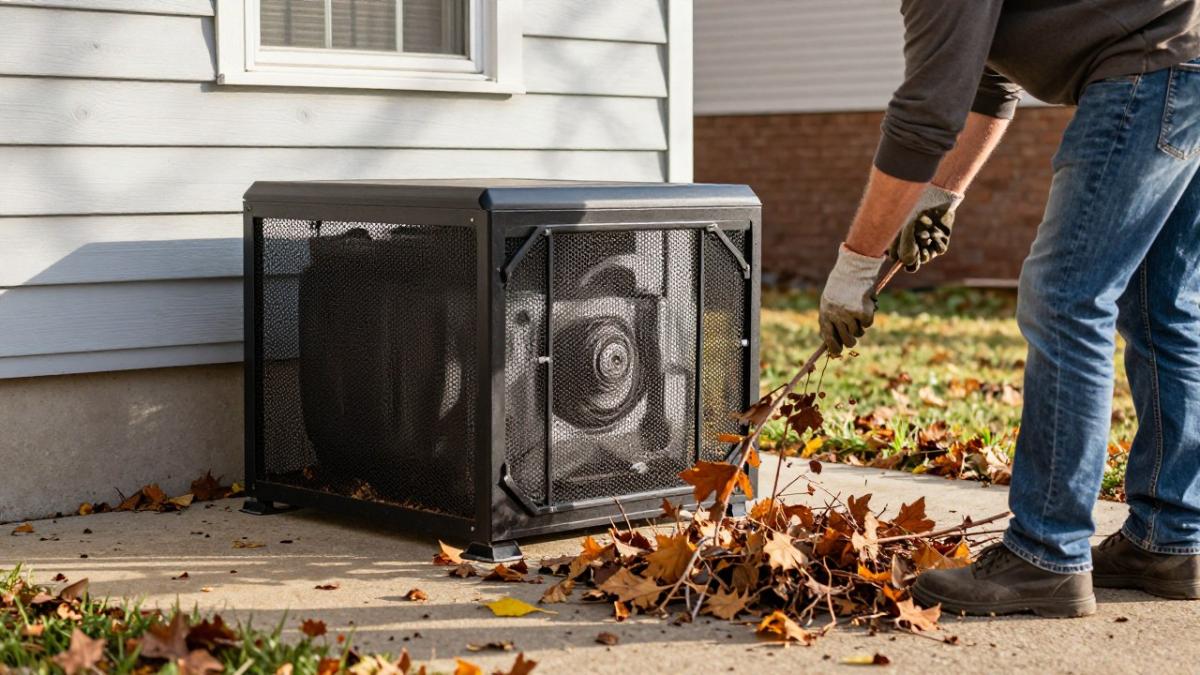
Before a storm, trim trees and shrubs near the unit. Remove leaves, grass clippings, weeds, and vines. Clear the enclosure so wind and rain cannot pile debris against it. Check the canopy and ventilation openings for blockages.
Here are the storm-specific prep facts worth checking before a hurricane.
| Item | Value | Note |
|---|---|---|
| Clearance around generator | At least three feet | Keeps unit breathing and safe |
| Vegetation | Trim trees and shrubs near unit | Before a storm |
| Debris | Remove leaves, grass clippings, weeds, vines | Clear the enclosure |
| Ventilation | Check canopy and openings | Look for blockages |
How to Use a Generator During a Power Outage and How Long a Whole House Generator Can Run
How long a whole house generator can run depends on its fuel supply and the load it carries. Your owner's manual lists fuel consumption at different load levels, and that table is the right way to estimate your own runtime. Your owner's manual lists fuel consumption at different load levels, and that table, not a rule of thumb, is the right way to estimate your own runtime.
Before the Storm
- Top off propane well before a storm is named; suppliers get backlogged fast.
- Confirm the natural gas shutoff valve at the meter works and is accessible.
- Verify the generator is in automatic mode and the transfer switch is set to automatic.
- Test carbon monoxide detectors and replace batteries.
- Clear the area around the unit and secure anything that could become windblown debris.
- Photograph the installation, including the transfer switch and fuel connections, for insurance purposes.
During the Outage
- Confirm the transfer switch has moved the house onto generator power before assuming the unit is carrying the load.
- Keep the area around the unit clear of debris, standing water, and stored supplies.
- Check the oil level during long outages only if your manual permits it and the unit is cool enough to touch safely.
- Never refuel a hot unit, and never store fuel near the generator.
- Keep carbon monoxide detectors working and never operate a portable generator indoors, in a garage, or near a window (the CDC).
Carbon monoxide is a real risk with any generator if exhaust is blocked or driven toward a window or door. If anyone in the home develops headache, dizziness, nausea, or confusion, get everyone outside and call for help.
After the Storm: When to Restart and When Not To
When utility power returns, the transfer switch should return your home to the grid on its own. Let it do its job, and do not flip breakers by hand while the unit is running.
Do not restart a generator that has been flooded, submerged, or visibly damaged. If you see damage, smell fuel, or the unit was exposed to floodwater, call a qualified professional before attempting a restart.
For generator service or questions after a storm, start with a conversation with our team.
How to Turn Off a Generator Safely After the Storm
When power comes back, the transfer switch should return your home to the grid on its own. Let it do its job. Do not flip breakers by hand while the unit is running.
After the storm, do a visual inspection. Look for visible damage, leaks, corrosion, or debris in the enclosure. Let the unit cool before you touch anything.
For generator service or questions after a storm, start with a conversation with our team.
A standby generator is only as reliable as its last service.
Frequently Asked Questions
How do I test a standby generator before a hurricane?
Run a manual test cycle a week or two before the storm hits. Put the unit in manual mode, let it start and stabilize, then confirm it reaches normal operating speed and holds steady. Watch for unusual noise, smoke, or a warning light on the controller. After the test, return the switch to auto so the unit starts on its own during an outage. If the exercise cycle has been failing or the controller shows a fault code, call a licensed electrician before the storm rather than waiting.
How long can a whole house generator run continuously?
A properly maintained standby generator can run for days at a time during an extended outage, provided it has a steady fuel source and is serviced on schedule. Natural gas units draw from the utility line, so runtime depends on the gas supply staying on. Propane units depend on tank size. Check oil levels every 24 hours of continuous running and follow the manufacturer's interval for oil changes during long outages. Many units need a brief cooldown period, so check your owner's manual for the exact guidance.
What is the 80% rule for generators?
The 80% rule means you should keep the total connected electrical load at or below 80% of the generator's rated output. Running a standby generator at full capacity for long stretches stresses the unit and can trip breakers or cause overheating. Your transfer switch should already be sized to match the generator, but it pays to know which circuits are on the backed-up panel. If you are adding appliances or a new HVAC system, have an electrician verify the load before hurricane season.
How should I protect a standby generator during a storm?
Do not cover a running generator. The enclosure is designed to shed rain and the unit needs open ventilation to exhaust carbon monoxide and cool itself. Keep open clearance around the enclosure by clearing leaves, branches, and debris, and follow your owner's manual for the clearance it specifies. Before landfall, remove loose items nearby that could become projectiles, and confirm the unit sits on a raised pad above expected flood level. After the storm, inspect for visible damage, leaks, or corrosion before restarting.