
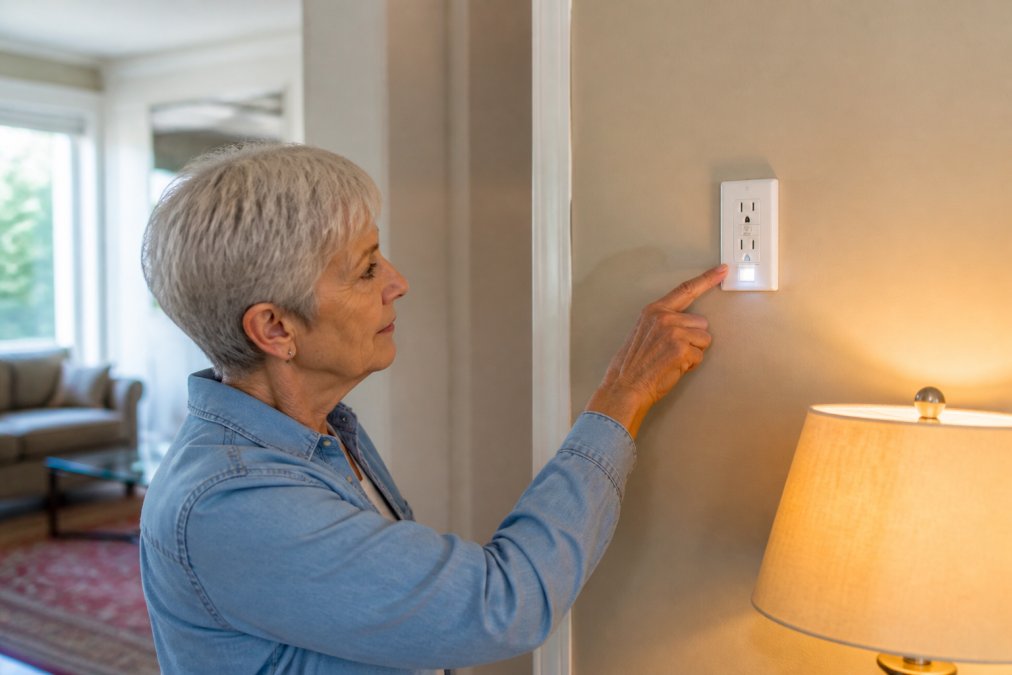
 listicle
Best Smart Home Devices for Senior Electrical Safety
Table of Contents
- Why Senior Electrical Safety Needs Smart Devices
- Comparison Table: Top Smart Devices for Electrical Safety
- Smart Plug Safety Features for Elderly Users
- AFCI Breaker Installation for Residential Safety
- 10 Electrical Safety Tips for Seniors 2026
- Interoperability and Maintenance: What Competitors Miss
- Frequently Asked Questions
Last Updated: September 16, 2026
Why Senior Electrical Safety Needs Smart Devices
Electrical hazards rank among the leading causes of home fire deaths for adults over 65. This guide from Mister Volts examines the best smart home devices for senior electrical safety, from shutoff plugs to monitored breakers, and explains what actually reduces risk versus what just adds convenience. Senior electrical safety combines code-compliant wiring, ground-fault and arc-fault protection, and monitored smart devices to prevent shocks, burns, and fires where residents may have reduced mobility, vision, or reaction time.
Comparison Table: Top Smart Devices for Electrical Safety
| Device Category | Primary Risk Addressed | Power Source | Standout Feature | Maintenance Burden | Best For |
|---|---|---|---|---|---|
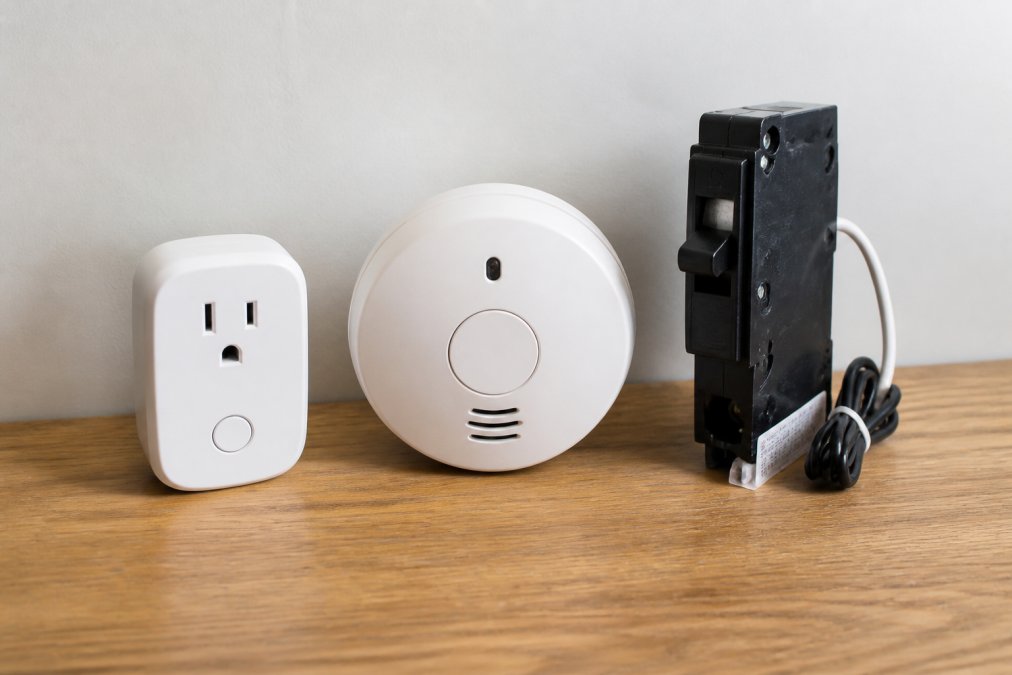
| Smart plugs with auto-shutoff | Overload, unattended appliances | Plug-in (no battery) | Scheduled and threshold-based power cutoff | None beyond firmware | Kitchens, space heaters, irons, heating pads |
| Smart smoke/CO detectors | Fire and carbon monoxide | Battery or hardwired with battery backup | Real-time alerts to caregivers | Monthly test, annual battery | Every bedroom, hallway, and level |
| Smart circuit breakers | Arc faults, overloads, ground faults | Hardwired at the panel | Per-circuit monitoring and remote trip | None | Older panels, renovations, whole-home coverage |
| GFCI/AFCI receptacles | Shock and arc faults | Hardwired at the outlet | Ground-fault and arc detection at point of use | Monthly test-button check | Bathrooms, kitchens, laundry, garage |
| Smart locks and doorbells | Intrusion, emergency access | Battery or hardwired | Keyless entry, video verification | Battery swap every few months | Entry points |
| Medical alert wearables | Fall and medical emergency | Battery | Two-way call, fall detection | Daily charging | Throughout the home and yard |
| Smart water/leak shutoff | Water damage near electrical equipment | Battery or hardwired | Automatic supply shutoff | Annual valve exercise | Basements, laundry, water heater closets |
Smart Plug Safety Features for Elderly Users
- Overload protection that trips the plug itself, not just the breaker
- Scheduling that runs automatically without app interaction
- Away mode that cuts power to selected outlets when the home is empty
- Voice assistant compatibility so control does not require a phone
- A physical override button that works even if the network is down
What most reviews miss: the plug's own amperage rating is the limiting factor. A plug rated for 15 amps will not safely carry a 20-amp load no matter what the app claims.
AFCI Breaker Installation for Residential Safety
AFCI breaker installation for residential safety is the single most effective upgrade for homes with aging wiring, because arc faults are the failure mode smart plugs and detectors cannot prevent. An arc fault occurs when current jumps across a damaged conductor, loose terminal, or worn cord, generating heat that ignites surrounding material. Conventional breakers do not detect it; AFCI breakers do.
10 Electrical Safety Tips for Seniors 2026
Most safety tip lists are written for the installer. This one is written for the household, the resident, the family member who checks in, and the electrician who signs off.
-
Replace ungrounded two-prong receptacles in living areas with grounded, tamper-resistant GFCI receptacles where required. An ungrounded outlet offers no path for fault current, exactly the condition GFCI protection interrupts. Tamper-resistant shutters also stop a curious grandchild or an adult with reduced dexterity from contacting live parts.
-
Put space heaters on a dedicated circuit, never on a power strip or extension cord. A 1,500-watt heater draws roughly 12.5 amps at 120 volts, most of a 15-amp circuit's usable capacity, and power strips are not rated for continuous high-draw loads. The cord and strip are the failure point, not the heater.
-
Test GFCI and AFCI devices monthly using the physical test button, not the app. The test button exercises the actual trip mechanism; an app status indicator only reports what the device thinks its state is. If it does not trip when you press the button, it is not protecting anyone.
-
Label the panel clearly and keep a working flashlight beside it. A tripped breaker in a dark basement is a fall hazard before it is an electrical problem. A printed circuit map turns a panicked call into a ten-second reset.
-
Route cords along walls, never under rugs or across walkways. Cord damage from foot traffic is a leading cause of arc faults in older homes, and a cord under a rug is also a trip hazard. Both risks come from the same habit.
-
Replace any cord that is warm to the touch, frayed, or taped. A warm cord means resistance is building somewhere it should not be. Tape is not a repair; it hides damage from the next inspector.
-
Use smart plugs with auto-shutoff for irons, coffee makers, and heating pads. The mechanism that matters is threshold-based cutoff, the plug kills power when current draw exceeds a set limit or a runtime timer expires.
-
Install interconnected smoke and carbon monoxide detectors with remote alerting in every sleeping area. Interconnection means one alarm triggers all of them, which matters when the resident has reduced hearing or is asleep with a door closed. Remote alerting notifies a family member even if no one is home.
-
Schedule a professional inspection if the home has not been evaluated in over a decade. Panels, receptacles, and grounding degrade slowly and invisibly. An electrician can verify capacity, confirm grounding, and identify circuits needing AFCI or GFCI protection before a failure decides for you.
-
Keep a phone or medical alert wearable within reach in every room, and keep it charged. A wearable with a dead battery is a paperweight. The most common failure in caregiver-managed setups is not a device that broke; it is one that was never put back on the charger.
Caregiver-Managed Setup: The Accessibility Angle Most Guides Skip
If the resident is not comfortable managing apps, do not build a system that requires them to. The better pattern is a caregiver-managed setup: the family member holds the account, configures automations, and receives alerts, while the resident interacts through physical buttons, voice commands, or nothing at all.
Three practical rules for this approach:
- Prefer devices with a physical override. A smart plug that only works through an app is a liability if the network drops or the resident cannot navigate the interface. A physical button that still switches the outlet is the fallback.
- Set automations to run without confirmation. Scheduled shutoff, lighting, and detector tests should not require anyone to tap a prompt. The system should act; the resident should not have to remember.
- Consolidate to one app or one hub where possible. Four apps means four places to check and four chances for something to be missed. Devices that speak a common protocol such as Matter or Thread can often be managed from a single interface, the difference between a system that gets used and one that gets abandoned.
Interoperability and Maintenance: What Competitors Miss
- Monthly: test GFCI and AFCI devices, test smoke and CO alarms
- Quarterly: check smart plug firmware updates and verify automations still run
- Annually: replace detector batteries, inspect cords and outlets, evaluate the panel
The most reliable senior electrical safety setup is not the one with the most devices. It is the one where every device is tested on a schedule, integrated into a single control layer, and backed by a code-compliant panel and circuit protection.
This is where professional installation earns its keep. A licensed electrician can confirm the panel supports the added load, verify grounding, and install AFCI and GFCI protection correctly the first time. Mister Volts handles residential and commercial electrical work across the service area, from a single outlet replacement to a full panel upgrade, all completed to NEC standards.
Frequently Asked Questions
What technology can help keep elderly people safe at home from electrical hazards?
Smart plugs with automated shutoff, AFCI breakers, and smart smoke detectors can all help. Smart plugs let you schedule or remotely turn off appliances that might be left on. AFCIs detect dangerous arc faults that regular breakers miss. Smart smoke and CO detectors send real-time alerts to caregivers. These devices support aging in place and independent living by adding layers of electrical safety without requiring constant supervision.
How can smart plugs improve electrical safety for seniors?
Smart plugs offer automated shutoff timers, overload protection, and remote access via smartphone. For example, you can set a space heater to turn off after 30 minutes, preventing overheating. Some models monitor energy use and send alerts if an appliance draws too much power. These features reduce fire risk and give caregiver peace of mind, especially when the senior has memory issues or limited mobility.
Are smart smoke and carbon monoxide detectors necessary for seniors?
Yes, they add critical safety beyond standard alarms. Smart detectors send real-time alerts to family or caregivers if they go off, so help can be called even if the senior is asleep or can't hear the alarm. They also test themselves automatically and notify you when batteries are low. For aging in place, this connectivity can mean faster emergency response and reduced risk of undetected fires or CO leaks.
How do AFCI breakers improve electrical safety in residential homes?
AFCI breakers detect arc faults, which are dangerous electrical sparks that can start fires. Standard breakers only protect against overloads and short circuits, not arcs. The National Electrical Code (NEC) now requires AFCIs in most living areas of new homes. If you live in an older home, having a licensed electrician install AFCI breakers adds a vital layer of fire prevention, especially important for seniors who may not notice early warning signs.