
 listicle
Signs Your Home Needs Electrical Rewiring
Table of Contents
- 8 Signs Your Home Needs Electrical Rewiring
- Why These Signs Matter: Electrical Fire Hazards and Safety
- Knob and Tube Wiring Replacement Cost and Timeline
- How Long Does a Home Rewire Take?
- NEC Electrical Code Compliance Standards for Rewiring
- Insurance Implications of Outdated Wiring
- Partial vs. Full Rewiring: Cost-Benefit Analysis
- What to Do When You Spot These Warning Signs
- Frequently Asked Questions
Last Updated: September 19, 2026
8 Signs Your Home Needs Electrical Rewiring
Your home's electrical system is the backbone of modern living, but it ages invisibly. Most homeowners don't think about wiring until something goes wrong. By then, you're already at risk. Recognizing these early signals can prevent electrical fires, equipment damage, and costly emergency repairs. Recognizing these early signals can prevent electrical fires, equipment damage, and costly emergency repairs.
The following eight warning signs should prompt an immediate inspection by a licensed electrician. Each one points to deteriorating wiring, overloaded circuits, or outdated infrastructure that poses real safety risks to your family.
Frequently Tripping Circuit Breakers or Blown Fuses
Circuit breakers trip when they detect an overload or short circuit. One trip is normal. Repeated trips mean your electrical panel is working overtime to protect your home from damage.
If your breakers trip regularly when you use multiple appliances, your circuits are overloaded. This happens in older homes where electrical demand has grown far beyond what the original wiring was designed to handle. Modern households use far more power than homes built 30 or 40 years ago. Blown fuses, the older equivalent of circuit breakers, are an even clearer sign that your system needs attention. Fuses can only be replaced once, so frequent replacements indicate a systemic problem that rewiring can solve.
Flickering or Dimming Lights
Lights that flicker when you turn on high-draw appliances signal voltage drop in your wiring. This isn't just annoying, it means your wiring is struggling to deliver consistent power.
Dimming happens when the voltage supplied to a circuit drops below the standard 120 volts. Old wiring develops resistance over decades. Aluminum wiring (common in homes built in the 1960s and 1970s) corrodes and increases resistance even faster. When you start the dishwasher and your kitchen lights dim noticeably, that's a sign your home needs electrical rewiring to restore proper voltage delivery throughout the house.
Burning Smells or Charred Outlets
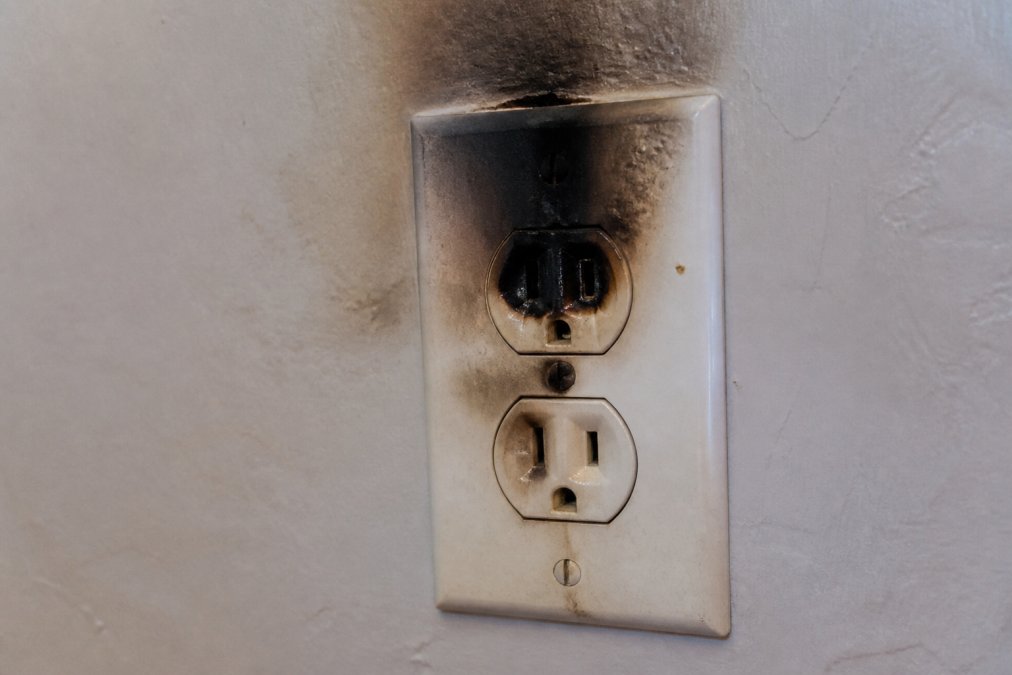
A burning smell near outlets or switches is an emergency warning sign. This indicates overheating insulation or arcing inside the outlet or wall cavity.
Charred or discolored outlets mean heat damage has already occurred. The insulation around the wiring inside your walls may be degrading. This creates conditions for an electrical fire. Do not ignore this warning. Contact a licensed electrician immediately. Your home needs electrical rewiring in the affected areas at minimum, and possibly throughout if the problem is widespread.
Buzzing or Sizzling Sounds from Outlets
Buzzing or sizzling from outlets indicates arcing, electricity jumping across gaps in connections or damaged insulation. This is a precursor to electrical fire.
Loose connections, corroded terminals, or degraded insulation all cause arcing sounds. The noise happens as electrical current finds alternative paths through damaged materials. If you hear these sounds, your home needs electrical rewiring to replace the damaged wiring and restore safe connections throughout the affected circuit.
Warm or Discolored Switch Plates
Feel your light switches and outlet covers. They should be cool to the touch. Warm switch plates indicate heat buildup behind the wall.
Discolored or scorched switch plates show that heat damage is visible on the surface. The wiring behind the wall is even hotter. This is a sign of excessive current flow, loose connections, or insulation breakdown. Warm outlets and switches mean your home needs electrical rewiring in those areas before an electrical fire starts.
Lack of GFCI Protection
GFCI outlets (ground fault circuit interrupters) protect against electrical shock in wet areas like bathrooms, kitchens, and laundry rooms. These outlets have a test and reset button. If your home was built before 1970, it likely has no GFCI protection at all.
Modern electrical code requires GFCI outlets in all wet locations. Older homes with standard outlets in bathrooms and kitchens are not protected against ground faults. If someone touches a wet appliance or outlet, the risk of electrocution is high. Adding GFCI protection is often part of a broader rewiring project to bring your home up to current safety standards.
Outdated Fuse Boxes and Knob-and-Tube Wiring
Fuse boxes are a red flag. They indicate your home's electrical panel hasn't been updated since the 1960s or earlier. Knob-and-tube wiring, individual wires strung through ceramic tubes and fastened with knobs, is even older and far more dangerous.
https://mistervoltsusa.com/contact →
Knob-and-tube wiring has no ground wire, making it unsuitable for modern appliances. The insulation on these ancient wires becomes brittle and cracks over time. Many insurance companies now refuse to cover homes with knob-and-tube wiring still in place. If your home has either of these systems, your home needs electrical rewiring to meet modern safety standards and restore insurability.
Visible Scorch Marks or Damaged Insulation
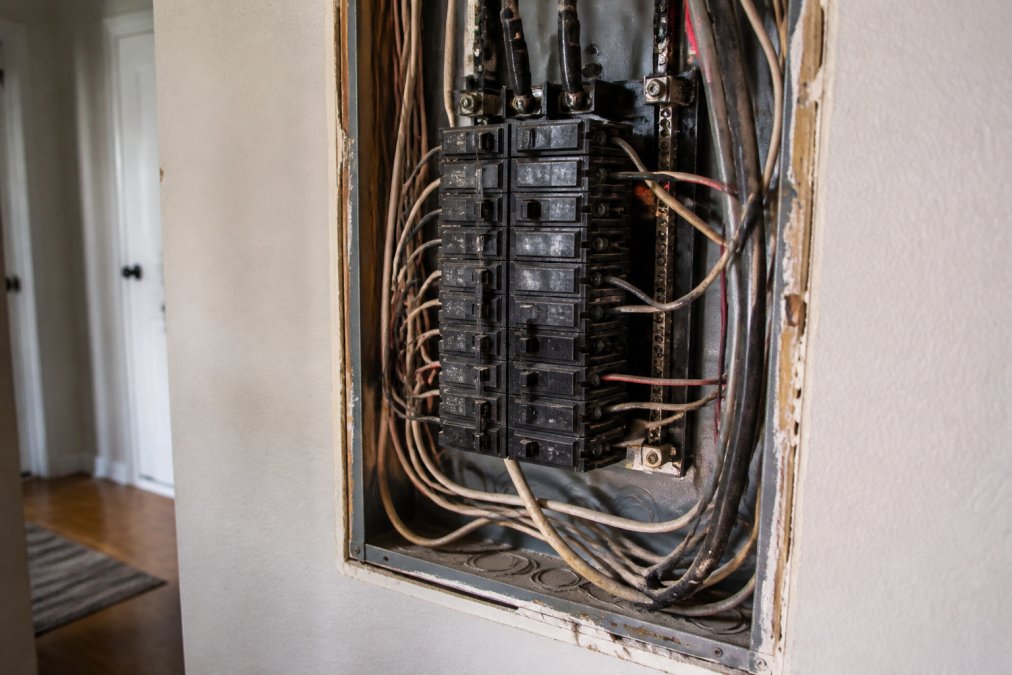
Look inside your electrical panel and around outlets for visible scorch marks, melting, or discolored wiring. Damaged insulation that's cracked, peeling, or discolored is a clear sign of age and deterioration.
Scorch marks indicate previous arcing or overheating events. Damaged insulation loses its ability to prevent contact between live wires and conductive materials like metal framing or water pipes. This creates short-circuit and electrocution hazards. Any visible damage means your home needs electrical rewiring to restore safety.
Why These Signs Matter: Electrical Fire Hazards and Safety
Electrical fires account for thousands of residential fires each year. Most start in walls where damaged wiring goes unnoticed until flames appear. By the time you smell smoke, the fire is already spreading.
The common thread among all these warning signs is deteriorating insulation, loose connections, or circuits operating beyond their design capacity.
Knob and Tube Wiring Replacement Cost and Timeline
Knob-and-tube wiring is the oldest residential wiring system still found in homes. If your home has this system, replacement should be a priority. The cost to replace knob-and-tube wiring varies based on the size of your home, the complexity of the installation, and local labor rates. Smaller projects may cost less, while comprehensive rewiring of a large home requires significant investment.
How Long Does a Home Rewire Take?
The duration of a home rewiring project depends on the scope. A partial rewiring of a single room or circuit takes a few days. A complete home rewire typically takes one to three weeks, depending on the home's size and complexity.
NEC Electrical Code Compliance Standards for Rewiring
The National Electrical Code (NEC) sets the safety standards for all electrical installations in the United States (Learn More About NFPA 70, National Electrical Code (NEC)). These standards are updated every three years to reflect new technology and safety research. When your home needs electrical rewiring, the new wiring must meet current NEC standards.
Insurance Implications of Outdated Wiring
Insurance companies increasingly scrutinize home electrical systems. Many insurers now require electrical inspections before issuing policies or renewing coverage. Homes with outdated wiring, knob-and-tube systems, or visible electrical hazards face policy cancellation or premium increases.
Partial vs. Full Rewiring: Cost-Benefit Analysis
Not every home requires complete rewiring. Some homes benefit from partial rewiring of specific circuits or areas where hazards are concentrated.
What to Do When You Spot These Warning Signs
If you notice any of the warning signs described above, take action immediately. Start by scheduling an inspection with a licensed electrician. An inspection identifies the specific problems and recommends solutions.
Frequently Asked Questions
What are the most common signs of outdated knob and tube wiring?
Knob-and-tube wiring, installed in homes built before the 1950s, shows distinct visual markers. Look for cloth-wrapped wires running through walls or attics, ceramic knobs and tubes supporting the wires, and an absence of a ground wire. Homes with this wiring often experience frequent blown fuses, flickering lights, and overheating outlets. If your home has knob-and-tube wiring, electrical fire hazard risk increases significantly, and many insurance providers now refuse coverage or charge premium rates. A licensed electrician can confirm the presence of this hazardous system during a home inspection.
How long does a home rewire take on average?
A complete home rewire typically takes 3 to 10 days, depending on the home's size, layout, and complexity. A 2,000 square foot home usually requires 5 to 7 days of work. Older homes with plaster walls or complex layouts may take longer. Partial rewiring of specific circuits or rooms takes 1 to 3 days. The timeline also depends on whether walls require opening and whether the electrical panel needs replacement. Your electrician can provide a more precise estimate after assessing your electrical system and home structure.
What does NEC electrical code compliance mean for home rewiring?
The National Electrical Code (NEC) sets minimum safety standards for all electrical installations in the United States. NEC compliance ensures your rewiring meets current amperage requirements, proper grounding and bonding, correct circuit breaker sizing, and adequate GFCI protection in wet areas. Non-compliant wiring creates electrical shock and fire hazards. When a licensed electrician rewires your home to NEC standards, the work passes inspection and ensures your electrical system handles your home's electrical load safely. Insurance companies and home buyers expect NEC-compliant installations.
Will my insurance company cover a house with outdated wiring?
Many insurance providers now deny coverage or charge significantly higher premiums for homes with outdated wiring like knob-and-tube or aluminum wiring. Some insurers require a full electrical inspection before issuing a policy. If your insurer discovers undisclosed outdated wiring, they may refuse to pay claims related to electrical damage or fire. Rewiring your home to current standards typically qualifies you for standard insurance rates and better coverage terms. Contact your insurance agent about your wiring before purchasing a policy or making a claim.