
 listicle
Electrical Safety Checklist for Aging in Place
Table of Contents
- Electrical Safety Checklist for Aging in Place: A Room-by-Room Approach
- Electrical Safety Tips for Seniors 2026
- Common Electrical Hazards in Older Homes
- Hiring a Licensed Electrician for Home Safety Audits
- Smart Home Electrical Integration for Aging in Place
- Cost-Benefit Analysis of Electrical Retrofitting
- Medical Equipment Power and Universal Design Standards
- Conclusion
- Frequently Asked Questions
Last Updated: September 29, 2026
Electrical Safety Checklist for Aging in Place: A Room-by-Room Approach
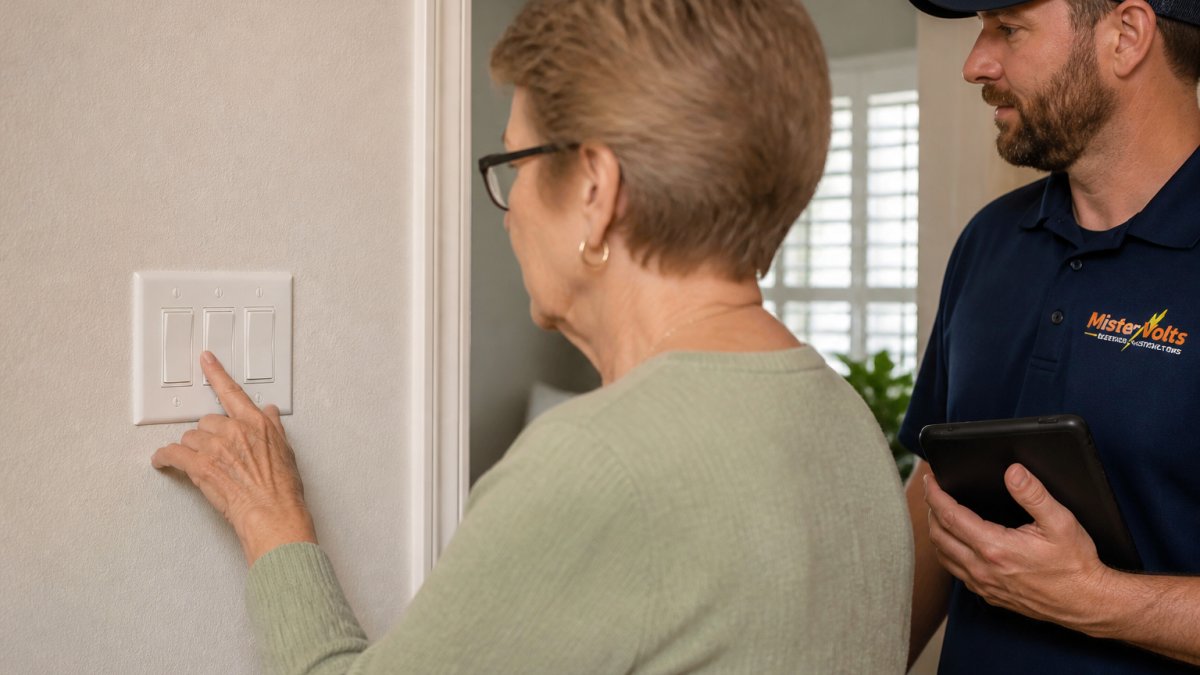
An electrical safety checklist for aging in place is a room-by-room inspection that finds the hazards most likely to cause shock, fire, or a fall for an older adult: overloaded outlets, missing GFCI protection, dead smoke alarms, and cords stretched across walking paths. At Mister Volts, we run these checks for homeowners across Macon, Perry, Warner Robins, and surrounding Georgia communities, and the same handful of problems shows up in house after house. This guide walks you through each room, tells you what to fix first, and explains when to call a licensed electrician instead of reaching for a screwdriver yourself.
The stakes are higher than most families realize. Older adults are more vulnerable to electrical shock because of reduced skin sensitivity and slower reaction times, and reduced mobility makes a trip over a loose extension cord far more dangerous than it would be for a younger person. A fall in a hallway can end independent living entirely.
Below, we'll show you exactly how to inspect every room, what to fix immediately, and when a professional needs to step in.
Electrical Safety Tips for Seniors 2026
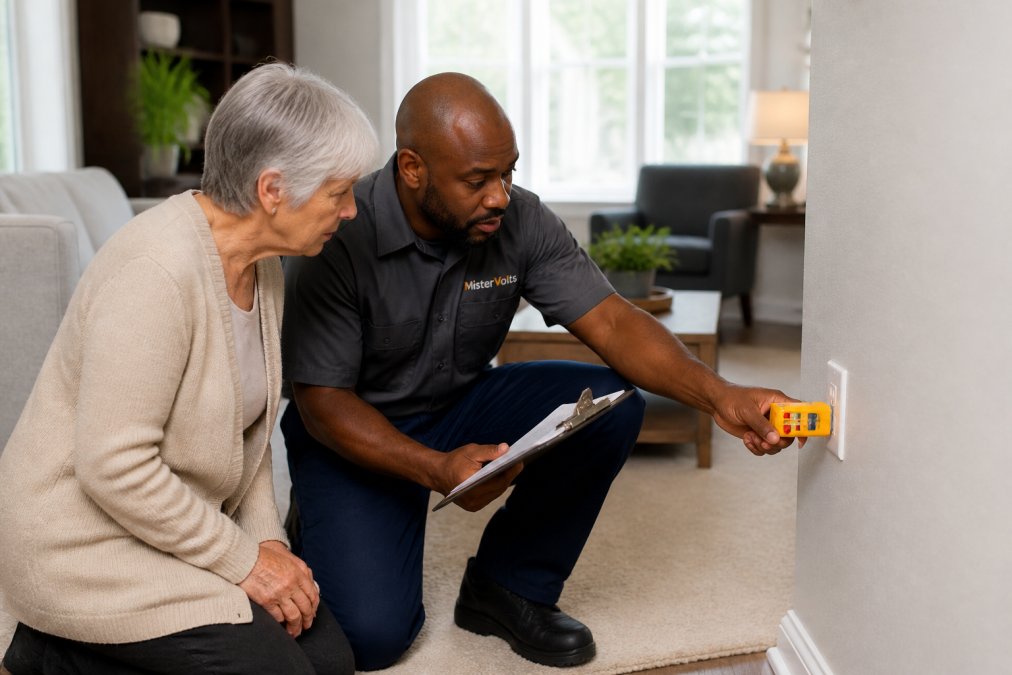
Start with the rooms where people move most: kitchen, bathroom, bedroom, hallway, and living room. The Electrical Safety Foundation's home safety guidance recommends testing GFCIs monthly, and that single habit prevents more shocks than any other.
Work through this list in one afternoon:
- Kitchen: Confirm every countertop outlet is GFCI-protected. Move the coffee maker and toaster off any extension cord. Check that appliance cords aren't pinched behind the fridge.
- Bathroom: Test the GFCI, keep hair dryers unplugged when not in use, and make sure no outlet sits within reach of the tub or shower.
- Bedroom: Replace worn lamp cords, add a bedside lamp with a touch switch, and keep a flashlight within arm's reach of the bed.
- Hallways and stairs: Remove every cord from the walking path. Add nightlights or motion-sensor pathway lighting.
- Living room: Check that power strips aren't daisy-chained, and tuck cords behind furniture or into cord covers.
Common Electrical Hazards in Older Homes
Older homes carry hazards newer construction doesn't. Two-prong outlets with no ground, aluminum branch wiring, fuse boxes instead of breaker panels, and outlets with no GFCI protection near water are the four we see most often in pre-1980s houses.
The specific dangers, ranked by risk:
| Hazard | Why It's Dangerous | Fix |
|---|---|---|
| No GFCI near water | Shock risk in kitchens and baths | Install GFCI outlets |
| Two-prong, ungrounded outlets | No path for fault current | Rewire or add grounding |
| Aluminum branch wiring | Overheats at connections | Licensed evaluation required |
| Fuse box, no breakers | Harder to isolate faults | Panel upgrade |
| Daisy-chained power strips | Circuit overload and fire | Add dedicated circuits |
What most guides miss is that a home can pass a visual inspection and still have a hidden problem. Aluminum wiring, for example, looks fine until a connection overheats.
Hiring a Licensed Electrician for Home Safety Audits
A licensed electrician should perform a full safety audit whenever a home hasn't been inspected in more than a decade, when you're planning a renovation, or when you're preparing a home for a family member to age in place. A proper audit covers the panel, grounding, GFCI function, outlet condition, and load capacity, not just a quick walk-through.
Ask three questions before you hire anyone:
- Are you licensed, and can I see the license number?
- Will the audit include the service panel and a written report?
- What's your warranty if something you inspected later fails?
At Mister Volts, our licensed electricians provide code-compliant evaluations and clear written findings, so you know exactly what needs attention and what can wait. We also offer ongoing electrical maintenance contracts for property owners who'd rather prevent problems than react to them.
Smart Home Electrical Integration for Aging in Place
Smart home devices solve problems traditional wiring can't, but only when they're installed on a circuit that can support them. The value for aging in place is specific: fewer trips across dark rooms, fewer forgotten appliances, and faster alerts to family when something goes wrong. The failure mode is equally specific, smart devices added to old, ungrounded, or overloaded wiring create new hazards instead of removing old ones.
Here's what actually works, and what to check before you buy.
Voice-controlled lighting. A smart bulb or smart switch lets someone turn lights on and off without crossing a room.
Before adding any smart device, confirm three things:
- The outlet or switch box is properly grounded.
- The circuit has capacity for the added load.
- The device's hub or app works with the home's Wi-Fi and the family member's phone.
Cost-Benefit Analysis of Electrical Retrofitting
Retrofitting costs less than most homeowners assume, and the alternative is worse. A single electrical fire or a fall-related hospital stay can cost far more than a panel upgrade, and retrofitting also raises resale value and lowers insurance risk.
Think about it in three tiers:
https://mistervoltsusa.com/contact →
- Low-cost fixes: GFCI outlets, outlet covers, cord covers, nightlights, and battery-operated smoke alarms. These address the majority of everyday hazards.
- Mid-range upgrades: Dedicated circuits for medical equipment or kitchen appliances, plus a whole-home surge protector.
- Major work: Service panel replacement, rewiring ungrounded circuits, and adding circuits for a home office or medical devices.
Medical Equipment Power and Universal Design Standards
What each device actually needs:
-
Oxygen concentrators typically draw 300 to 600 watts and run continuously. They need a dedicated, grounded circuit that nothing else shares, because a shared circuit that trips takes the oxygen supply with it.
-
CPAP machines draw far less, usually under 100 watts, but they run every night, so a dedicated circuit or at least a circuit with no other high-draw load is the safer choice. Many users add a battery backup for outages.
-
Home dialysis units are the most demanding. They often require a dedicated 20-amp circuit, a dedicated water supply, and in some cases a dedicated outlet near the treatment chair. The equipment supplier usually provides a power specification sheet; give that sheet to the electrician before any work is quoted.
-
Mobility lifts and hospital beds draw power intermittently but need an outlet that's reachable without bending or reaching behind furniture.
-
Accessible switches placed 36 to 44 inches above the floor, reachable from a seated position.
-
Outlets raised to reduce bending and strain, 18 to 24 inches is a common target.
-
Rocker-style switches instead of small toggles, easier for hands with reduced grip strength.
-
Lever-style handles on doors and faucets, which need less grip than round knobs.
-
Task, ambient, and pathway lighting layered so no area is ever fully dark.
-
Contrasting switch plates so switches are visible against the wall.
Conclusion
Electrical safety is one of the few parts of aging in place you can fully control, and the fixes range from a five-dollar outlet cover to a full panel upgrade. Start with the room-by-room checklist, address the hazards in older wiring, and bring in a licensed electrician for anything involving the panel, grounding, or medical equipment circuits.
Frequently Asked Questions
What are the most common electrical hazards for seniors at home?
The most common hazards include overloaded outlets and extension cords, missing GFCI protection in kitchens and bathrooms, outdated two-prong receptacles, damaged wiring in older homes, and blocked or hard-to-reach switches. Smoke and carbon monoxide alarms that are missing, old, or without working batteries also raise risk. A room-by-room electrical safety checklist helps you spot these issues early and fix them before they cause shocks, tripping, or fires.
How often should an older home's electrical system be inspected?
Schedule a professional electrical inspection every 5 to 10 years, and sooner if you notice flickering lights, warm outlets, burning smells, frequent breaker trips, or you are planning a renovation. Homes built before 1980 often have aging wiring, small service panels, or limited GFCI protection. A licensed electrician can assess the service panel, circuit breakers, outlets, and grounding, then recommend repairs or upgrades that support safe aging in place.
What electrical upgrades are recommended for senior-friendly homes?
Recommended upgrades include GFCI outlets in kitchens, bathrooms, and laundry areas, AFCI breakers where required, additional outlets to reduce extension cord use, rocker-style switches at accessible heights, motion-sensor or illuminated pathway lighting, and hardwired smoke and carbon monoxide alarms with battery backup. A surge protector for medical devices and a dedicated circuit for high-demand equipment can also help. These changes reduce tripping, shock, and fire risks while making daily tasks easier.
Are there specific NEC requirements for senior living electrical safety?
The NEC sets requirements for GFCI and AFCI protection, receptacle spacing, grounding, and panel clearances that apply to homes regardless of the resident's age. It does not have a separate senior-specific section, but these rules directly support aging in place by reducing shock and fire risks. Local amendments may add requirements, so confirm with your jurisdiction. A licensed electrician can verify that your home meets current code and recommend upgrades where it does not.