
 ultimate-guide
Cost of Upgrading Old Electrical Wiring for Seniors
Table of Contents
- Signs of Outdated Electrical Wiring You Should Not Ignore
- What Drives the Cost of Upgrading Old Electrical Wiring for Seniors
- Electrical Panel Replacement Cost vs. a Full Rewire
- Electrical Safety Tips for Seniors Before Work Begins
- Financial Assistance and Grants for Senior Home Repairs
- How to Vet an Electrical Contractor as a Senior Homeowner
- Aging-in-Place Electrical Modifications Worth Planning For
- Conclusion
- Frequently Asked Questions
Last Updated: September 13, 2026
Signs of Outdated Electrical Wiring You Should Not Ignore
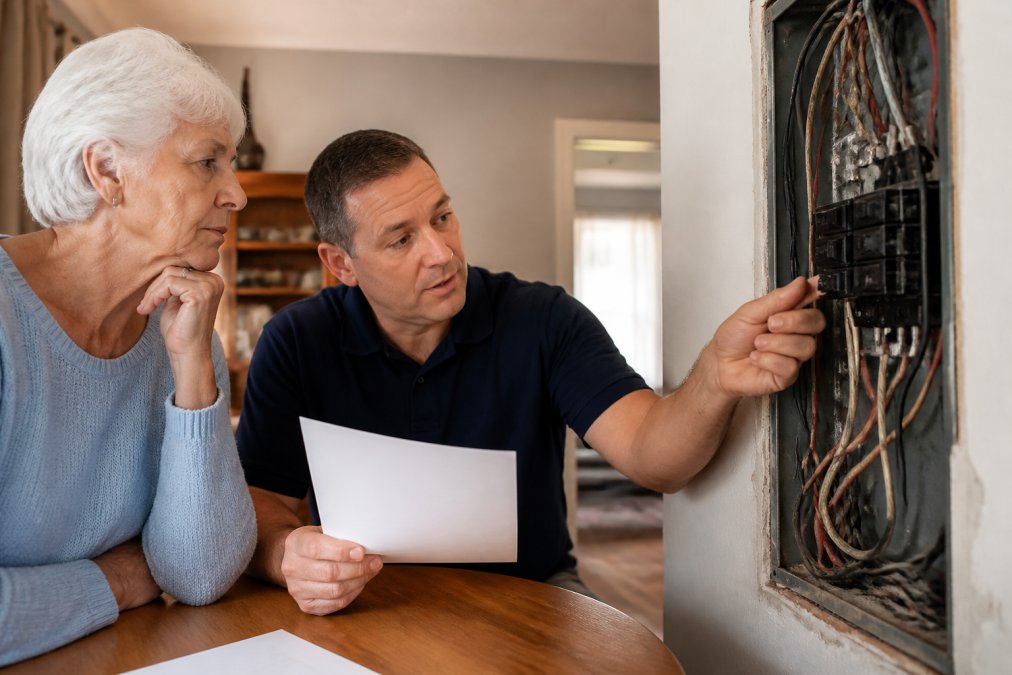
The cost of upgrading old electrical wiring for seniors starts with recognizing warning signs before they become emergencies. Older homes in Macon and Perry often carry wiring never designed for modern loads.
Outdated electrical wiring no longer meets current safety codes or cannot safely handle modern demand, knob-and-tube wiring, aluminum branch circuits, and two-prong ungrounded outlets are common examples.
Watch for these red flags:
- Circuit breakers that trip repeatedly when running appliances
- A burning smell near outlets or the electrical panel
- Flickering lights when multiple devices run simultaneously
- Discolored or warm outlet covers
- Two-prong outlets throughout the home
- Buzzing sounds from switches or outlets
Waiting until an outlet stops working usually means the damage has spread.
What Drives the Cost of Upgrading Old Electrical Wiring for Seniors
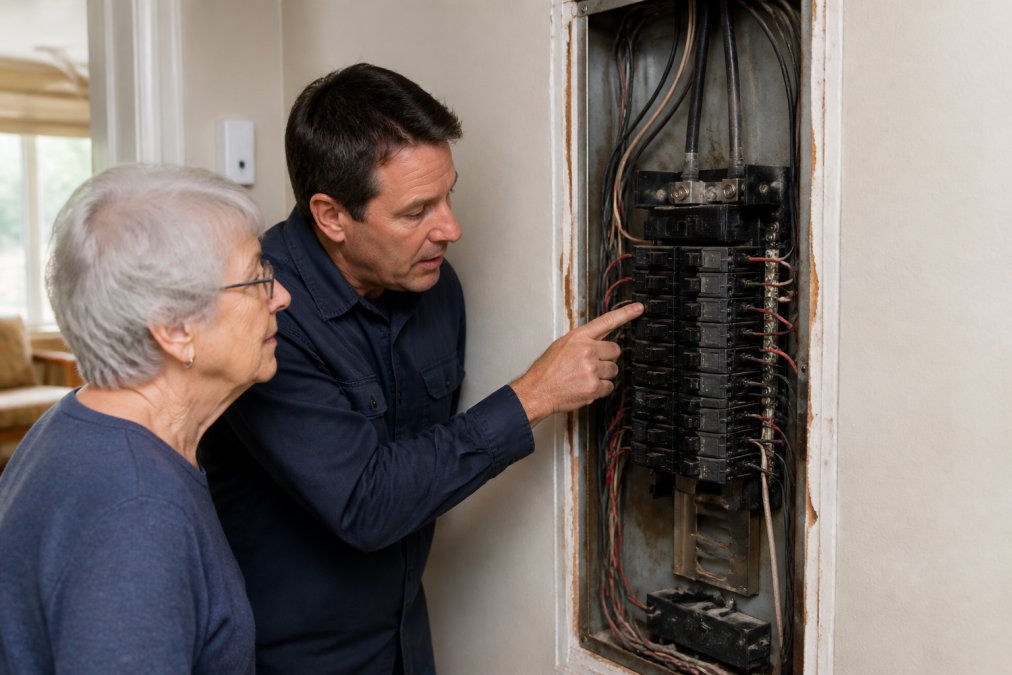
The cost of upgrading old electrical wiring for seniors is driven by six variables: home size, labor rates, wiring type, access to wiring runs, device count, and whether the work is a full rewire or targeted circuit repair. Understanding each lever lets you pressure-test a quote.
Home Size and Per-Square-Foot Pricing
Electricians price whole-home rewires by the linear foot of cable pulled or by per-square-foot finished living area. A single-story home with an unfinished basement or crawl space runs lower per square foot than a two-story with finished walls, which requires more wall opening and patching.
A 1,200-square-foot ranch with attic and crawl access is a different job than a 3,000-square-foot two-story with a finished basement: the first can often be rewired with minimal drywall damage, the second requires cutting into finished ceilings and walls on every floor. Ask contractors to quote per square foot of conditioned living space to compare bids fairly.
Wiring Type: The Single Biggest Cost Multiplier
The material already in your walls determines how much of the job is removal versus installation:
- Knob-and-tube wiring is the most expensive to remove because it runs through drilled joists and ceramic knobs that must be pulled and the holes patched. It also frequently lacks a grounding conductor, so every circuit it serves needs a new ground path.
- Aluminum branch-circuit wiring (common in homes built roughly between the mid-1960s and mid-1970s) can sometimes be remediated with approved connectors at each device rather than fully replaced, which lowers cost, but only if a licensed electrician confirms the aluminum is in good condition (May Is National Electrical Safety Month).
- Two-prong ungrounded copper wiring is often the cheapest to upgrade because the copper itself may be reusable; the cost concentrates in running a ground and replacing receptacles.
Labor, Permits, and Inspection Fees
Licensed electrician labor is the largest line item on most rewiring projects. Rates vary by market and shop size, and overtime or weekend work carries a premium.
Permit fees and electrical inspection costs are billed by your local building department, not the electrician. Most jurisdictions require a rough-in inspection before walls are closed and a final inspection after devices are installed. Ask for the permit fee as its own line to verify it against your city or county fee schedule.
Access, Device Count, and Contingency
Two homes of identical square footage can differ by thousands of dollars based on:
- Attic and crawl space access, walkable, lit, and floored access is faster and cheaper than a low crawl.
- Number of outlets, switches, and fixtures, each device is a discrete labor unit. A home with 40 receptacles costs materially more than one with 20.
- Contingency, older homes routinely hide surprises: buried junction boxes, spliced wiring behind drywall, or DIY work. A 10-20% contingency line is standard practice, not a red flag.
The Senior-Specific Cost Levers Most Guides Ignore
Three factors change the math specifically for older homeowners:
- Staying in place vs. selling. If you plan to age in place, bundle accessibility modifications (covered below) into the same permit and electrician visit rather than paying for a second mobilization later.
- Partial vs. full rewire. A full rewire is not always required. If a licensed electrician confirms the existing copper is sound, a targeted upgrade, panel, grounding, GFCI protection, and circuits serving the kitchen, bathroom, and bedroom, delivers most of the safety benefit at a fraction of the cost.
- Fixed-income timing. Because labor and material prices move, getting three written quotes within a 30-day window gives you a fair snapshot and prevents one contractor from setting the market for you.
Electrical Panel Replacement Cost vs. a Full Rewire
Electrical panel replacement cost is typically lower than a full rewire because the work is concentrated in one location. A panel upgrade replaces the main breaker box and its connections without touching wiring throughout the house.
A full rewire runs new cable through walls, ceilings, and crawl spaces, opening walls, fishing wire through existing structures, and replacing every outlet, switch, and junction box.
| Project Type | Scope | Typical Timeline | Disruption Level |
|---|---|---|---|
| Panel replacement | Main breaker box only | 1-2 days | Minimal |
| Partial rewire | Specific circuits or rooms | 2-5 days | Moderate |
| Full rewire | Entire home wiring system | 1-3 weeks | Significant |
A service upgrade from 100-amp to 200-amp service often pairs with panel replacement, increasing electrical system capacity for modern appliances.
The right choice depends on your wiring's condition: if it's sound, a panel upgrade may suffice; if outdated wiring runs throughout the home, a full rewire delivers lasting safety.
Electrical Safety Tips for Seniors Before Work Begins
Electrical safety tips for seniors focus on reducing risk before upgrades are complete, especially in homes with known wiring issues.
Before any work begins:
- Test all smoke detectors and replace batteries
- Identify which circuits control which rooms
- Move furniture away from electrical panels
- Keep a working flashlight accessible
- Unplug space heaters when not in use
- Avoid running multiple high-wattage appliances on one circuit
Electrical hazards increase when aging wiring meets modern demand: a circuit that handled a lamp and radio in 1970 may struggle with a microwave, air fryer, and television at once.
Homeowners should also verify GFCI outlets are installed in kitchens, bathrooms, and outdoor areas; they cut power when they detect a ground fault, preventing shock.
https://mistervoltsusa.com/contact →
Financial Assistance and Grants for Senior Home Repairs
Several federal, state, and nonprofit programs help older homeowners fund safety repairs, and most are underused because homeowners never hear about them.
Federal Programs Worth Knowing
- U.S. Department of Housing and Urban Development (HUD), HUD does not write checks to homeowners directly, but it funds the state and local agencies that do. Start at HUD's home improvement and repair resources to find the administering agency for your area.
- Community Development Block Grant (CDBG) programs, Funded by HUD and administered by cities and counties, CDBG dollars frequently pay for emergency home repairs, including electrical work, for income-qualified homeowners. Your city or county planning department is the entry point.
- Weatherization Assistance Program (WAP), Administered by the U.S. Department of Energy through state agencies, WAP focuses on energy-efficiency upgrades but often includes electrical safety work (panel repairs, wiring corrections) when it is required to complete the weatherization. Priority is typically given to households with elderly or disabled members.
- Section 504 Home Repair program (USDA Rural Development), For homeowners in eligible rural areas, this program offers loans and, for very-low-income elderly homeowners, grants to remove health and safety hazards. Grants are reserved for homeowners age 62 and older who cannot repay a loan.
- VA housing grants, Veterans and surviving spouses may qualify for Specially Adapted Housing (SAH) or Special Housing Adaptation (SHA) grants to modify a home for disability-related needs, which can include electrical accessibility work.
State, Local, and Nonprofit Sources
Federal programs are the floor, not the ceiling. The most reliable path is usually local:
- State housing finance agencies often run their own homeowner repair loan and grant programs, sometimes with below-market interest rates for seniors.
- Area Agencies on Aging, Every state is divided into planning and service areas, each with an Area Agency on Aging that maintains a current list of local repair assistance. Call the Eldercare Locator (a public service of the federal Administration for Community Living) to be routed to yours.
- Rebuilding Together and similar nonprofit housing organizations rehabilitate homes for low-income older adults, often at no cost to the homeowner.
- Habitat for Humanity affiliates in many markets run Aging in Place and critical home repair programs that include electrical work.
How to Actually Apply
Qualification typically depends on three things: income threshold (usually a percentage of area median income), homeownership status (you must own and occupy the home), and the nature of the safety issue (documented by a licensed contractor or inspector).
A practical sequence:
- Use the National Council on Aging benefits check-up tool to screen yourself against federal and state programs in one sitting.
- Call your Area Agency on Aging and ask specifically for "home repair assistance for seniors", the staff know which local programs are funded this fiscal year.
- Get a written scope of work and estimate from a licensed electrician before you apply. Most programs require documentation of the problem and a cost estimate.
- Ask the program administrator whether the work must be performed by a pre-approved contractor. Many grant programs maintain their own contractor lists.
Tax Angles
Some energy-efficiency electrical upgrades, such as certain panel or service upgrades tied to efficiency improvements, may qualify for federal tax credits under the Energy Efficient Home Improvement Credit. Rules and eligible equipment change, so confirm eligibility with a tax professional or the IRS.
How to Vet an Electrical Contractor as a Senior Homeowner
Vetting an electrical contractor protects you from poor workmanship and overcharges, time upfront prevents costly problems later.
Ask these questions before hiring:
- Are you licensed and insured in this state?
- Can you provide references from similar projects?
- Will you pull the required permits?
- What warranty do you offer on your work?
- How do you handle unexpected discoveries during the job?
A licensed electrician carries credentials verifying training and accountability. Unlicensed workers may offer lower prices but leave you responsible for code violations and safety issues.
Mister Volts provides competitive quotes and stands behind every installation. We understand that inviting someone into your home requires trust, and we work to earn it on every job.
Aging-in-Place Electrical Modifications Worth Planning For
Aging-in-place electrical modifications prepare a home for changing physical needs, going beyond basic safety to address how daily tasks become harder over time.
Consider these modifications:
- Motion-sensor lighting in hallways and bathrooms reduces fumbling for switches in the dark
- Rocker-style light switches are easier to operate than traditional toggle switches
- Outlets at counter height reduce bending and reaching in kitchens
- Smart home controls allow voice activation of lights and appliances
- USB outlets eliminate the need to reach behind furniture for charging
These changes work best planned alongside major electrical work, adding them during a panel upgrade or partial rewire costs less than separate visits later.
Planning for accessibility now means fewer modifications later. A home that supports independence maintains its home value and lets you stay in familiar surroundings longer.
Conclusion
Upgrading old electrical wiring involves real decisions about budget, safety, and timing, depending on your home's condition, goals, and available resources.
Mister Volts delivers code-compliant electrical services for homeowners throughout Macon, Perry, and surrounding communities. Our licensed electricians handle everything from panel replacements to complete building wiring, with competitive quotes and NEC-compliant installations.
Get started with Mister Volts and schedule an assessment to understand exactly what your home needs.
Frequently Asked Questions
Can I upgrade my electrical panel without rewiring the whole house?
Yes, in many cases. A panel replacement can be done on its own when the existing wiring is still in acceptable condition and can carry the load. An electrician will check for aluminum wiring, knob-and-tube runs, and undersized conductors first. If those are present, a panel swap alone will not fix the underlying hazard and a partial or full rewire may be recommended instead.
Are there government grants or assistance programs for senior electrical repairs?
Several programs can help. USDA Section 504 loans and grants assist very-low-income homeowners with repairs, and HUD's Title I property improvement loans are available through approved lenders. Many states and Area Agencies on Aging also run weatherization or home repair programs that cover electrical hazards. Eligibility depends on income, age, and location, so start with your local Area Agency on Aging.
At what age should electrical wiring be replaced?
There is no fixed expiration date, but wiring installed before 1950 is a common concern. Knob-and-tube systems from that era lack a grounding conductor, and aluminum branch wiring used in the 1960s and 1970s has a higher risk of loose connections and overheating. An electrical inspection is the only reliable way to know whether your specific wiring needs replacement.
What are the signs that my home's wiring is a fire hazard?
Watch for breakers that trip repeatedly, a burning smell near outlets or the panel, discolored or warm outlet covers, flickering lights when appliances cycle on, and any buzzing from the panel. Knob-and-tube wiring with brittle insulation or aluminum branch circuits are red flags on their own. If you notice any of these, stop using the affected circuits and schedule an inspection.