
 ultimate-guide
Is Knob and Tube Wiring Safe for Modern Appliances?
Table of Contents
- What Is Knob and Tube Wiring?
- Why Knob and Tube Wiring Cannot Handle Modern Appliances
- The Lack of a Ground Wire and Fire Hazards
- Signs of Outdated Electrical Wiring You Should Not Ignore
- NEC Electrical Code Requirements for Old Homes
- Insurance Implications and Real Estate Impact
- Knob and Tube Wiring Replacement Cost and Your Options
- Frequently Asked Questions
Last Updated: September 27, 2026
What Is Knob and Tube Wiring?
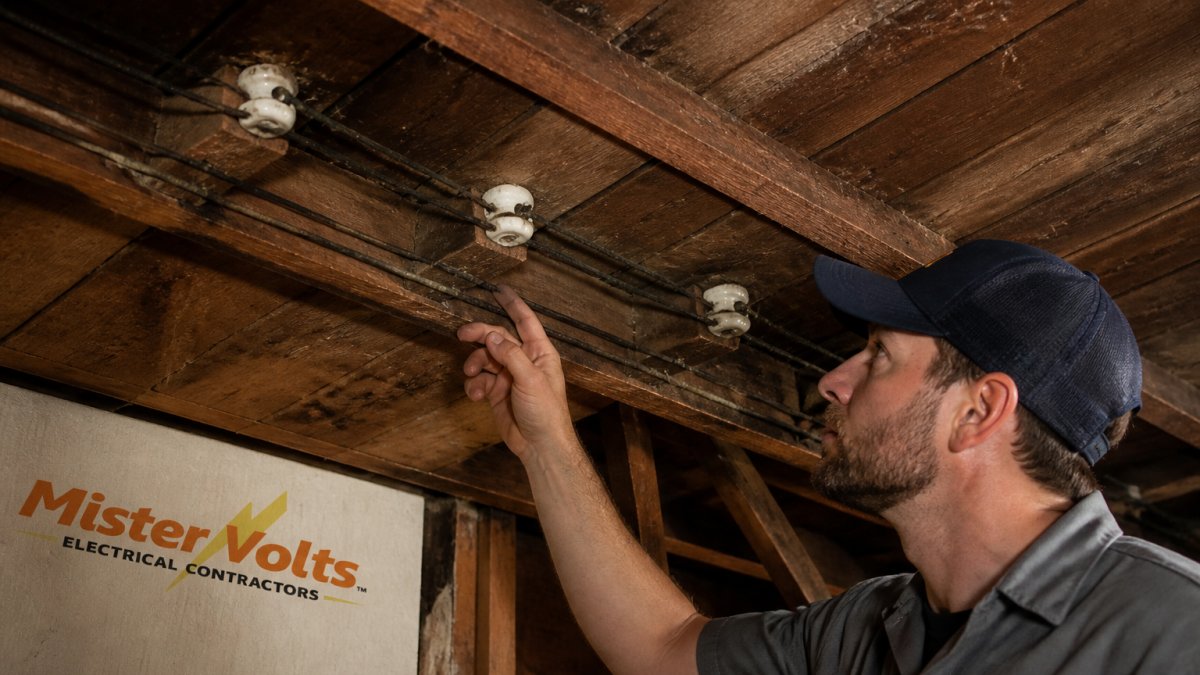
Knob and tube wiring is an outdated electrical system that uses ceramic knobs and porcelain tubes to route copper conductors through walls, attics, and crawl spaces. This system dominated residential construction from the 1880s through the 1930s and remained common into the 1950s. The ceramic knobs secure the wiring to framing members, while the porcelain tubes protect the conductors where they pass through joists or studs.
The system was economical for early electrification, using a single copper conductor with no ground wire. It worked adequately for the era's minimal electrical loads, primarily lighting and basic appliances.
Today, homes with knob and tube wiring face serious safety risks: insulation deteriorates over decades, and the system cannot handle modern electrical loads, which is why knob and tube wiring safe is not a realistic expectation.
Why Knob and Tube Wiring Cannot Handle Modern Appliances
Modern homes require 200+ amperes of service versus 30-60 amperes in the 1920s. Knob and tube circuits operate at limited amperage, and overloading creates dangerous overheating.
Understanding Appliance Draw and Circuit Limits
Knob and tube circuits typically operate at 15 or 20 amperes per circuit. Modern appliances draw power at rates that far exceed what these circuits can safely handle. An induction cooktop draws 40-50 amperes. A central air conditioning unit draws 15-20 amperes continuously. An electric water heater draws 20-30 amperes. A microwave draws 10-15 amperes. When you plug multiple devices into the same knob and tube circuit, the cumulative draw causes the conductors to overheat.
Appliance Compatibility Risk Tiers
Not all modern appliances pose equal risk on knob and tube wiring, though none are truly safe. Understanding the risk profile helps homeowners make informed temporary decisions while planning a rewire:
High-Risk (Strictly Incompatible): Induction cooktops, electric ranges, central air conditioning units, electric water heaters, electric heat pumps, and whole-home humidifiers. These appliances draw sustained amperage that will cause knob and tube conductors to overheat within hours or days of operation. Do not attempt to operate these on knob and tube circuits under any circumstances.
Medium-Risk (Functional but Dangerous): Dishwashers, electric clothes dryers, microwave ovens, and space heaters. These appliances can technically operate on knob and tube circuits for short periods, but they will cause noticeable heating of the wiring and insulation degradation. If you must use these appliances temporarily, operate them individually on dedicated circuits and monitor for signs of overheating (warm outlet covers, burning smell, discoloration around fixtures).
Lower-Risk (Least Problematic): Standard refrigerators, televisions, computers, lighting fixtures, and small appliances. These draw modest amperage and pose less immediate fire risk, though the system remains unsafe long-term.
Why Circuit Breakers Don't Protect You
When high-draw appliances are plugged into knob and tube wiring, conductors overheat and insulation breaks down. Older breaker panels often cannot reliably detect dangerous overloads at levels that cause insulation damage.
A 20-ampere breaker trips at 20 amperes, but 80-year-old insulation fails at lower temperatures than modern wire. The breaker may not trip until the wire is dangerously hot. Modern protection includes ground-fault detection that knob and tube cannot support.
The Ground Wire Problem
Knob and tube lacks a ground conductor, which modern code requires to dissipate fault currents and prevent electrical shock. Electricians cannot extend the system because it violates code.
The Lack of a Ground Wire and Fire Hazards
Knob and tube uses only two conductors (hot and neutral) instead of the three required by modern code. Without a ground wire, fault currents cannot be safely dissipated, creating electrocution and fire hazards.
Original rubber and cloth insulation becomes brittle and crumbly after 70-80 years. Rodents and insects chew through it, exposing live conductors. Deteriorated insulation increases arcing risk dramatically.
Arcing inside walls creates localized heat that ignites nearby combustibles. Fires may smolder for hours before detection. Insurance companies recognize this risk and often refuse to insure homes with active knob and tube wiring.
Signs of Outdated Electrical Wiring You Should Not Ignore
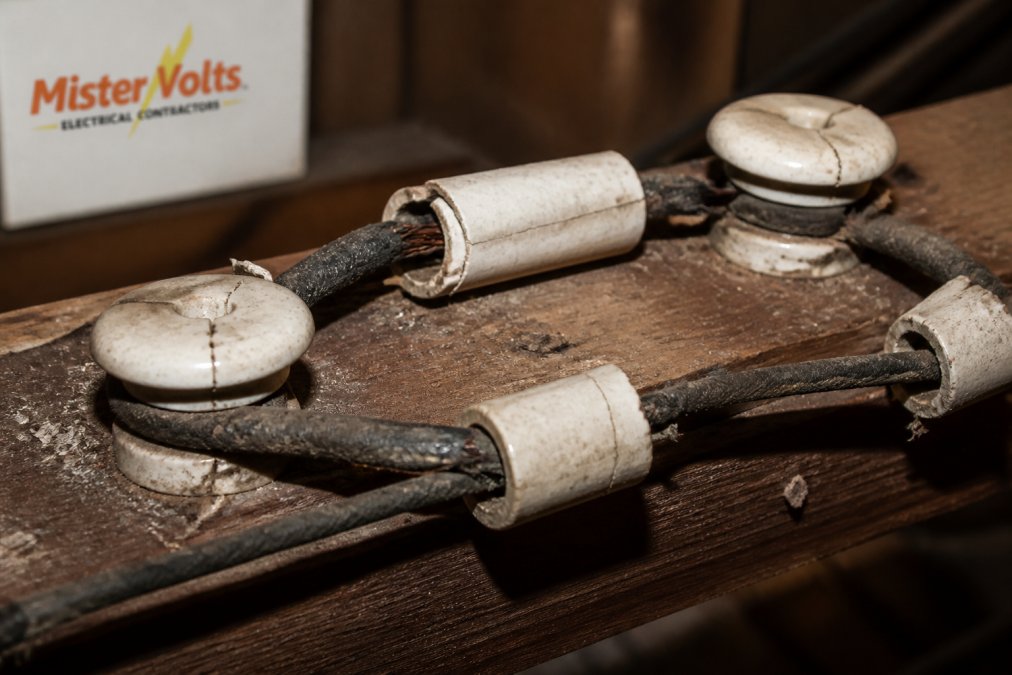
Look for ceramic knobs mounted on framing and porcelain tubes where wiring passes through joists in attics or crawl spaces. Conductors are typically cloth-wrapped or rubber-insulated copper, appearing brown or blackened with age.
Frequent circuit breaker trips or blown fuses indicate undersized wiring. Modern appliances draw more current than the original system anticipated.
Warm outlets, discoloration around boxes, or burning smells indicate dangerous overheating and precede electrical fires.
If electricians refuse to extend your wiring or modernize your panel, knob and tube is likely present. Modern code prohibits extending these systems.
Homes built before 1950 that have never been completely rewired likely still have knob and tube. Mixed systems combining old and new wiring compound safety risks.
https://mistervoltsusa.com/contact →
NEC Electrical Code Requirements for Old Homes
The NEC prohibits extending or modifying knob and tube systems in ways that would increase their use.
Current NEC requirements mandate a ground conductor on all circuits. Any panel upgrades, new circuits, or outlet installations must comply with current code. Knob and tube cannot meet these requirements.
Many jurisdictions require complete rewiring of homes with knob and tube before renovation approval, property transfer, or installation of high-draw appliances.
Home inspectors flag knob and tube as a safety concern. Lenders and appraisers expect it to be addressed before sale or refinance, affecting property value and financing ability.
Code compliance is a legal requirement. Concealing outdated wiring or hiring unlicensed contractors creates liability. Insurance claims may be denied if code violations are discovered after a fire.
Insurance Implications and Real Estate Impact
Many insurers refuse to write policies for homes with active knob and tube wiring or charge substantially higher premiums. Insurers ask about electrical system age and condition.
Disclosing knob and tube may result in policy denial or surcharges. Failing to disclose it risks claim denial if a fire occurs. Concealment constitutes fraud.
Buyers' inspectors identify knob and tube wiring, and buyers demand it be addressed before closing. Outdated wiring can reduce property value significantly or make it unsellable.
Lenders require properties to meet current electrical code before financing. Refinancing may require full rewiring as a loan condition.
The real estate market expects modern electrical systems. Properties with updated systems sell faster and command higher prices.
Knob and Tube Wiring Replacement Cost and Your Options
Rewiring a home is a substantial project, but it's the only safe and code-compliant long-term solution. The cost depends on the size of your home, the complexity of the layout, and local labor rates. For a typical single-family home, budget for a significant investment, though exact figures depend on your specific situation and local market conditions.
The process involves removing old knob and tube wiring and installing new conductors. Modern wiring includes the ground conductor, and the work must meet current NEC code. Your electrical panel will likely need an upgrade as well, since older panels cannot safely handle the amperage requirements of contemporary homes.
Interim Risk Reduction While You Plan a Full Rewire
If financial constraints, scheduling conflicts, or other factors mean you cannot rewire immediately, several interim strategies can reduce fire risk and improve safety while you plan the full replacement:
Load Management and Circuit Segregation: Identify which circuits are knob and tube and which appliances are connected to them. Avoid running high-draw appliances simultaneously on the same circuit. For example, do not run the dishwasher and microwave at the same time if they share a circuit. Spread usage across different circuits to keep individual circuit loads below 80 percent of the breaker rating. This reduces the likelihood of insulation overheating but does not eliminate the underlying hazard.
Dedicated Sub-Panel Installation: Have a licensed electrician install a modern sub-panel fed from your main electrical panel with new, code-compliant wiring. This sub-panel can serve specific high-demand areas like a kitchen or laundry room, allowing you to operate modern appliances safely in those zones while the rest of the home remains on knob and tube. This approach is more expensive than simple load management but significantly reduces risk in the areas where you use the most power.
Surge Protection and Arc-Fault Monitoring: Install whole-home surge protectors at your main electrical panel and arc-fault circuit interrupters (AFCIs) on knob and tube circuits. AFCIs detect dangerous arcing patterns that precede electrical fires and shut down the circuit before fire can start. While AFCIs cannot be retrofitted to true knob and tube circuits (due to the lack of a ground wire), some jurisdictions allow them on circuits that have been partially modernized.
Timing and Planning for Full Rewiring
Why Interim Measures Are Not a Long-Term Solution
Frequently Asked Questions
Is knob and tube wiring safe to use with modern appliances like microwaves and air conditioning units?
No. Knob and tube wiring was designed for electrical loads of 30 amps or less, typical of homes built before 1950. Modern appliances like air conditioning units, electric ranges, and high-powered microwaves draw significantly more amperage. The copper conductors overheat when carrying these loads, the thermal insulation breaks down, and the lack of a ground conductor creates shock hazards. Using modern appliances on knob and tube wiring increases fire risk substantially.
Will homeowners insurance cover a house with knob and tube wiring?
Most major insurance carriers will not insure homes with knob and tube wiring, or they charge significantly higher premiums and require it to be replaced within a specified timeframe. Some insurers require a professional electrician's inspection and a remediation plan before offering coverage. This is a critical issue when buying or selling a home, check with your insurer before purchasing a property with this outdated electrical system.
What are the main signs that knob and tube wiring needs to be replaced?
Look for visible porcelain knobs and ceramic tubes in your attic, basement, or walls; cracked or crumbling insulation around the copper conductors; a lack of grounding (two-prong outlets instead of three-prong); frequent circuit breaker trips; outlets that feel warm to the touch; or a burning smell near outlets or switches. If your home was built before 1950 and you haven't had an inspection, contact a licensed electrician for a safety assessment.
What does the National Electrical Code require for replacing knob and tube wiring?
The NEC (National Electrical Code) does not permit new installations of knob and tube wiring. If you have it, the NEC requires that any additions or modifications to the electrical system must bring the entire installation into compliance with current electrical code standards. This typically means full rewiring with modern cables, proper grounding, and a new electrical panel. Your local building inspector and a licensed electrician can explain the specific requirements for your home.