 listicle
10 Electrical Safety Tips for Seniors 2026
Table of Contents
- 10 Electrical Safety Tips for Seniors That Prevent Real Hazards
- Tip 1: Never Overload Outlets or Power Strips
- Tip 2: Inspect Cords and Wiring for Fraying or Damage
- Tip 3: Keep Electrical Equipment Away from Water
- Tip 4: Eliminate Tripping Hazards from Loose Cords
- Tip 5: Unplug Appliances You Are Not Using
- Tip 6: Upgrade Lighting to Reduce Electrical and Fall Risks
- Tip 7: Use Smart Home Devices to Monitor Electrical Safety
- Tip 8: Know Your Emergency Shut-Off Protocol
- Tip 9: Schedule a Professional Electrical Safety Inspection
- Tip 10: Address Age-Related Sensory Changes That Increase Risk
- Signs of Outdated Electrical Wiring Every Senior Should Recognize
- GFCI Outlet Installation Benefits for Senior Households
- When to Call a Licensed Electrician Instead of Waiting
- Frequently Asked Questions
Last Updated: August 24, 2026
10 Electrical Safety Tips for Seniors That Prevent Real Hazards
Electrical hazards are among the most preventable causes of home fires and injuries, yet many households overlook the specific risks that increase with age. This guide covers 10 electrical safety tips designed specifically for seniors, along with what to watch for in older wiring and when to call a licensed electrician before a small problem becomes a serious one.

Most electrical hazards in senior households are not dramatic failures but slow-developing problems that compound over time, making them harder to detect.
| Tip | Primary Hazard | Quick Action |
|---|---|---|
| Never overload outlets | Electrical fire, short circuit | Limit to one high-draw appliance per outlet |
| Inspect cords for fraying | Electric shock, fire | Replace any cord with visible damage |
| Keep equipment away from water | Electrocution | Install GFCI outlets in wet areas |
| Eliminate tripping hazards | Fall injury, cord damage | Route cords along walls, use cord covers |
| Unplug unused appliances | Phantom load, fire risk | Unplug before leaving a room or sleeping |
| Upgrade lighting | Falls, missed hazards | Add LED fixtures and night lights |
| Use smart home devices | Undetected faults | Install smart plugs with energy monitoring |
| Know emergency shut-off | Delayed response to fire | Label breaker panel, practice protocol |
| Schedule professional inspection | Hidden wiring faults | Annual inspection for homes 20+ years old |
| Address sensory changes | Missed warning signs | Use visual and auditory alert devices |
Tip 1: Never Overload Outlets or Power Strips
Overloaded circuits are one of the most common causes of residential electrical fires. Every outlet and power strip has a maximum electrical load it can safely handle, and exceeding that load generates heat that can ignite surrounding materials.
Plug only one high-draw appliance, such as a space heater, microwave, or hair dryer, into a single outlet. Power strips are designed for low-draw devices like lamps and phone chargers, not for daisy-chaining multiple appliances. Using a surge protector does not increase available voltage or amperage; it only protects connected devices from power spikes.
How to check your load:
- Identify which devices are plugged into each circuit
- Avoid running a space heater and hair dryer on the same circuit simultaneously
- If a breaker trips repeatedly, that circuit is being overloaded
Tip 2: Inspect Cords and Wiring for Fraying or Damage
Frayed cords are a direct path to electric shock or electrical fire. Insulation degrades over time, particularly on cords that run under rugs, behind furniture, or near heat sources. Any cord showing cracked insulation, exposed copper wire, or discoloration at the plug end should be replaced, not repaired with electrical tape.
What to inspect:
- Check cords where they enter the plug and where they connect to the appliance (highest-stress points)
- Look for kinks, pinch marks, or areas where the outer jacket has worn through
- Examine wall outlets for scorch marks, which indicate arcing inside the outlet
According to the U.S. Consumer Product Safety Commission's home electrical safety guidance, damaged electrical cords and outlets are a leading contributor to home electrical fires each year.
Tip 3: Keep Electrical Equipment Away from Water
Water and electricity are an immediately dangerous combination. Ground fault circuit interrupters (GFCIs) exist specifically to prevent electrocution in areas where water and electrical outlets are in close proximity. Kitchens, bathrooms, garages, and outdoor areas are all required by the National Electrical Code to have GFCI protection in new construction.
Practical steps:
- Never use a plugged-in appliance near a sink, bathtub, or toilet
- Keep hair dryers, electric razors, and radios away from water sources
- If an outlet near water does not have a GFCI test/reset button, it should be upgraded
Tip 4: Eliminate Tripping Hazards from Loose Cords
Extension cord safety is about more than electrical load. Cords running across walkways are a fall risk, and falls are the leading cause of injury-related emergency room visits among adults over 65, according to the Centers for Disease Control and Prevention's older adult falls data.
Route cords along baseboards using cord covers or cable raceways. Avoid running extension cords under rugs, which traps heat and accelerates insulation breakdown. If a room consistently requires extension cords, adding permanent outlets is a better long-term solution.
Tip 5: Unplug Appliances You Are Not Using
Many appliances draw power continuously even when switched off. Beyond the energy cost, appliances left plugged in can become fire hazards if a wiring fault develops while unattended. Unplug small kitchen appliances after each use and unplug space heaters before leaving a room or going to sleep. For devices that are difficult to reach, smart plugs with remote control via smartphone or voice assistant make this practical without requiring physical access to the outlet.
Tip 6: Upgrade Lighting to Reduce Electrical and Fall Risks
Poor lighting is both an electrical hazard and a fall risk. Seniors are more likely to miss frayed cords, discolored outlets, or tripping hazards in low-light environments. LED fixtures use significantly less energy than incandescent bulbs, reducing electrical load on circuits and lowering the risk of overheating in enclosed fixtures. Motion-activated night lights in hallways and bathrooms address the specific risk of navigating in the dark at night.
Lighting improvements worth prioritizing:
- Motion-activated night lights in every hallway and bathroom
- LED replacements for all high-use fixtures
- Under-cabinet lighting in kitchens to improve visibility near appliances
Tip 7: Use Smart Home Devices to Monitor Electrical Safety
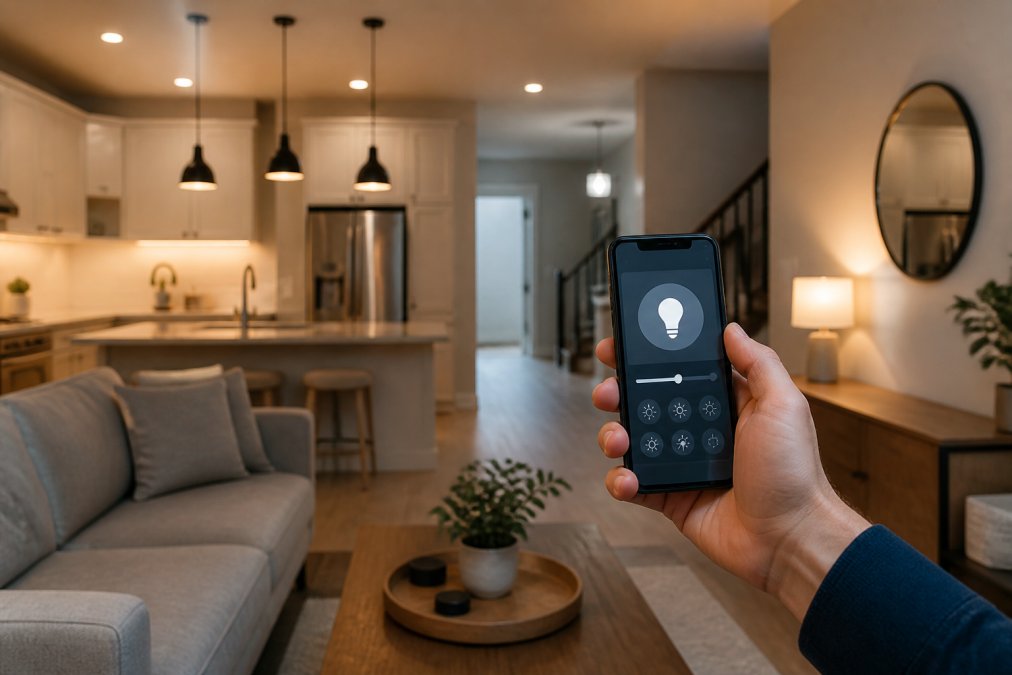
Smart plugs with energy monitoring can detect when an appliance is drawing abnormally high power, which often indicates an internal fault before any visible sign appears. Voice-controlled smart outlets allow seniors with limited mobility to turn off devices without physically reaching behind furniture. Smart smoke detectors that send alerts to a smartphone provide a faster emergency response than a standard alarm.
Tip 8: Know Your Emergency Shut-Off Protocol
Most households have never practiced what to do when an electrical emergency occurs. Every senior household should:
- Locate the main breaker panel and label every circuit clearly
- Identify the main disconnect switch that cuts power to the entire home
- Keep the path to the breaker panel clear and well-lit
- Post the local emergency number and utility company's outage line near the panel
- Practice reaching and operating the main disconnect so it is not unfamiliar under stress
If water has entered an electrical panel or if there is visible arcing, leave the building and call emergency services.
Tip 9: Schedule a Professional Electrical Safety Inspection
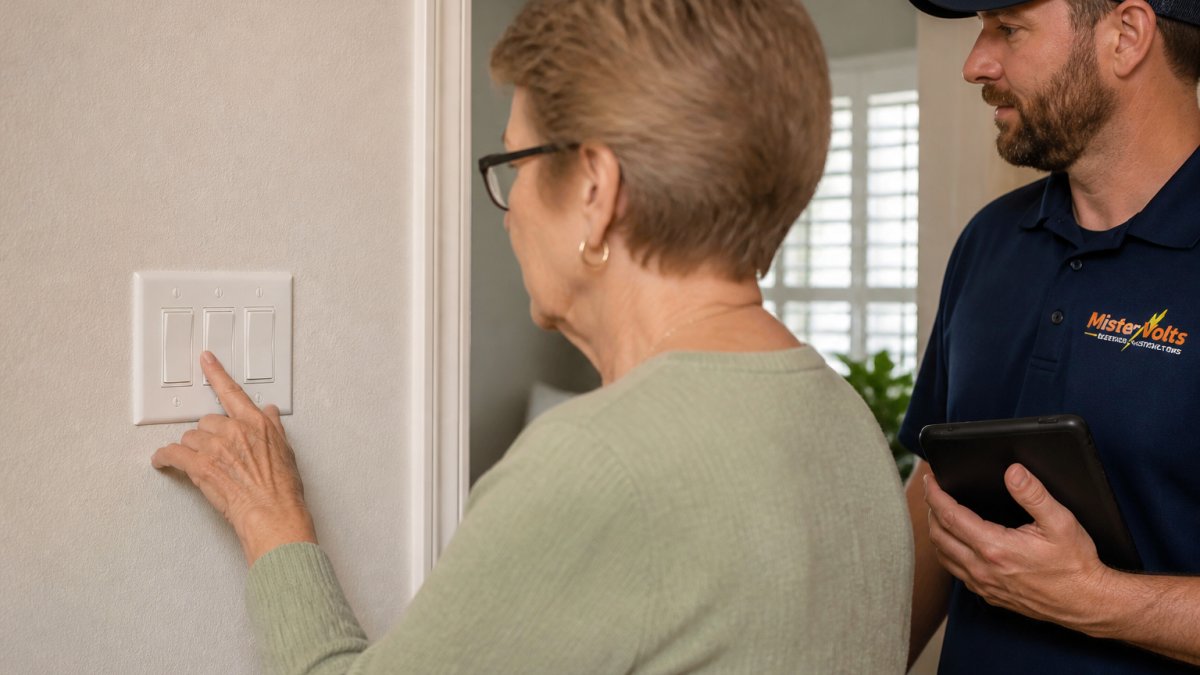
A home safety assessment by a licensed electrician is the single most effective preventative maintenance step available to senior homeowners. Many electrical hazards, including deteriorating insulation inside walls, undersized wiring, and outdated panel components, are not visible without professional inspection tools.
Homes built before 1980 are particularly likely to have wiring systems that do not meet current NEC standards. Aluminum branch circuit wiring, ungrounded outlets, and panels with known safety issues are all problems that a professional inspection will identify.
Tip 10: Address Age-Related Sensory Changes That Increase Risk
Age-related changes in vision, hearing, and sense of smell directly affect a person's ability to detect early warning signs of electrical hazards. Reduced visual acuity makes it harder to spot frayed cord insulation or discolored outlets. Diminished sense of smell can delay detection of the burning plastic odor that often precedes an electrical fire.
Practical responses:
- Install interconnected smoke and CO detectors with both audible alarms and visual strobes
- Use smart plugs that send phone notifications when power draw spikes
- Establish a monthly visual inspection routine with a family member or caregiver
- Request accessibility accommodations when scheduling professional inspections
According to the National Institute on Aging's home safety resources for older adults, adapting home environments to account for age-related changes is a core component of aging-in-place safety planning.
Signs of Outdated Electrical Wiring Every Senior Should Recognize
Knowing what to look for allows homeowners to act before a hazard develops.
Common indicators of wiring that needs professional evaluation:
- Flickering or dimming lights when appliances start up, suggesting circuits are undersized for the current load
- Frequently tripping breakers, particularly on circuits serving kitchen or bathroom appliances
- Outlets or switches that are warm to the touch, indicating resistance heating from a loose connection or degraded wiring
- Two-prong ungrounded outlets throughout the home, a sign of wiring that predates modern grounding standards
- Aluminum branch circuit wiring, identifiable by a silver color at outlet connections
- Burn marks or discoloration around any outlet or switch plate
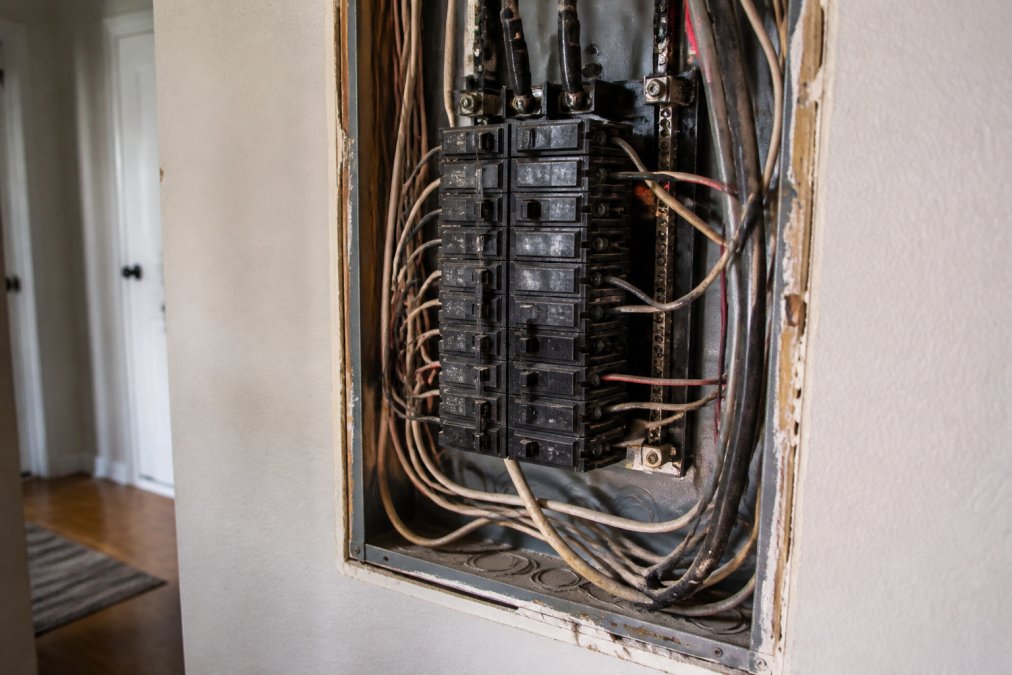
- A breaker panel with fuses instead of breakers, or a panel using brand names associated with recalled products
Homes with knob-and-tube wiring, standard before the 1950s, present particular concerns. That wiring system lacks a ground conductor and was not designed for modern appliance loads. If a home inspection reveals knob-and-tube wiring, a licensed electrician should assess its condition.
GFCI Outlet Installation Benefits for Senior Households
A ground fault circuit interrupter monitors the flow of electricity through a circuit and cuts power within milliseconds when it detects a ground fault, an unintended path for current that often runs through a person's body.
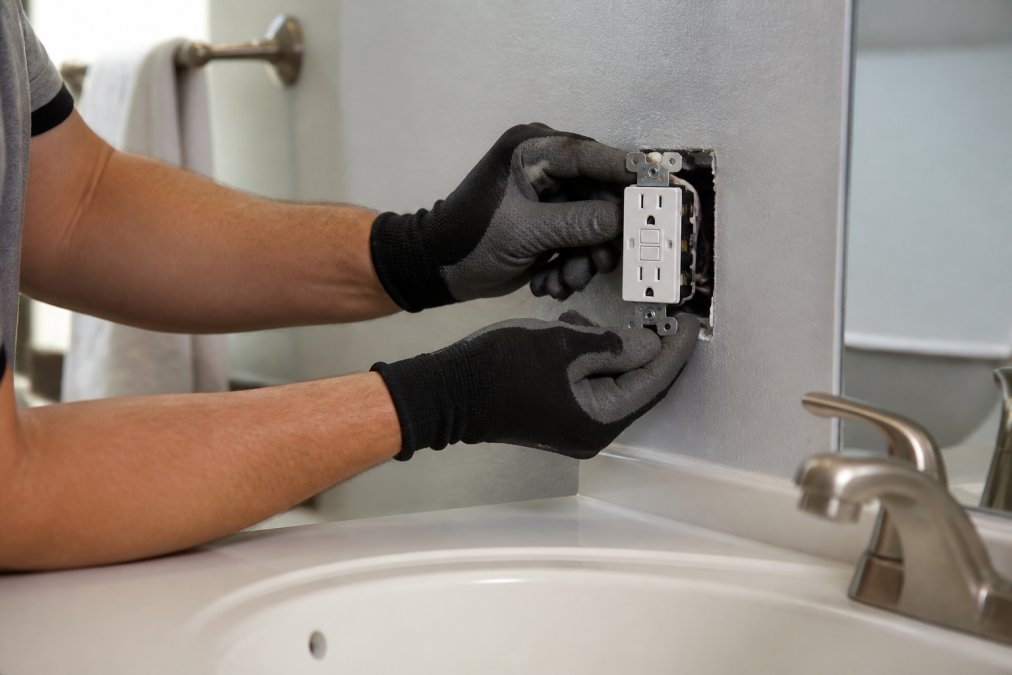
GFCI protection is most critical in wet areas: bathrooms, kitchens, laundry rooms, garages, and outdoor outlets. Older adults are more vulnerable to the effects of electric shock due to changes in skin resistance and cardiovascular sensitivity, meaning the same fault that might cause a younger person to feel a jolt can cause a more serious injury.
Where GFCI outlets should be installed:
- All bathroom outlets, including those serving countertop appliances
- Kitchen outlets within six feet of a sink
- Garage and basement outlets
- All outdoor outlets
- Any outlet in a laundry room or utility space
A single GFCI outlet can protect multiple downstream outlets on the same circuit when wired correctly. The National Fire Protection Association's electrical safety standards identifies GFCI protection as one of the most effective single interventions for preventing electrocution in residential settings.
When to Call a Licensed Electrician Instead of Waiting
The most common mistake homeowners make is treating electrical symptoms as minor inconveniences rather than diagnostic signals. A tripping breaker is not a nuisance; it is a circuit telling you it is overloaded or has a fault.
Call a licensed electrician immediately when you observe:
- Any outlet, switch, or breaker that shows burn marks or emits a burning smell
- A breaker that trips repeatedly on the same circuit, even after reducing the load
- Lights that flicker or dim when large appliances start
- Any outlet that sparks when a plug is inserted
- A panel that buzzes, hums, or feels warm to the touch
- Any situation where water has contacted electrical equipment
Electrical faults do not resolve on their own; they develop. The cost of a professional inspection is a fraction of the cost of fire damage or an emergency service call after a fault has progressed. Mister Volts provides residential electrical services for homeowners who need reliable, code-compliant work.
Electrical hazards in senior households are preventable, but prevention requires more than awareness. It requires a home that has been assessed, updated where needed, and maintained on a regular schedule. If your home is overdue for a professional electrical safety inspection, or if you have noticed any of the warning signs covered in this guide, the right move is to call a licensed electrician before the problem decides the timeline for you. Mister Volts offers electrical safety inspections, GFCI outlet installation, and panel assessments for residential clients. Get a competitive quote from the Mister Volts team and know exactly what your home's electrical system needs.
Frequently Asked Questions
Q: What are the most common electrical hazards for seniors at home?
A: The most common electrical hazards seniors face include overloaded outlets, frayed or damaged extension cords, missing GFCI protection near water sources, and outdated wiring that can no longer handle modern appliance loads. Tripping over loose cords is also a serious risk. Homes built before 1980 are especially likely to have wiring that does not meet current NEC standards. A professional electrical safety inspection can identify these problems before they cause a fire or electric shock.
Q: How can I tell if my home's electrical system needs an upgrade?
A: Common warning signs include circuit breakers that trip frequently, lights that flicker when appliances run, outlets that feel warm to the touch, a panel that still uses fuses instead of breakers, or aluminum branch-circuit wiring. Two-prong ungrounded outlets throughout the home are another indicator the system is outdated. If your home is more than 30 to 40 years old and has never had a panel upgrade, scheduling an inspection with a licensed electrician is the safest next step.
Q: Are there specific electrical safety devices recommended for seniors?
A: GFCI outlets are the top recommendation for any room near water, including bathrooms, kitchens, and garages. Arc-fault circuit interrupters (AFCIs) protect against electrical fires caused by damaged wiring inside walls. Smart plugs with energy monitoring can alert family members to unusual power consumption patterns. Tamper-resistant outlets reduce shock risk. These devices are all code-compliant under the NEC and can be installed by a licensed electrician during a single service visit.
Q: How do I prevent electrical fires in my home?
A: Start by not overloading circuits or using extension cords as permanent wiring. Replace any cord with cracked insulation or exposed copper immediately. Have your electrical panel inspected if it is more than 20 years old. Install AFCI breakers, which detect the arc-fault conditions that start most home electrical fires. Keep combustible materials away from outlets and light fixtures. Smoke detectors on every level of the home, tested monthly, are your last line of defense if a fire does start.
Q: Why is it important to have a professional electrical inspection?
A: A licensed electrician can identify wiring defects, overloaded circuits, and code violations that are invisible to the homeowner. Many electrical fires start inside walls from conditions that show no outward signs. An inspection also documents whether your home meets current NEC requirements, which matters for insurance coverage and resale value. For seniors living alone, a formal inspection every few years provides peace of mind and a written checklist of any repairs needed before small problems become emergencies.