 How-to
Hiring a Licensed Electrician for Panel Upgrades: A Homeowner's Guide
Last Updated: November 3, 2026
Quick Summary
Hire a licensed electrician for panel upgrades because the job touches the utility connection, the main breaker and every circuit in the home. Verify the state license, confirm insurance directly, and make sure the electrician pulls the permit in the company's name so the work passes inspection.
- Verify the electrician's state license with the licensing board before signing any contract.
- Confirm liability and workers' compensation insurance directly with the insurer or agent.
- The licensed electrician should pull the permit in the company's name.
- Get at least two written estimates that itemize the panel, breakers, permit and utility fees.
- Ask how the electrician will calculate your home's load and handle utility coordination.
Table of Contents
- Why a Panel Upgrade Calls for a Licensed Electrician
- Signs Your Home Needs a Panel Upgrade
- Questions to Ask an Electrician Before a Panel Upgrade
- How to Verify an Electrician's License
- Reading a Panel Upgrade Estimate Checklist
- Permits, Inspections and the Panel Upgrade Timeline
- Booking Your Panel Upgrade with Mister Volts
- Frequently Asked Questions
Why a Panel Upgrade Calls for a Licensed Electrician
A panel upgrade replaces the main service panel that distributes electricity through your home. It touches the utility connection, the main breaker and every circuit in the house. That is why it belongs with a licensed electrician rather than a weekend handyman, and why hiring the right person matters so much for panel upgrades.
Electricians hold state licenses that show they have passed exams and met experience requirements. A licensed electrician also understands the National Electrical Code, which sets the baseline for safe wiring in most of the country. Mister Volts provides licensed electricians for residential and commercial panel work throughout Macon, Perry and Warner Robins. Our residential page lists electrical panel upgrade service for Middle Georgia homes and related work.
Employment for electricians is expected to keep growing (Electricians : Occupational Outlook Handbook: : U.S. Bureau of Labor Statistics). The U.S. Bureau of Labor Statistics projections for electricians project 9% growth from 2025 to 2035, so skilled electricians will stay in demand for years to come.
Signs Your Home Needs a Panel Upgrade
Some warning signs point to a panel that has reached its limit. Our eight warning signs that point to a panel needing prompt attention or a planned upgrade walks through each symptom in detail. Flickering lights when a large appliance starts, breakers that trip often, and warm or buzzing panel covers all deserve prompt attention. Our guide to when flickering lights and limited capacity call for an upgrade assessment explains what to look for. Adding an electric range, a heat pump or an EV charger can also push an older panel past its capacity.
Homes with older fuse boxes or panels from manufacturers with known defects often need replacement, even when nothing has failed yet. Our guide on when to replace an electrical panel covers these signs in more detail, and our electrical system upgrade guide for modern homes explains how the upgrade fits into a larger renovation.
If you notice burning smells, scorched outlets or sparks at the panel, turn off the main breaker if it is safe to do so and call a licensed electrician right away.
Questions to Ask an Electrician Before a Panel Upgrade
Before you sign anything, ask a few direct questions. Ask whether the electrician holds a current state license and whether the company carries liability insurance and workers' compensation. Ask who pulls the permit, since that determines who is responsible for the work passing inspection.
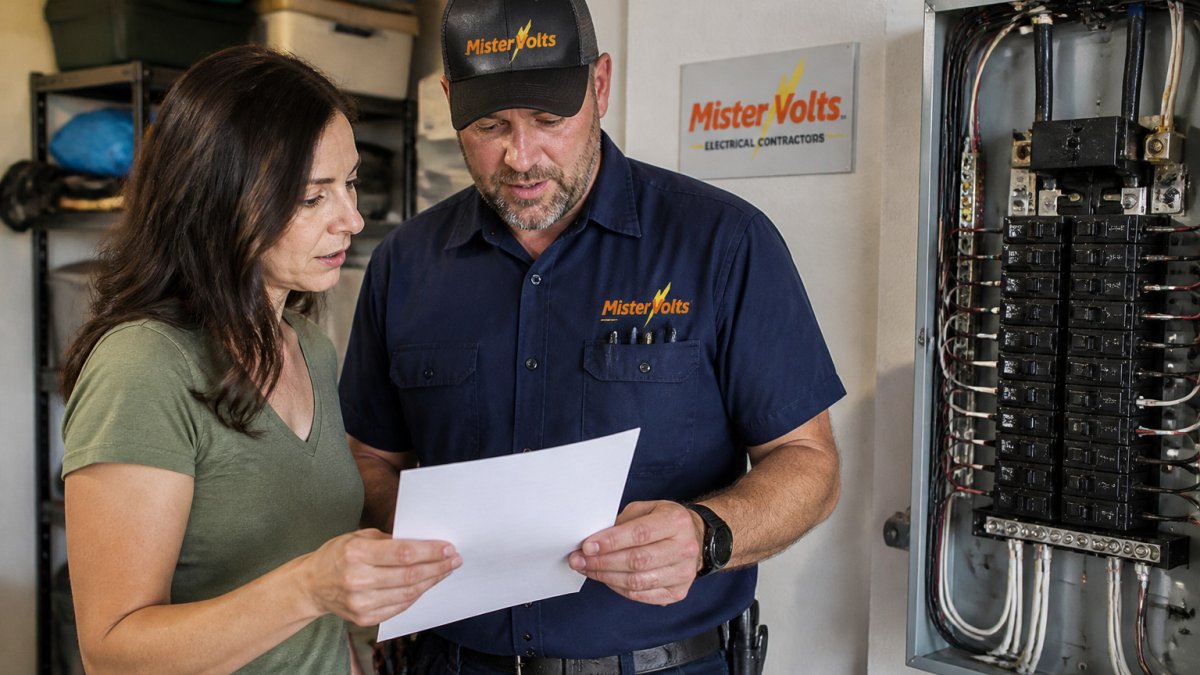
Ask how the electrician will calculate your home's load, and whether they will check grounding and bonding as part of the job. Finally, ask how they handle utility coordination, because the utility company must disconnect and reconnect power during the swap.
A clear, written answer to each of these questions is a good sign. Vague answers are a reason to keep looking.
How to Verify an Electrician's License
Every state has a licensing board that maintains a public lookup for electricians and electrical contractors. The lookup is free, takes a few minutes, and is the single best defense against unqualified or uninsured work.
Work through these steps before you sign:
- Find the right board. Search for your state's electrical licensing board or contractor licensing agency. Many states split the electrical contractor license (the business) from the journeyman or master electrician license (the individual), so confirm both.
- Look up the license number. Search by the electrician's name or license number. The record should show the license class, status (active or expired), expiration date and any disciplinary actions.
- Match the license class to the job. A panel upgrade is service work that typically requires a master or electrical contractor license, not an apprentice or journeyman working alone. Confirm the person signing the contract holds the right class.
- Confirm the business registration. Check that the company is registered to do business in your state, since a valid individual license does not guarantee the business entity is in good standing.
- Verify insurance directly. Ask for a certificate of insurance showing general liability and workers' compensation, and have it emailed from the insurer or agent rather than forwarded by the contractor. Call the agent's number on the certificate to confirm it is current.
Watch out: a certificate of insurance is easy to forge or to let lapse. Confirming coverage with the agent, not just reading the PDF, is what actually protects you if a worker is injured or the new panel causes damage.
A clean lookup should show an active license, the correct class, no unresolved disciplinary history and current insurance. If any of those is missing, keep looking. Verifying takes about five minutes and protects you from unpermitted installs, code violations and uninsured losses that can follow the panel for years.
Reading a Panel Upgrade Estimate Checklist
A good estimate lists each part of the job rather than a single lump sum. Check that it includes the new panel, main breaker, service entrance conductors, grounding electrode system, circuit breakers and labor. It should also name the permit fee, the inspection and any utility disconnect or reconnect charges.
Watch for estimates that leave out permit or utility fees, since those costs often appear later as surprise add-ons. Ask whether the price includes patching drywall or moving existing circuits. Get at least two written estimates so you can compare scope, not just price.
Pricing depends on the size of your service, the condition of existing wiring and the permit requirements in your area, so contact Mister Volts for a quote specific to your home. Our knob and tube panel upgrade cost guide shows what typically drives the price.
Permits, Inspections and the Panel Upgrade Timeline
Most panel upgrades require an electrical permit from the local building or electrical department, and the permit is the backbone of the whole job. The licensed electrician typically pulls it in the company's name, because the permit is tied to the license holder who is responsible for the work passing inspection. Ask for the permit number before work starts and confirm it is open and posted.
A typical sequence looks like this:
- Permit application. The electrician submits the scope, the service size and the panel location to the local authority having jurisdiction (AHJ). Many jurisdictions now accept online applications, and simple residential panel swaps are often approved in a few business days.
- Utility coordination. The utility must disconnect the existing service and later reconnect the new one. The electrician schedules the disconnect, and the utility may require its own service request or meter work order. This step is where schedules most often slip.
- The swap. Power is off, the old panel and service entrance conductors come out, and the new panel, main breaker, grounding electrode system and branch breakers go in.
- Rough and final inspection. The inspector checks grounding and bonding, conductor sizing, breaker listing, working clearances and labeling. Some jurisdictions require a separate rough-in inspection before the panel is closed up.
- Utility reconnect and meter seal. Only after the inspection passes does the utility restore power and reseal the meter.
Timelines vary by jurisdiction. Permit approval can take a few days to a few weeks depending on backlogs, and utility scheduling adds its own lead time. Plan for the panel to be without power for most of a day during the swap, and build in buffer for inspection and reconnect.
Watch out: if the electrician asks you to pull the permit as the homeowner, that shifts legal responsibility for code compliance onto you and can complicate insurance and resale disclosures. A licensed contractor should be willing to pull the permit in the company's name.
Skipping the permit is a real risk. Unpermitted panel work can surface during a home sale inspection, trigger a requirement to open walls for a retroactive inspection, or give an insurer grounds to deny a claim tied to the panel. Insist on a permitted, inspected installation and keep the inspection record with your home documents.
The steps below summarise the permitted panel upgrade sequence and the typical timing for each stage.
| Step | What happens | Timing |
|---|---|---|
| Permit application | Electrician submits scope, service size and panel location to the AHJ | A few business days for simple residential swaps |
| Utility coordination | Utility disconnects the existing service and later reconnects the new one | Often where schedules slip |
| The swap | Old panel and service entrance conductors removed; new panel and breakers installed | Most of a day without power |
| Rough and final inspection | Inspector checks grounding, bonding, conductor sizing and labeling | Depends on jurisdiction |
| Utility reconnect | Power restored and meter resealed after inspection passes | After inspection approval |
Booking Your Panel Upgrade with Mister Volts
If you are ready to move forward, Mister Volts can assess your existing panel and explain your options. Start a conversation with Mister Volts about your panel upgrade by phone or online. Our licensed electricians can help you understand the permit and inspection steps so you know the work meets code.
Our residential electrical services page lists the work we do for Middle Georgia homes, including panel upgrades, outlets, ceiling fans and generator installation. When you are ready, [contact Mister Volts to schedule a panel upgrade assessment | mistervoltsusa.com/contact].
Hiring a licensed electrician for your panel upgrade protects your home, your insurance and your family. Mister Volts is ready to help with a safe, permitted installation built to last.
Frequently Asked Questions
How much do electricians charge for a panel upgrade?
Pricing depends on the size of the service upgrade, the condition of the existing wiring, local permit fees and how much work the home needs. Mister Volts does not publish a standard rate for panel upgrades because every property is different. The most reliable way to compare costs is to request a written, itemized estimate from each licensed electrician you are considering, then check that each estimate covers the same scope of work. Ask for current pricing directly through the Mister Volts contact page.
How do I verify an electrician's license?
Ask the electrician for their license number and confirm it with the licensing authority in your state. In Georgia, electrical contractors are licensed through the state's contractor licensing board, so you can look up the license status and any complaints or disciplinary history online. Also ask for proof of liability insurance and workers' compensation coverage, and confirm that the license covers the type of work you need. A licensed electrician should be willing to provide these details before you sign a contract.
Does a panel upgrade require a permit and inspection?
In most jurisdictions, replacing or upgrading a main electrical panel requires a permit and a final inspection by the local building or electrical authority. A licensed electrician typically pulls the permit as part of the job and schedules the inspection once the work is complete. Skipping the permit can cause problems when you sell the home or file an insurance claim, so confirm with your electrician that the permit will be handled and that the final inspection is documented.