
 ultimate-guide
Hiring a Licensed Electrician for Kitchen Renovations
Table of Contents
- Why Hiring a Licensed Electrician for Kitchen Renovations Matters
- Kitchen Electrical Code Requirements NEC Compliance
- Electrical Permit Requirements for a Kitchen Remodel
- Hiring a Licensed Electrician Checklist: What to Ask Before You Sign
- Insurance and Liability Verification: What Most Homeowners Skip
- Cost Factors and Getting Accurate Project Estimates
- Electric Companies in Macon GA: How to Choose Locally
- Conclusion
- Frequently Asked Questions
Last Updated: September 18, 2026
Why Hiring a Licensed Electrician for Kitchen Renovations Matters
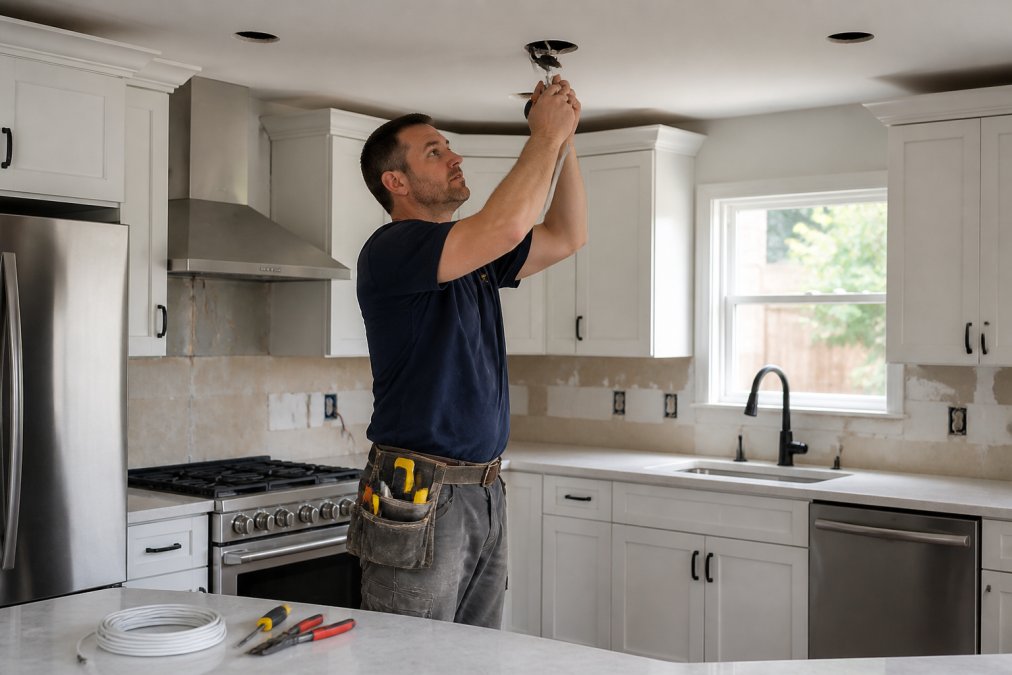
Hiring a licensed electrician for kitchen renovations is the most important decision you'll make before demo day, because kitchens combine water, heat, and heavy power draw in one room.
The stakes are higher than most people realize. Kitchen circuits feed refrigerators, dishwashers, garbage disposals, microwaves, and ranges, and each of those appliances has its own voltage and amperage requirements. A licensed electrician reads those requirements correctly, sizes the dedicated circuits, and installs GFCI outlets where the code demands them. An unlicensed handyman guesses. According to [the U.S.
Kitchen Electrical Code Requirements NEC Compliance
Kitchen electrical code requirements under NEC standards are strict for good reason, and they cover more than most homeowners expect. The National Electrical Code sets minimum standards for outlets, circuits, and protection devices, and local jurisdictions enforce them through inspection.
- GFCI protection for all countertop receptacles, plus outlets within six feet of a sink
- Dedicated circuits for the refrigerator, dishwasher, disposal, and microwave
- Two or more small-appliance circuits serving countertop outlets
- Tamper-resistant receptacles in most residential locations
- Proper box fill and wire gauge matched to each circuit's amperage
Electrical Permit Requirements for a Kitchen Remodel
Electrical permit requirements for a kitchen remodel exist to protect you, not slow you down. Most jurisdictions require a permit for new circuits, panel changes, and any work behind the walls, with inspections at two stages.
Hiring a Licensed Electrician Checklist: What to Ask Before You Sign
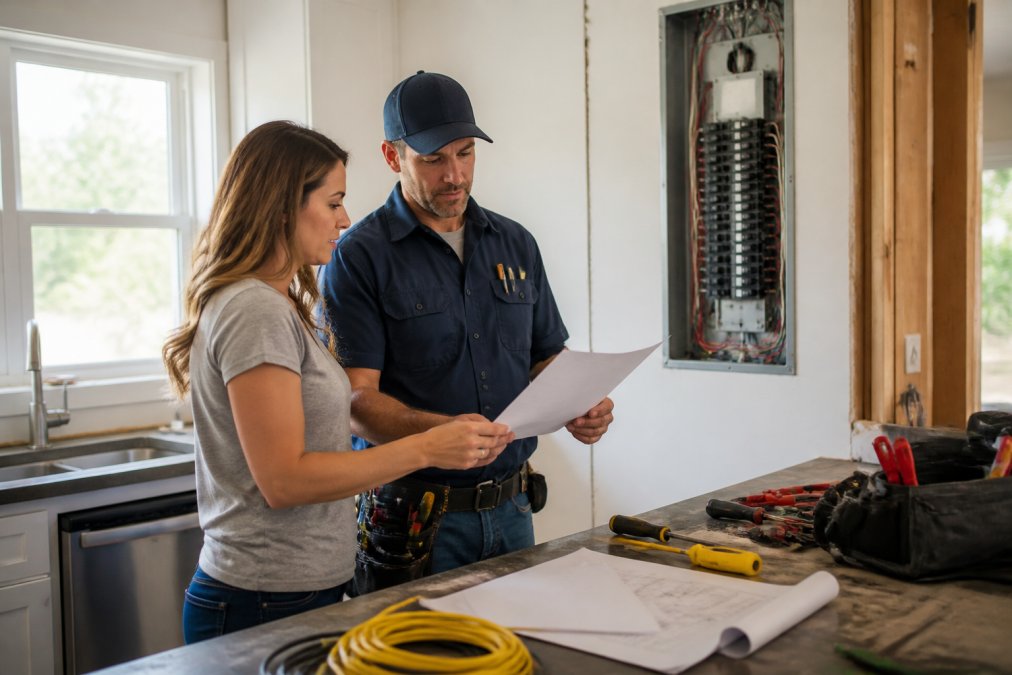
A hiring a licensed electrician checklist turns a stressful decision into a short, structured conversation. Use these questions before you sign anything, and don't accept verbal assurances in place of documentation.
- Can I see your state electrical license number?
- Will you pull the permit, and can I see it?
- Are you insured for both liability and workers' compensation?
- Who exactly will do the work, you or a subcontractor?
- What's the written scope of work, and what's excluded?
- How will you handle load calculations for my appliances?
- What's the project timeline, stage by stage?
- Do you offer a workmanship warranty, and for how long?
- Can I call two recent customers with similar kitchens?
Insurance and Liability Verification: What Most Homeowners Skip
Insurance and liability verification is the step nearly every homeowner skips, and it protects your finances if something goes wrong. A license proves competency; insurance proves the electrician can cover damage or injury without you footing the bill.
Cost Factors and Getting Accurate Project Estimates
Cost factors drive every kitchen electrical estimate, and understanding them helps you compare quotes fairly instead of chasing the lowest number. Pricing depends on scope, the condition of existing wiring, and whether the panel can handle the added load. The biggest variable homeowners underestimate is the load calculation, the math that decides whether your service can carry the new kitchen at all.
How a Load Calculation Actually Works
A load calculation is not a guess. A licensed electrician works from each appliance's nameplate ratings and applies the National Electrical Code demand factors. A modern kitchen stacks up quickly:
- An induction range on a 40- or 50-amp, 240-volt circuit
- A double wall oven on its own 30- to 50-amp, 240-volt circuit
- A countertop microwave on a dedicated 20-amp, 120-volt circuit
- A dishwasher and a garbage disposal, each on a dedicated 20-amp circuit
- A refrigerator on a dedicated 15- or 20-amp circuit
- Two or more 20-amp small-appliance circuits for countertop receptacles
The Main Cost Drivers
| Cost Factor | What Drives It | Why It Matters |
|---|---|---|
| Circuit additions | Number of dedicated circuits needed | More appliances mean more runs; each run is wire, breaker, box, and labor |
| Panel capacity | Available amperage and open breaker slots | A 100-amp panel feeding a new electric range usually needs a 200-amp upgrade |
| Service entrance | Age and condition of the mast, meter, and grounding | Older services often fail inspection and must be brought up to current code |
| Wiring condition | Age and material of existing wiring | Knob-and-tube or undersized aluminum wiring often needs replacement, not splicing |
| Fixture count | Recessed, under-cabinet, and pendant lighting | Each fixture is a box, a run, and labor; lighting layout adds design time |
| GFCI and AFCI devices | Required protection at countertops and on kitchen circuits | Devices cost more than standard receptacles and must be matched to the circuit |
| Permit and inspection | Local jurisdiction fees and inspection stages | Required for permitted work; fees vary by scope and jurisdiction |
Why Two Quotes for the Same Kitchen Differ
A real estimate starts with a load calculation and a panel walkthrough, not a square-foot guess. When two quotes for the same kitchen differ by thousands, the gap is usually one of four things: one counted the panel upgrade and the other didn't; one included AFCI and GFCI devices and the other assumed existing protection was adequate; one priced a permit and the other planned to skip it; or one scoped a dedicated circuit for every high-draw appliance and the other planned to share.
Electric Companies in Macon GA: How to Choose Locally
Choosing among electric companies in Macon GA comes down to three things: licensing, insurance, and a verifiable track record. Local matters because the electrician must know your jurisdiction's permit process and inspection schedule, and because you want someone still around if a problem surfaces months later.
https://mistervoltsusa.com/contact →
Verify the License, Don't Just Ask About It
A state electrical license number is public information. Ask for it, then look it up through the state licensing board's online lookup rather than accepting a photo of a card. Confirm the license is active, the classification matches the work (residential vs. commercial vs. master), and the name matches the person or company you're hiring. A license held by someone who won't be on your job isn't the same as one held by the electrician doing the work.
Verify Insurance the Same Way
Ask for a certificate of insurance and read it. You want general liability coverage and, if the electrician employs anyone, workers' compensation. Then call the insurer and confirm the policy is active and covers your project dates. A lapsed policy is worthless, and an uninsured worker injured in your kitchen can push the claim onto your homeowner's policy.
The Post-Renovation Inspection Checklist
This is the step most guides skip, and it's the one that protects your final payment. Before you release the last check, walk the kitchen with the electrician and confirm the following:
- Every countertop receptacle is GFCI-protected and trips when tested with the test/reset buttons
- Kitchen circuits are AFCI-protected where the code requires it
- Each high-draw appliance sits on its own dedicated circuit, labeled at the panel
- The panel directory is filled out and matches the actual circuits
- Breaker sizes match the wire gauge and the appliance nameplate ratings
- Receptacle and switch plates are flush, level, and secure
- All terminations are torqued to the manufacturer's specification (ask the electrician to confirm)
- The permit is closed and the final inspection has passed, with paperwork in hand
- Any drywall cuts or penetrations are sealed and fire-blocked where required
What Local Experience Actually Buys You
A company that mostly handles service calls may not be set up for a full renovation with load calculations and rough-in inspections. Look for a team that handles everything from minor repairs to major renovations, that range signals they can design the whole system rather than patch it.
Conclusion
A kitchen renovation is exciting right up until an inspection fails or a circuit can't handle the new range. Getting the electrical work right the first time means verifying the license, insurance, and permit before anyone touches a wire.
Frequently Asked Questions
Why is it mandatory to hire a licensed electrician for kitchen renovations?
Kitchen electrical work involves dedicated circuits, GFCI outlets, hardwired appliances, and panel load calculations that must meet NEC standards and local building codes. An unlicensed worker may not carry liability insurance or pull the required permits, leaving you responsible for failed inspections, unsafe wiring, and costly rework. Hiring a licensed electrician protects your home, your insurance coverage, and your renovation investment.
Do kitchen electrical upgrades require a permit and inspection?
Most kitchen remodels that add circuits, relocate outlets, install new hardwired appliances, or modify the electrical panel require a permit and at least one inspection. The electrical permit requirements for a kitchen remodel vary by jurisdiction, but the process typically includes a rough-in inspection before drywall goes up and a final walkthrough after completion. Skipping permits can void your homeowners insurance and complicate future home sales.
What electrical codes must be followed during a kitchen remodel?
Kitchen electrical code requirements under NEC standards include GFCI protection for all countertop outlets, dedicated 20-amp circuits for small appliances, separate circuits for the dishwasher and disposal, and proper voltage requirements for hardwired appliances like ranges and ovens. Under-cabinet lighting, outlets and switches, and any smart home integration must also meet current code. A licensed electrician will confirm which edition your local jurisdiction enforces.
How do I verify an electrician's license and insurance before hiring?
Ask for the license number and verify it through your state licensing board. Request a certificate of liability insurance and a workers compensation policy, then call the insurer to confirm the policy is active. A hiring a licensed electrician checklist should also include checking for a workmanship warranty, asking for references from similar kitchen renovation projects, and confirming the electrician will pull the electrical permit in their name.