
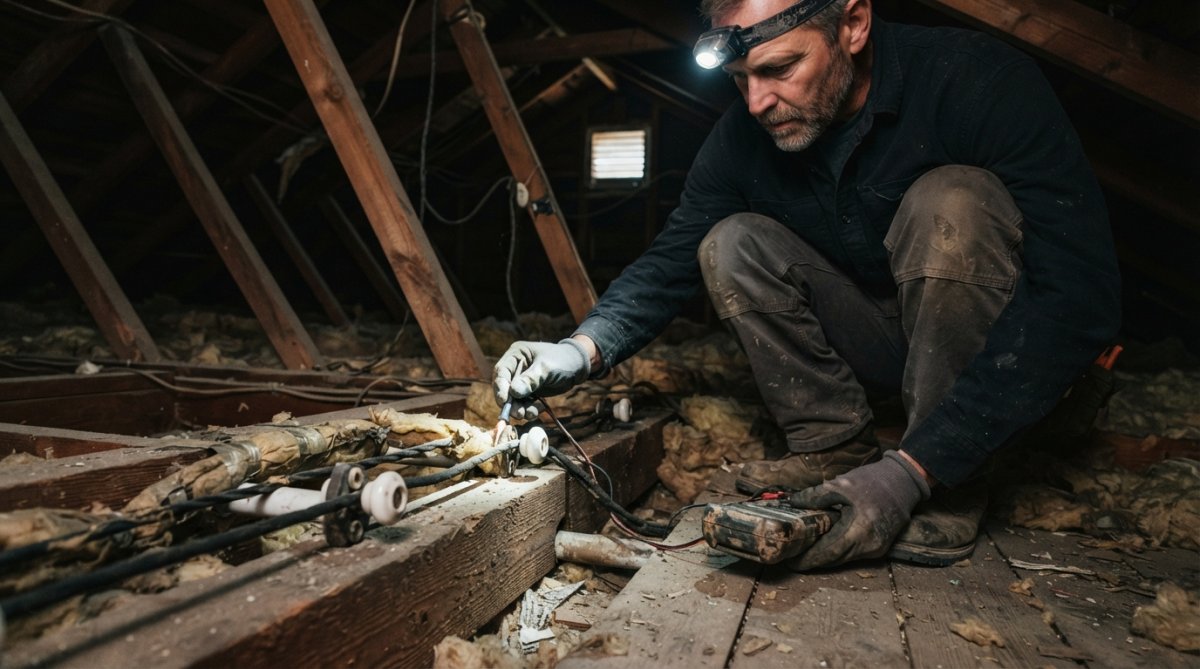
 how-to
How to Inspect Knob and Tube Wiring Before Buying
Table of Contents
- What Is Knob and Tube Wiring?
- Why Knob and Tube Wiring Is Dangerous
- How to Identify Knob and Tube Wiring
- Knob and Tube Wiring Insurance Issues
- Hiring a Licensed Electrician for Electrical Inspection
- Knob and Tube Wiring Replacement Cost
- Impact on Home Resale Value
- DIY Assessment vs. Professional Inspection
- Frequently Asked Questions
Last Updated: September 23, 2026
What Is Knob and Tube Wiring?
Knob and tube wiring is an outdated electrical system that was common in homes built before the 1950s. It consists of individual copper wires run through ceramic tubes and supported by porcelain knobs attached to wooden framing inside walls and attics.
Each wire ran separately with no ground wire. The system worked for light bulbs and basic appliances, but modern homes demand far more electrical capacity.
If you're buying an older home with knob and tube wiring, insurance companies often refuse coverage and lenders may require replacement before closing.
Why Knob and Tube Wiring Is Dangerous
Knob and tube wiring poses real safety risks: insulation deteriorates over decades, rodents chew through exposed wires, and bare copper contacting wood framing creates fire hazards.
The system lacks a ground wire, making electrical shocks more likely and preventing proper surge protection for modern appliances.
The wiring can't handle modern electrical loads. A typical 1920s home had 30-60 amp service versus the 100-200 amps modern homes need. Overloading creates heat buildup inside walls, compounding fire risk from deteriorated insulation.
The National Electrical Code standards for residential wiring require grounding and proper insulation, standards that knob and tube wiring cannot meet.
How to Identify Knob and Tube Wiring
Visual Identification for Non-Experts
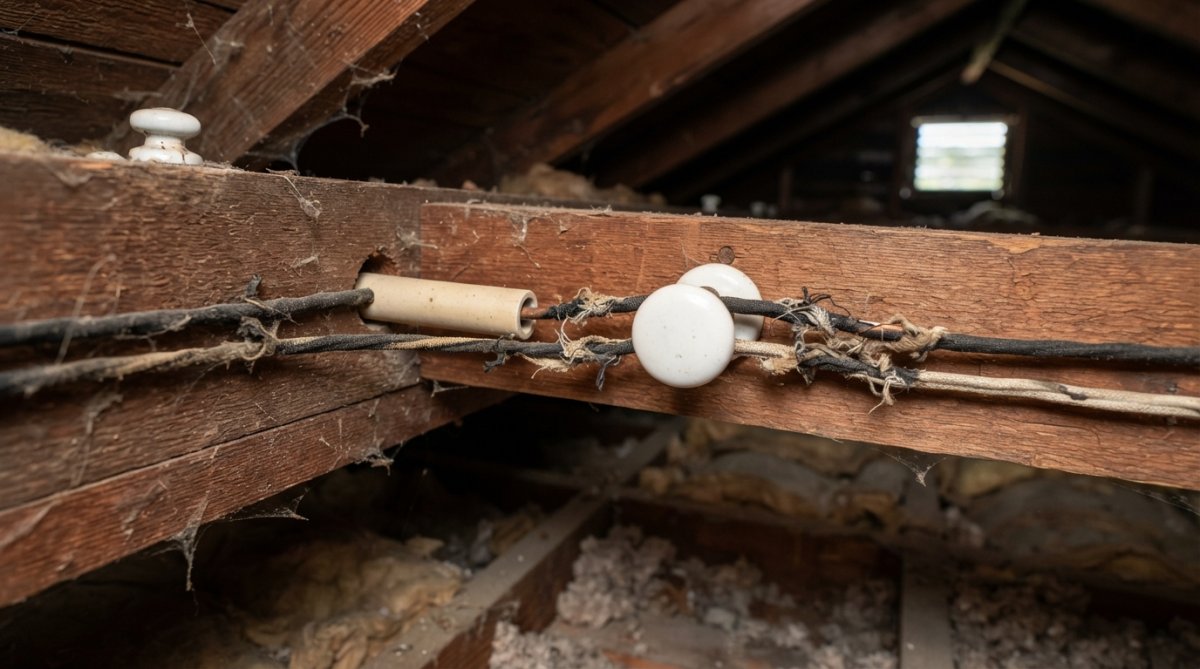
Knob and tube wiring uses individual copper conductors supported by ceramic knobs clamped to wooden framing and ceramic tubes where wires pass through structural members. Insulation is typically cloth, rubber, or early plastic, materials that deteriorate visibly over decades.
Here's what to look for during your walkthrough:
What to Look For:
- Round porcelain knobs attached to wooden framing
- Individual wires running separately (not grouped in cable)
- Ceramic tubes where wires pass through structural members
- Cloth or rubber insulation that's cracked, brittle, or missing
- No ground wire (only two conductors instead of three)
- Pre-1960s fuse boxes or breaker panels
- Knob and tube running alongside modern Romex cable
Active vs. Abandoned: A Critical Distinction
Many homes have been partially updated with new circuits in modern Romex while old circuits remain abandoned in walls. This distinction matters enormously for insurance and negotiation.
Active knob and tube wiring is still connected to the panel and carries current. Insurers and lenders require this to be replaced. Abandoned knob and tube wiring is disconnected from the panel but left in place. Some insurers accept this if all active circuits use modern wiring; others require removal.
To determine if wiring is active, trace it to the panel and check if a breaker or fuse controls it. Turn off the breaker, if power stops, it's active. Photograph abandoned wiring and note its location; removal costs less than replacement.
Where to Look During a Home Inspection
Start in the attic, the easiest place to spot knob and tube. Check the basement or crawl space along rim joists and where wires enter the home. Inspect behind accessible walls for individual wires with ceramic supports. Many homes have mixed systems, some circuits updated, others still using knob and tube, which creates code compliance issues and affects insurance and lending.
Printable Walkthrough Checklist
Use this checklist during your second showing or walkthrough to document what you find:
Location & Observations:
- Attic: Knob and tube present? (Yes / No / Uncertain)
- Basement/Crawl space: Knob and tube present? (Yes / No / Uncertain)
- Visible near electrical panel? (Yes / No / Uncertain)
- Wiring appears active or abandoned? (Active / Abandoned / Mixed / Unclear)
Physical Condition:
- Insulation intact or deteriorated? (Intact / Cracked / Missing / Severely damaged)
- Evidence of rodent damage? (Yes / No / Uncertain)
- Wires discolored or scorched? (Yes / No)
- Ceramic knobs or tubes broken? (Yes / No / Some)
System Scope:
- Entire home appears to use knob and tube? (Yes / No / Partial)
- Modern wiring also present? (Yes / No)
- Fuse box or breaker panel visible? (Type: _________)
- Panel appears original or updated? (Original / Updated)
Next Steps:
- Request electrician inspection before making offer
- Ask seller for any prior electrical work or permits
- Contact insurance agent with property address for pre-offer quote
This checklist gives you concrete data to share with your electrician and helps you make an informed decision before committing to an offer.
Knob and Tube Wiring Insurance Issues
Insurance is where knob and tube wiring becomes a deal-breaker. Many buyers discover too late that lenders require homeowners insurance and carriers won't issue policies for homes with knob and tube wiring.
How Insurers Classify Knob and Tube Risk
Insurers typically fall into three categories:
Category 1: Hard Decline, Some carriers automatically decline any home with active knob and tube wiring. You must rewire before closing or switch carriers.
The "Abandoned in Place" Loophole
Some insurers accept abandoned wiring (disconnected from the panel but left in place) because no current flows through deteriorated insulation. However, acceptance varies by state and carrier. Abandoned wiring requires the wire to be physically disconnected at the panel, all circuits rerouted to modern wiring, and written electrician documentation. Do not assume abandoned wiring is acceptable, call your agent and get approval in writing before closing.
Pre-Offer Insurance Shopping
Before making an offer, contact your insurance agent with the property address and ask: (1) Will you issue a policy as-is? (2) If it has active knob and tube, what's required? (3) What's the annual premium versus a fully rewired home? If your preferred carrier declines, ask your agent to shop other carriers. Get at least two quotes. Use this information in negotiations, if one carrier will insure for an extra $300/year, you have leverage to adjust your offer.
State Variations and Lender Requirements
Insurance regulations vary by state; some allow outright declines while others require coverage or referral to a high-risk pool. Your lender requires homeowners insurance before funding, if you can't get it, the lender won't close. Build extra time into your closing timeline if using a high-risk pool or specialty carrier.
Using Insurance as a Negotiation Tool
Use insurance quotes in negotiations. If a carrier will insure only if rewired, ask the seller for a rewire or credit. If a carrier will insure if abandoned, ask for a credit for abandonment instead of full rewire. If no carrier will insure, you have limited leverage, you can walk away or make an offer contingent on the seller rewiring.
Hiring a Licensed Electrician for Electrical Inspection
A licensed electrician can assess the full scope of what needs replacing. They'll identify whether you have partial knob and tube, full knob and tube, or a mix of systems.
- Trace wiring from the electrical panel through walls and attics
- Test insulation integrity with specialized equipment
- Identify any abandoned wiring that needs removal
- Assess whether the panel itself needs upgrading
- Provide a written report with repair recommendations
Knob and Tube Wiring Replacement Cost
Rewiring a home depends on size, layout, and how much of the system needs replacing. A small house might need less work than a large one. A simple layout costs less than a complex renovation.
Impact on Home Resale Value
A home with knob and tube wiring sells for less than comparable homes with modern wiring. Buyers know they'll face rewiring costs. Lenders know insurance will be an issue. Appraisers factor in the cost to fix it.
DIY Assessment vs. Professional Inspection
You can do a preliminary visual check yourself. Climb into the attic and look for ceramic knobs and porcelain tubes. Take photos. This costs nothing and gives you a starting point.
Here's the practical trade-off:
| Assessment Type | Cost | Accuracy | Detail Level | Negotiation Value |
|---|---|---|---|---|
| DIY Visual Check | Free | Low | Surface-level | Minimal |
| Professional Inspection | Competitive quotes | High | Complete | Strong |
Frequently Asked Questions
Is it safe to buy a house with knob and tube wiring?
Buying a house with knob and tube wiring carries significant electrical and fire hazards. The wiring lacks proper grounding, insulation can deteriorate over time, and the system cannot safely handle modern electrical loads. Many homeowners insurance carriers refuse to insure homes with this wiring, and those that do charge higher premiums. Before closing, have a licensed electrician perform a full safety assessment. Negotiate replacement or repair into your purchase agreement to protect your investment and safety.
How much does it cost to replace knob and tube wiring in a home?
Knob and tube wiring replacement cost depends on the home's size, layout, and how much wiring needs replacement. Contact Mister Volts for a detailed quote tailored to your property. Most homeowners should budget for a comprehensive rewiring project if the home still relies on this system, as partial replacements do not fully eliminate fire hazards or insurance complications.
Will insurance companies cover a home with knob and tube wiring?
Many major homeowners insurance carriers no longer insure homes with active knob and tube wiring due to fire risk. Some carriers may offer coverage but with exclusions or higher premiums. Your insurance underwriting process will likely require proof that the wiring has been replaced or professionally certified as safe. Check with your insurance agent before making an offer on a home with this wiring. This is a critical part of your real estate contingency planning.
Can knob and tube wiring be safely repaired or modified?
Knob and tube wiring should not be repaired or modified by homeowners or unlicensed contractors. The system's design makes it unsafe to patch or extend. A licensed electrician can assess whether partial upgrades are feasible, but full replacement is the only way to meet modern electrical code and eliminate fire hazards. Attempting DIY repairs or hiring unlicensed workers violates electrical code and creates serious safety risks.
Buying a home with knob and tube wiring presents a real challenge. You're facing insurance hurdles, lender requirements, and eventual rewiring costs. A professional electrical inspection removes the guesswork. Get one before you commit to a purchase, and use the findings to negotiate fairly with the seller. When it's time to rewire, Mister Volts delivers code-compliant electrical work with the precision and care your home deserves.