 ultimate-guide
Is a Whole House Surge Protector Worth It? (2026)
Table of Contents
- What Is a Whole House Surge Protector?
- How a Whole House Surge Protector Works
- Whole House Surge Protector Cost vs. Potential Damage
- Surge Protector vs Power Strip: Understanding the Difference
- NEC Surge Protection Requirements for New Homes
- Signs Your Home Needs Surge Protection
- Installation and Maintenance: What to Expect
- The Verdict: Is It Worth the Investment?
- Frequently Asked Questions
Last Updated: September 5, 2026
What Is a Whole House Surge Protector?
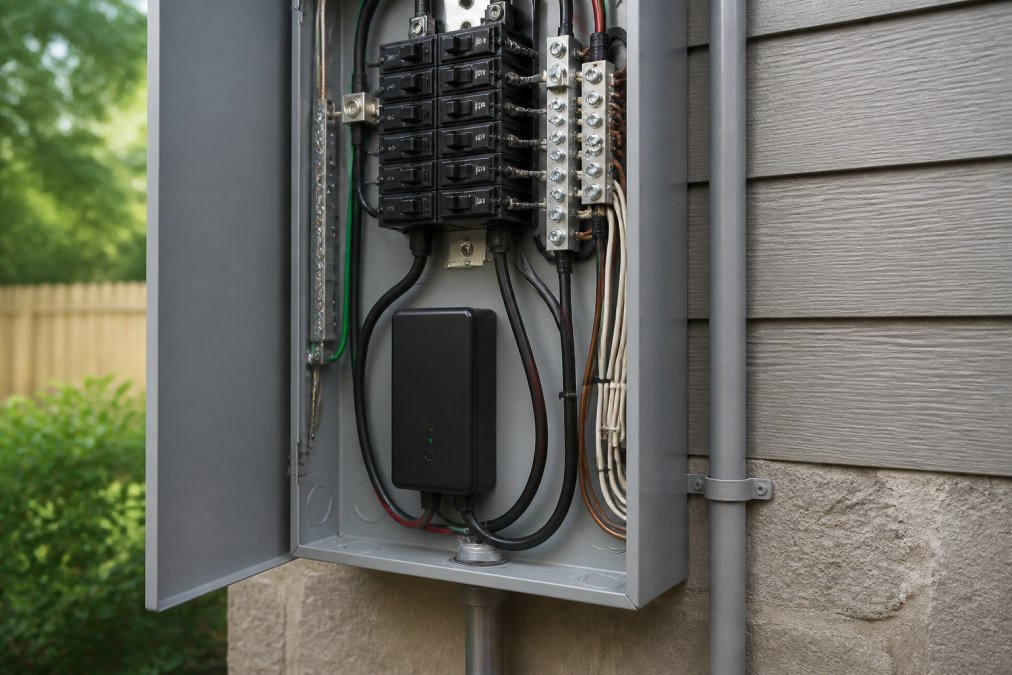
A whole house surge protector is a hardwired device installed at your main electrical panel that shields every circuit in your home from external voltage spikes. It acts as a gatekeeper between the utility grid and your internal wiring, intercepting surges before they reach your outlets, appliances, and sensitive electronics.
Unlike a power strip that guards only what's plugged into it, a whole house surge protector addresses the entire home, covering your HVAC system, refrigerator, entertainment center, and every USB charger in between.
How a Whole House Surge Protector Works
A whole house surge protector works by detecting an overvoltage event and diverting the excess energy safely to ground through a component called a metal oxide varistor (MOV). Under normal conditions, the MOV sits idle with high resistance. When a surge occurs, resistance drops dramatically, allowing the excess current to bypass your appliances and dissipate into the earth.
The key specification to understand is the joule rating, which measures how much energy the device can absorb before failing. Higher joule ratings mean longer protection lifespans. Clamping voltage matters too: this is the threshold at which the unit activates, and lower clamping voltages mean faster response times for your electronic equipment.
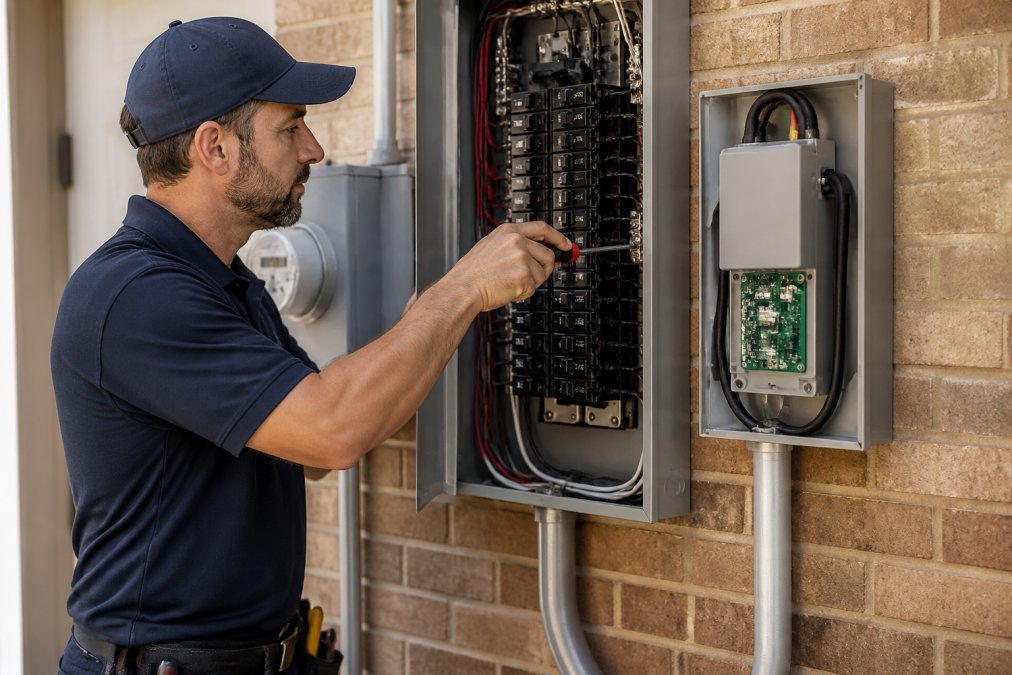
Surge protectors are sacrificial components: every significant surge degrades the MOV slightly, so the device has a finite lifespan.
Whole House Surge Protector Cost vs. Potential Damage
When weighing whether a whole house surge protector is worth the cost, the comparison that matters is equipment replacement versus protection. A single lightning strike can send thousands of volts through your wiring, and the damage often extends far beyond one outlet.
What You're Protecting: The Replacement Value at Risk
Consider what's at risk in a typical modern home:
- Refrigerator and freezer: $800-$2,500 for a standard unit with a compressor control board
- HVAC system: $4,000-$12,000 for a variable-speed unit with an inverter-driven compressor
- Entertainment system: $1,500-$5,000 for a 65-inch OLED television, soundbar, and gaming console
- Home office: $1,000-$3,000 for a computer, monitor, router, and network-attached storage
- Smart appliances: $1,200-$3,500 each for Wi-Fi-enabled washers, dryers, and ovens with touchscreen controls
- Well pump or pool equipment: $800-$2,000 for the control box and motor
Add these up, and a typical home with modern electronics carries $15,000-$30,000 in surge-vulnerable equipment. That's the baseline for your risk calculation.
The Cost of Protection: Equipment and Installation
Whole house surge protector pricing breaks down into two components: the device itself and professional installation.
Equipment costs by specification:
- Entry-level (20,000-40,000 joules, 120/240V, Type 2): $50-$150. These units handle minor grid fluctuations but may sacrifice themselves after a few significant events.
- Mid-range (40,000-80,000 joules, 120/240V, Type 2 with thermal protection): $150-$300. This is the sweet spot for most homes, offering a balance of absorption capacity and response speed.
- High-end (80,000+ joules, 120/240V, Type 1 or Type 2 with replaceable modules): $300-$600. These units often feature modular MOV cartridges that can be swapped without replacing the entire device.
Installation costs: A licensed electrician typically charges $200-$500 for installation, depending on your panel's accessibility and condition. The total project, equipment plus labor, usually lands between $250 and $800.
The Cost-Benefit Framework
If your home has $20,000 in vulnerable equipment and you face a 5-10% annual probability of a damaging surge, your expected annual loss is $1,000-$2,000. A $500 protection investment pays for itself within the first year if a surge occurs.
Why Joule Ratings Matter for Cost Decisions
The joule rating directly affects how long your protector lasts. A 40,000-joule unit can absorb roughly 40 surges of 1,000 joules each before its MOVs fail; a 20,000-joule unit would sacrifice itself after half as many events.
The Hidden Cost of Skipping Protection
Insurance claims for surge damage often carry deductibles of $1,000-$2,500, and many policies exclude "power surge" events entirely or cap payouts for electronics. A $500 surge protector eliminates that entire headache.
Surge Protector vs Power Strip: Understanding the Difference
A power strip is simply an extension cord with multiple outlets and often a circuit breaker. A surge protector, whether point-of-use or whole house, contains actual suppression components that absorb excess voltage.
Basic power strips offer zero surge suppression. Even genuine point-of-use surge protectors only guard devices plugged directly into them.
| Feature | Power Strip | Point-of-Use Protector | Whole House Protector |
|---|---|---|---|
| Surge suppression | None | Yes | Yes |
| Coverage area | One outlet | One device group | Entire home |
| Installation | Plug in | Plug in | Hardwired to panel |
| Protects wired-in appliances | No | No | Yes |
| Lifespan indicator | N/A | Some models | Status light on unit |
The real protection strategy uses both: a whole house surge protector as the first line of defense at the service entrance, paired with point-of-use protectors for high-value electronics that need the fastest clamping response.
NEC Surge Protection Requirements for New Homes
The National Electrical Code (NEC) has recognized the growing threat of surges to modern homes. Recent code cycles introduced requirements for surge protection in new residential construction.
The relevant provision requires that in new homes, a surge protection device must be installed to protect the entire dwelling unit. This applies to dwellings equipped with certain types of service equipment. For existing homes, the requirement doesn't mandate retrofits, but it establishes a clear baseline for what electrical professionals consider standard practice.
The National Electrical Code's surge protection provisions outline these requirements in detail, and any licensed electrician should be familiar with the current edition. If you're building a new home or planning a service panel upgrade, a whole house surge protector should be part of the plan from the start.
Signs Your Home Needs Surge Protection
Certain warning signs indicate your home is more vulnerable to surges than average. If you notice any of these, a whole house surge protector deserves serious consideration:
- You live in an area with frequent thunderstorms or utility grid fluctuations
- Your home has experienced flickering lights or unexplained electronic failures
- You've replaced appliances or electronics multiple times without an obvious cause
- Your neighborhood has overhead power lines susceptible to lightning strikes and falling branches
- You own smart appliances, electric vehicle charging equipment, or a home office with expensive gear
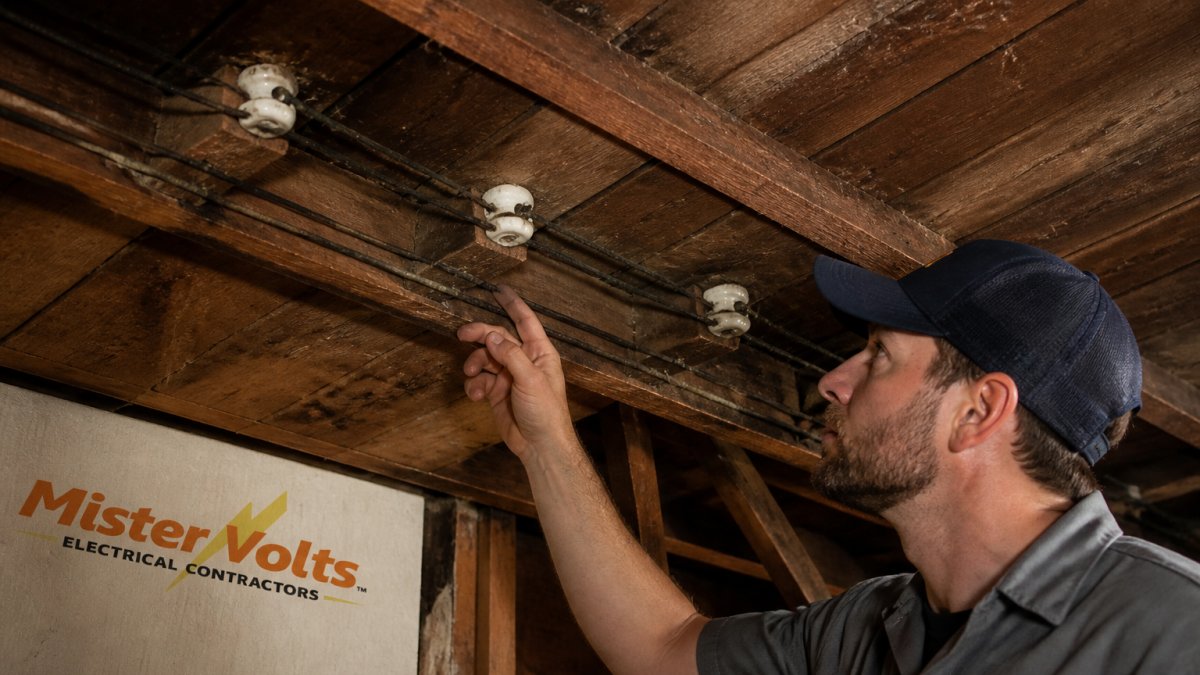
Another subtle indicator is the age of your electrical panel. Older panels may lack the grounding quality that modern surge protection relies on.
If you're already planning a renovation or addition, integrating surge protection during the electrical design phase is far simpler than retrofitting later.
Installation and Maintenance: What to Expect
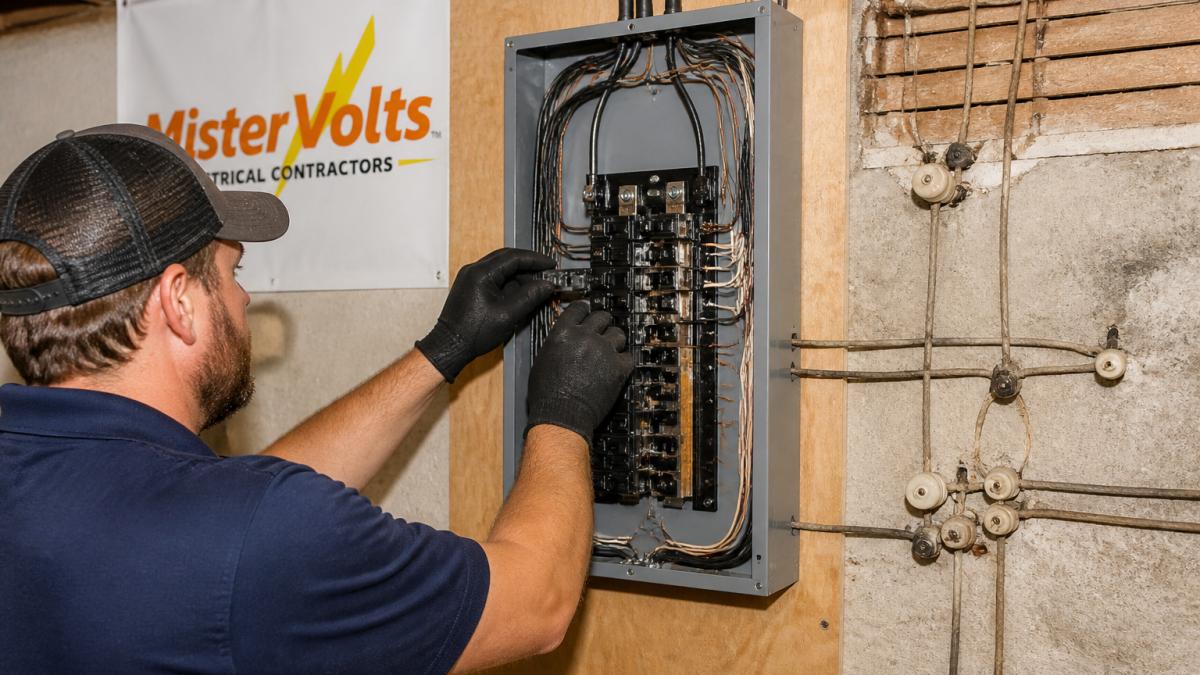
Installing a whole house surge protector is not a DIY project. It requires working inside your main electrical panel, which carries lethal voltage even with the main breaker off, the line side of the breaker remains energized.
The Installation Process Step by Step
- Panel assessment: The electrician checks your panel's amperage rating (100A, 150A, or 200A), available breaker spaces, and grounding system quality. A 200A panel requires a protector rated for that service size.
- Power shutdown: The main breaker is switched off, but the electrician still treats the panel as live because the utility feed remains energized.
- Mounting: The surge protector is mounted adjacent to the panel, either on the wall beside it or inside if space permits.
- Wiring: The unit connects to the main bus bars through a dedicated double-pole breaker (typically 50A) or directly to the lugs, depending on the manufacturer's instructions.
- Ground verification: The electrician tests the ground path, a poor ground connection renders the protector ineffective because surge energy needs a low-impedance path to earth.
- Re-energizing and testing: After power is restored, the electrician confirms the status indicator shows the unit is active and verifies proper voltage at the panel.
How to Tell If Your Protector Has 'Sacrificed' Itself
Surge protectors are sacrificial devices, every significant surge degrades the internal MOVs. Here's what you need to monitor:
Status indicator light: Most units have a small LED that glows green when protection is active. If it turns red, blinks, or goes dark, the MOVs have absorbed their maximum energy and the unit is no longer protecting your home, even though power still flows through it.
Audible alarm: Some higher-end models emit a beep when the protection module fails. If you hear an intermittent chirp from your panel area, check the indicator immediately.
Remote monitoring: Premium units (typically $300+) offer Wi-Fi connectivity that sends alerts to your smartphone when the device status changes.
Testing Your Protector's Functionality
While you shouldn't open the panel yourself, you can ask your electrician to perform these checks during annual inspections:
- Visual inspection: Look for signs of overheating, discoloration, or bulging on the unit's housing
- Ground continuity test: Verify the ground wire connection is tight and corrosion-free
- MOV resistance check: A multimeter test can confirm the MOVs are still within specification, a qualified electrician can perform this in minutes
The kA Rating and Lifespan Connection
The kA (kiloamp) rating indicates the maximum surge current the device can handle in a single event. A Type 2 protector with a 20kA rating can handle most grid-induced surges (typically 3-10kA), but a direct lightning strike can deliver 20-40kA.
Replacement Timeline
Most manufacturers rate their whole house surge protectors for 5-10 years of service life under normal conditions. A practical rule: replace the unit every 5 years or immediately after any major surge event, whichever comes first.
Surge protection guidance from the Electrical Safety Foundation International emphasizes that maintenance is minimal but not nonexistent. Preventative maintenance also includes ensuring your grounding system remains intact. Loose or corroded ground connections compromise the entire protection scheme. During routine electrical inspections, ask your electrician to verify the ground path and test the surge protector's functionality.
The Verdict: Is It Worth the Investment?
After weighing the whole house surge protector cost against the potential damage from a single voltage spike, the investment makes sense for most homeowners. The protection covers every outlet and hardwired appliance and requires minimal ongoing attention.
The one honest limitation is that no surge protector stops a direct lightning strike. But the vast majority of damaging surges come from smaller events, grid switching, nearby lightning, and utility fluctuations, which are exactly what a whole house surge protector is designed to handle.
For peace of mind and equipment protection, this is one of the highest-value upgrades available when you're already having electrical work done. The Consumer Product Safety Commission's guidance on power surges reinforces that prevention is far more cost-effective than repair.
If you're considering a whole house surge protector, the practical next step is having a licensed electrician assess your panel and grounding. At Mister Volts, our licensed electricians provide code-compliant installations for residential and commercial properties, with competitive quotes and workmanship that meets NEC standards. We handle everything from breaker panel upgrades to complete building wiring, so surge protection can be integrated into a broader electrical improvement plan.
Frequently Asked Questions
How much should a whole house surge protector cost?
The whole house surge protector cost varies based on the unit's joule rating and the complexity of the installation. The equipment itself is a modest investment, but professional installation by a licensed electrician is required for it to be effective and code-compliant. For an accurate price tailored to your electrical panel, contact Mister Volts for a competitive quote.
Can a whole house surge protector replace power strips?
No, a whole house surge protector and a power strip serve different purposes. A whole house unit, installed at your electrical panel, guards against large surges coming from the utility grid, like those from lightning strikes. Power strips protect individual devices from smaller, internal surges. A layered approach, using both, offers the best protection for your sensitive electronics.
What is the life expectancy of a whole house surge protector?
Most whole house surge protectors have a life expectancy of 5 to 10 years, but this depends on how many surges they absorb. Each significant surge degrades the unit's sacrificial component. Some models offer a visual or audible indicator when protection is lost. Checking the unit's status light periodically is a good preventative maintenance practice.
Do whole house surge protectors protect against lightning strikes?
They provide the first line of defense against a direct lightning strike, but no device can guarantee complete protection from a direct hit. A whole house unit is designed to handle the massive voltage spike from a nearby strike that enters through your service entrance. For the best defense, combine it with point-of-use protectors for your most valuable electronic equipment.
Choosing whether to install a whole house surge protector comes down to one question: what is the replacement value of everything plugged into your home? For most families, the answer justifies the investment many times over. Contact Mister Volts for a quote on whole house surge protection or a service panel assessment, and get started with a licensed electrician who respects your time and your budget.
Frequently Asked Questions
Q: How much should a whole house surge protector cost?
A: The whole house surge protector cost varies based on the unit's joule rating and the complexity of the installation. The equipment itself is a modest investment, but professional installation by a licensed electrician is required for it to be effective and code-compliant. For an accurate price tailored to your electrical panel, contact Mister Volts for a competitive quote.
Q: Can a whole house surge protector replace power strips?
A: No, a whole house surge protector and a power strip serve different purposes. A whole house unit, installed at your electrical panel, guards against large surges coming from the utility grid, like those from lightning strikes. Power strips protect individual devices from smaller, internal surges. A layered approach, using both, offers the best protection for your sensitive electronics.
Q: What is the life expectancy of a whole house surge protector?
A: Most whole house surge protectors have a life expectancy of 5 to 10 years, but this depends on how many surges they absorb. Each significant surge degrades the unit's sacrificial component. Some models offer a visual or audible indicator when protection is lost. Checking the unit's status light periodically is a good preventative maintenance practice.
Q: Do whole house surge protectors protect against lightning strikes?
A: They provide the first line of defense against a direct lightning strike, but no device can guarantee complete protection from a direct hit. A whole house unit is designed to handle the massive voltage spike from a nearby strike that enters through your service entrance. For the best defense, combine it with point-of-use protectors for your most valuable electronic equipment.