 how-to
Knob and Tube Wiring Replacement Cost Guide
Table of Contents
- What Is Knob and Tube Wiring?
- Is Knob and Tube Wiring a Fire Hazard?
- Electrical Rewiring Cost Per Square Foot: Full Breakdown
- Factors That Drive Your Total Replacement Cost
- How Long Does a Whole House Rewire Take?
- Insurance, Home Sales, and Knob and Tube Wiring
- Hiring a Licensed Electrician for Rewiring: What to Expect
- Frequently Asked Questions
Last Updated: August 23, 2026
What Is Knob and Tube Wiring?
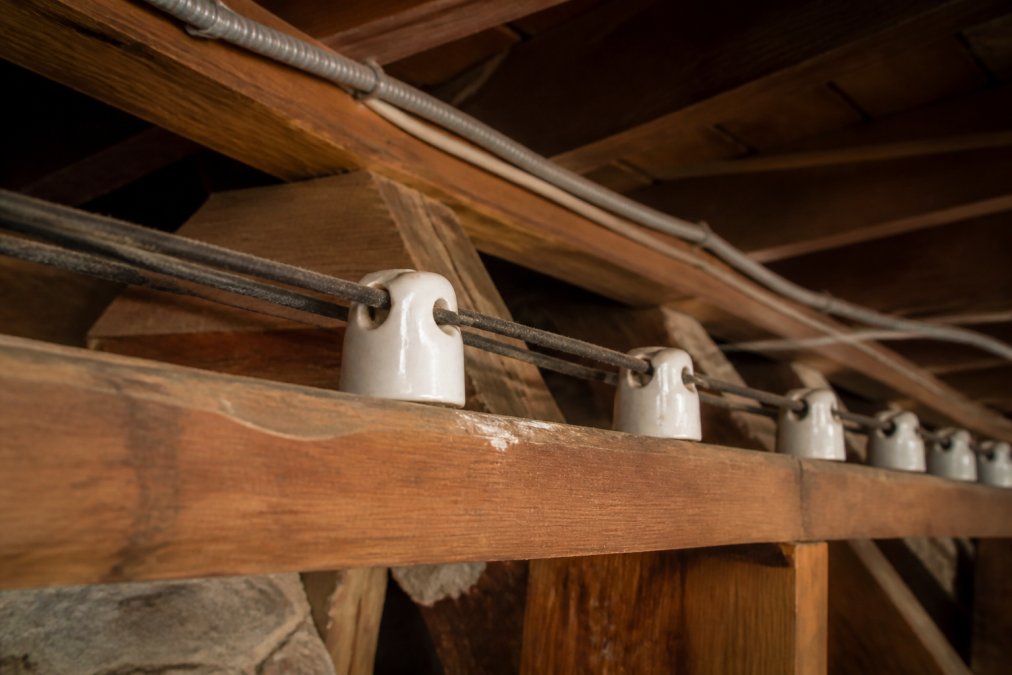
Knob and tube wiring is an early electrical system installed in American homes roughly between 1880 and the 1940s, consisting of single copper conductors routed through ceramic knobs nailed to framing and porcelain tubes threaded through joists and studs. The knobs hold wires away from wood surfaces, and the tubes protect wires where they pass through structural members.
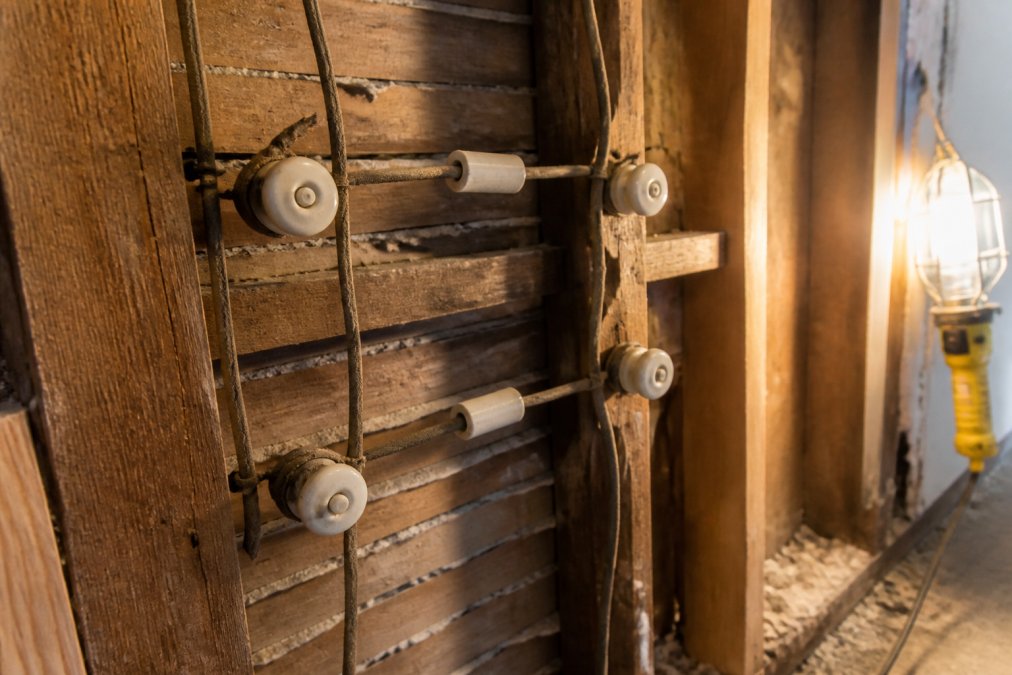
The system has no ground wire, meaning no safe path for fault current to discharge. It also relies on open-air cooling, assuming wires run through uninsulated attics and wall cavities with plenty of airflow. Modern homes have changed both of these fundamentals.
Functioning circuits and safe circuits are not the same thing. According to the U.S. Fire Administration's residential electrical fire data, electrical failures and malfunctions are among the leading causes of residential structure fires, with older wiring systems disproportionately represented.
If your home was built before 1950, knob and tube wiring is likely still present somewhere in the structure, even if partial rewiring has occurred.
Is Knob and Tube Wiring a Fire Hazard?
Knob and tube wiring is a documented fire and safety hazard. Licensed electricians and home inspectors flag it immediately. The core problems are the absence of a grounding conductor, the age and brittleness of cloth and rubber insulation, and the system's inability to handle modern electrical loads.
Homes in the 1920s ran a fraction of the amperage that today's kitchens, HVAC systems, and electronics demand. Overloading those circuits over decades causes insulation to degrade, connections to loosen, and heat to build up inside walls where no one can see it.
Why Insulation Contact Makes It Worse
Knob and tube wiring is designed to dissipate heat through open air. The moment someone installs blown-in insulation or spray foam around those wires, the system loses its only safety mechanism.
The National Electrical Code, Article 394 explicitly prohibits knob and tube wiring where it contacts thermal insulation. Many homes have had attic insulation added over the years without checking whether old wiring was still present. That combination, old wiring buried under insulation, is one of the most common scenarios electricians find during safety assessments. The insulation displacement creates sustained heat buildup that can ignite surrounding materials without visible warning signs.
Electrical Rewiring Cost Per Square Foot: Full Breakdown
Electrical rewiring cost per square foot varies considerably based on home size, construction type, and local labor rates. Mister Volts provides project-specific quotes rather than flat-rate pricing; the figures below reflect general industry ranges to help you frame your budget.
Most whole-house rewiring projects are priced by square footage, number of circuits, accessibility of walls and ceilings, and complexity of the electrical panel upgrade. Older homes with plaster walls cost more to rewire than those with drywall, because fishing wires through plaster requires more labor time and specialized technique.
| Factor | Lower-Cost Scenario | Higher-Cost Scenario |
|---|---|---|
| Wall material | Drywall | Plaster or lathe |
| Home size | Under 1,000 sq ft | Over 2,500 sq ft |
| Panel upgrade needed | Minor amperage increase | Full service entrance replacement |
| Accessibility | Open basement/attic | Finished ceilings throughout |
| Number of circuits | Standard residential load | Heavy appliances, EV charger, HVAC |
| Permit complexity | Straightforward | Requires multiple inspections |
Contact Mister Volts for a quote specific to your home's size, construction, and electrical load requirements. Generalized price-per-square-foot figures often exclude the variables that drive real costs.
Hidden Costs: Drywall Repair and Restoration
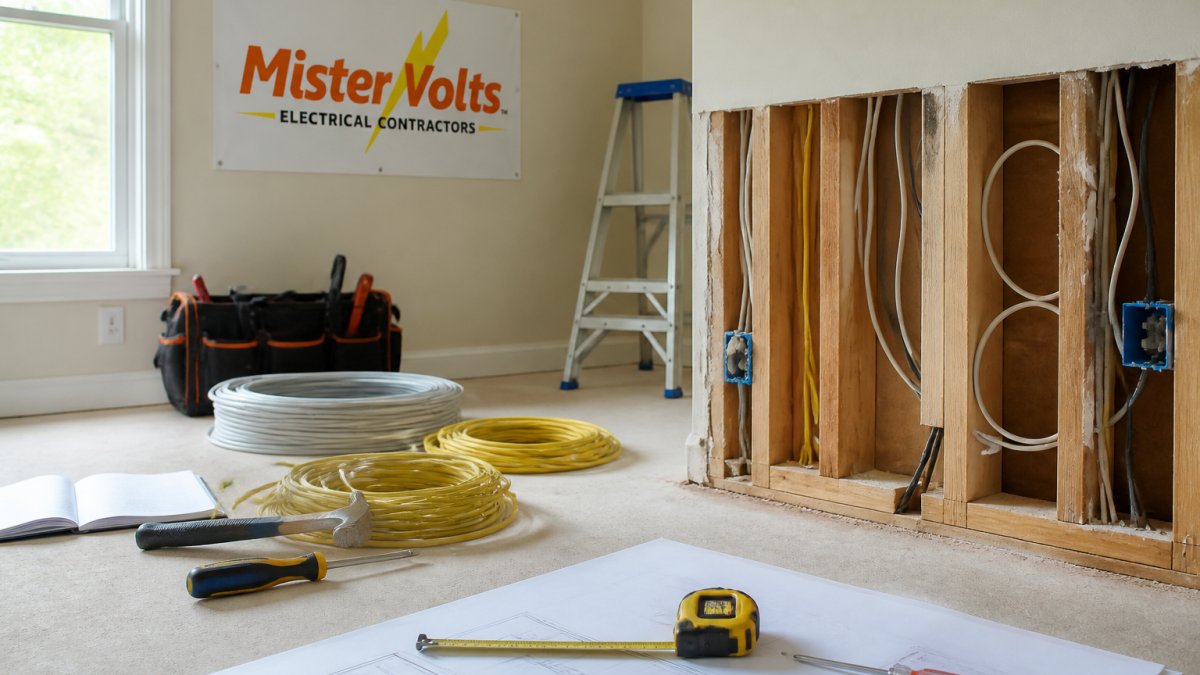
A whole-house rewire requires opening walls and ceilings to access junction boxes, route new copper wiring, and install grounded outlets and circuit breakers. Once the electrician is done, those openings must be closed.
Drywall repair, plastering, priming, and repainting add meaningful cost to the project. In older homes with textured or historically significant plaster walls, matching the original finish is a skilled trade job. Get a restoration estimate before the rewiring project starts. Some electrical contractors coordinate with drywall crews directly; others leave that to the homeowner.
The electrical work is often straightforward. The restoration work is where timelines and budgets slip.
Regional Labor Rate Variance
Labor rates for licensed electricians vary significantly across the country. Urban markets typically carry higher hourly rates than rural or suburban markets. A lower quote from an unlicensed contractor is rarely a bargain. NEC compliance, permitted work, and licensed electricians are not optional on a project of this scale.
Factors That Drive Your Total Replacement Cost
Several variables determine what a knob and tube wiring replacement will cost for a specific home:
- Total square footage: Larger homes require more wire, more labor hours, and more circuit breakers. This is the single largest cost driver.
- Number of circuits: Modern homes typically need more circuits than the original knob and tube system provided.
- Electrical panel upgrade: Most knob and tube homes need a panel replacement to handle modern amperage capacity.
- Wall and ceiling construction: Plaster walls require more labor to fish wires without causing structural damage.
- Permit fees and inspections: Permitted work is required. Permit fees vary by jurisdiction, and some municipalities require multiple inspection stages.
- Grounded outlets: Every outlet in the home needs replacement with grounded outlets.
- Load calculation complexity: Homes with high-demand equipment need a proper load calculation to size circuits correctly.
How Long Does a Whole House Rewire Take?
A whole-house rewire typically takes between three and ten days for a licensed electrical crew, depending on home size, construction type, and panel upgrade complexity. Smaller homes with accessible walls and attics fall toward the shorter end. Larger homes with finished plaster walls and complex load requirements take longer.
This timeline does not include drywall repair and repainting, which can add another week or more. Homeowners should plan to be without power to portions of the home during active work phases, though experienced crews sequence work to minimize disruption.
Fishing wires through plaster walls, installing junction boxes in finished spaces, and coordinating inspection stages all take time. Ask your electrical contractor for a realistic phase-by-phase schedule before work begins.
Insurance, Home Sales, and Knob and Tube Wiring
Knob and tube wiring creates two immediate practical problems: it makes homeowners insurance harder to obtain and maintain, and it complicates home sales.
Many insurance carriers will not write a new homeowners policy on a property with active knob and tube wiring. Others will insure the property but exclude electrical fires from coverage. According to the Insurance Information Institute on home electrical systems, outdated electrical systems are a primary underwriting concern for residential insurers. Some carriers will non-renew policies when knob and tube wiring is discovered.
On the home sale side, a home inspection will flag knob and tube wiring. Buyers will request remediation before closing, negotiate a price reduction, or walk away.
Insurance Negotiation Strategies
If your insurer has flagged knob and tube wiring but hasn't canceled your policy, you have a window to negotiate:
- Partial rewiring documentation: If the highest-risk areas (attic, kitchen, bathrooms) have been rewired, provide documentation to the carrier.
- Safety assessment letter: A licensed electrician's written assessment confirming the wiring is not in contact with insulation carries weight with underwriters.
- Escrow arrangements at closing: When selling, some transactions use an escrow holdback to fund rewiring after closing.
- Shop multiple carriers: Specialty insurers handle older homes more routinely than standard carriers.
Documentation is essential in any of these conversations. A vague assurance carries no weight. A written safety assessment from a licensed electrician does.
Hiring a Licensed Electrician for Rewiring: What to Expect
Hiring a licensed electrician for rewiring is not the same as hiring one for a repair call. A rewiring project requires planning, permitting, coordination with inspectors, and a clear scope of work before anyone picks up a wire stripper.
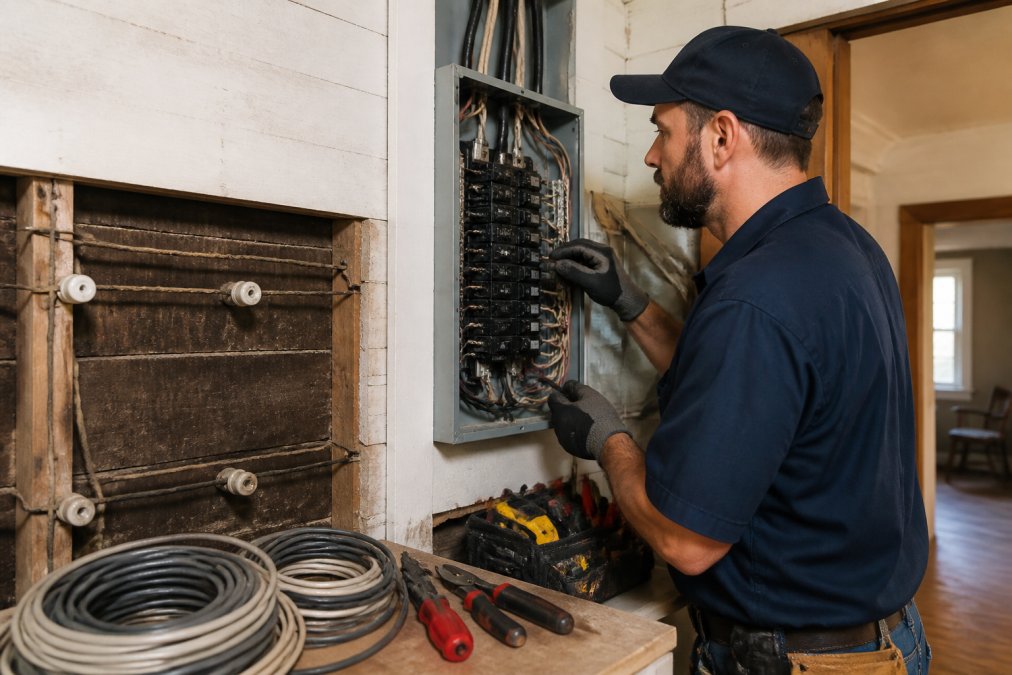
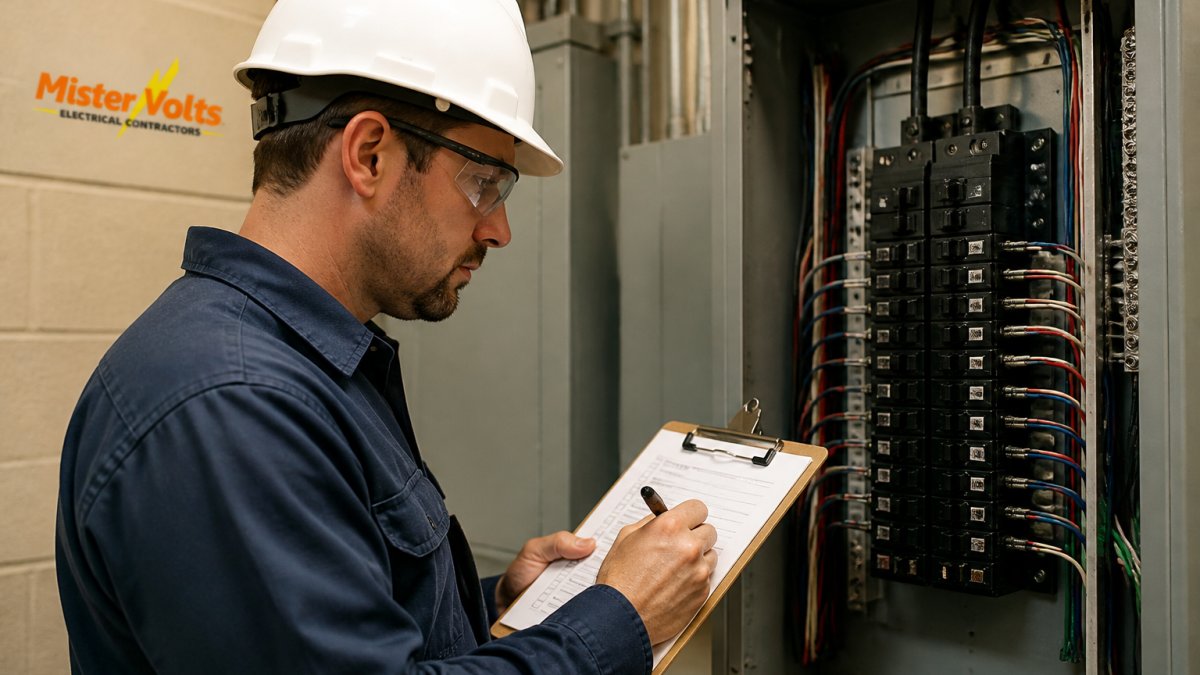
At Mister Volts, the process starts with a thorough on-site assessment before any quote is issued. That assessment identifies the extent of remaining knob and tube wiring, evaluates the current electrical panel, checks for insulation contact, and determines what the load calculation requires. A quote built on that information is accurate.
What to expect from the hiring and project process:
- Initial assessment: A licensed electrician walks the home, identifies all knob and tube circuits, checks the panel, and documents insulation contact issues.
- Scope of work and quote: A detailed written scope covering circuits, panel work, outlet replacements, permit costs, and timeline.
- Permit application: The contractor pulls required permits before work begins.
- Phased electrical work: Crews typically work room by room or floor by floor, maintaining partial power where possible.
- Inspection stages: Most jurisdictions require rough-in inspections before walls are closed and a final inspection after completion.
- Final documentation: You receive a copy of the passed inspection and permit closure for insurance purposes and future home sales.
DIY vs. Professional Assessment
A homeowner can reasonably identify ceramic knobs and cloth-wrapped wires in an accessible attic or basement, check whether insulation is in contact with visible wiring, and note which circuits appear original versus updated.
What requires a licensed electrician: any determination of whether the system is safe, any testing of circuit integrity, any work involving the electrical panel, and any conclusion submitted to an insurance company or home buyer. A visual inspection is useful for knowing what questions to ask. It is not a substitute for a professional safety assessment.
The Electrical Safety Foundation International's home electrical safety resources provides guidance on identifying warning signs of outdated electrical systems.
Knob and tube wiring replacement is one of the more consequential home improvement decisions a property owner makes. The safety risk is real, the insurance implications are immediate, and the cost of doing it correctly is always less than the cost of a fire or a failed home sale. Mister Volts brings licensed electricians, NEC-compliant workmanship, and detailed project scoping to every rewiring engagement. If your home has knob and tube wiring, the right next step is a professional evaluation. Get in touch with Mister Volts to schedule your assessment and receive an accurate, project-specific quote.
Frequently Asked Questions
Can a house be sold with knob and tube wiring?
Yes, a house with knob and tube wiring can be sold, but it complicates the process. Many lenders require the system to be replaced before approving a mortgage, and buyers may request a price reduction to cover replacement costs. A home inspection will flag the outdated electrical system, and some homeowners insurance carriers will refuse to cover the property or charge significantly higher premiums until the wiring is brought up to current NEC standards.
Is it worth replacing knob and tube wiring?
Replacing knob and tube wiring is worth it for most homeowners. The outdated system lacks grounded outlets, cannot safely handle modern amperage loads, and poses a genuine fire hazard when in contact with insulation. Replacement improves safety, lowers insurance costs, increases resale value, and brings the home into NEC compliance. The upfront cost of a whole-house rewire is significant, but the long-term risk and financial exposure of leaving the system in place is typically greater.
Why is knob and tube wiring considered a fire hazard?
Knob and tube wiring is a fire hazard for several reasons. The cloth-wrapped copper wiring degrades over decades, creating exposed conductors. The system has no ground wire, which means there is no safe path for fault current. Most critically, the wiring was designed to dissipate heat into open air. When thermal insulation is packed around it during energy upgrades, heat builds up and can ignite surrounding materials. Improper modifications by non-licensed electricians over the years add further risk.
Does homeowners insurance cover knob and tube wiring?
Most major homeowners insurance carriers either refuse to insure homes with active knob and tube wiring or charge substantially higher premiums. Some insurers will cover the home only if a licensed electrician certifies the system is in good condition, but this is becoming less common. The safest path is full replacement. Once the rewiring project is complete and permitted work is signed off, homeowners should contact their insurer immediately, as premiums often drop and previously unavailable coverage options open up.