
 how-to
Preventing Electrical Shocks in Senior Bathrooms and Kitchens
Table of Contents
- Why Senior Bathrooms and Kitchens Carry Higher Electrical Shock Risk
- What a GFCI Outlet Does and Why It Matters Near Water
- GFCI Outlet Installation Cost: What Homeowners Should Expect
- Signs of Faulty Wiring in Older Homes That Demand Attention
- Electrical Safety Checklist for Seniors: A Room-by-Room Guide
- Assistive Technology and Accessibility Upgrades That Reduce Shock Risk
- When to Call a Licensed Electrician for an Inspection
- Frequently Asked Questions
Last Updated: September 20, 2026
Why Senior Bathrooms and Kitchens Carry Higher Electrical Shock Risk
Older adults face a higher risk of electrical shocks at home, and the two most dangerous rooms are the ones they use every day. Water, grounded metal, and aging wiring meet in bathrooms and kitchens. That mix turns a small mistake into a serious hazard.
This guide from Mister Volts breaks down the risks room by room. It also covers GFCI protection, warning signs, and simple upgrades that lower the danger.
Bathrooms and kitchens share three things that raise shock risk:
- Water on floors, counters, and hands
- Metal pipes, sinks, and appliances that can carry current
- Outlets placed close to water sources
Age adds another layer. Thin skin, slower reflexes, and reduced grip strength make it harder to pull away from a live current. A shock that stuns a younger adult can cause a fall for someone older.
Older homes carry their own problems. Many were built before modern safety codes required ground fault protection near water. Deteriorated wiring, loose connections, and worn insulation only make it worse.
What a GFCI Outlet Does and Why It Matters Near Water
A ground fault circuit interrupter (GFCI) is an outlet that cuts power within a fraction of a second when it detects current leakage. It is the single most effective device for preventing electrical shocks in senior bathrooms and kitchens.
Here is how it works. The outlet monitors the current flowing out and back. If the two differ by even a small amount, the GFCI trips and shuts off power. That tiny difference often means current is traveling through a person instead of the wiring.
GFCIs belong anywhere water and electricity sit close together. The Electrical Safety Foundation guidance on GFCI protection recommends them for bathrooms, kitchens, laundry rooms, garages, and outdoor outlets. The National Electrical Code requirements has required GFCI protection in these wet locations for decades, and the rules have expanded over time.
How to Identify If You Already Have GFCI Protection
Look at the outlet itself. A GFCI has two small buttons between the slots: one labeled "TEST" and one labeled "RESET." Standard outlets have no buttons.
A few quick checks:
- Press the TEST button. The outlet should click off.
- Press RESET to restore power.
- If the outlet will not trip or reset, it needs attention.
- Check the circuit breaker panel too. Some homes use GFCI breakers instead of outlets.
Test every GFCI near water once a month. It takes seconds and confirms the device will work when it matters.
GFCI Outlet Installation Cost: What Homeowners Should Expect
There is no single price for a GFCI outlet. The total depends on how many outlets you need, the age of your wiring, and whether the circuit can support the upgrade. Most homeowners find the work falls into one of three tiers, and knowing which tier you are in is the fastest way to budget.
A few factors drive the cost:
- Number of outlets to replace
- Condition of existing wiring and connections
- Whether new circuits or a panel upgrade are needed
- Accessibility of the outlet locations
A simple swap of an existing outlet usually costs less than adding protection to a circuit that has none. Homes with old two-wire systems or overloaded panels often need more work first.
A Budget-Friendly Way to Prioritize the Work
Not every upgrade has to happen at once. If money is tight, tackle the highest-risk locations first and spread the rest over time.
A practical order of priority:
- Bathroom outlets within reach of the sink or tub
- Kitchen counter outlets near the sink
- Laundry and utility outlets near water
- Garage, basement, and outdoor outlets
- Whole-home surge protection and panel upgrades
The first two tiers cover the rooms where water and electricity sit closest together.
A few cost-saving moves that do not cut corners:
- Group outlets by circuit so one electrician visit covers several locations
- Ask for a written quote that separates parts, labor, and any panel work
- Combine the GFCI upgrade with an existing repair or renovation to avoid a second trip charge
- Ask whether a GFCI breaker can protect a whole circuit instead of replacing every outlet on it
Signs of Faulty Wiring in Older Homes That Demand Attention
Faulty wiring rarely announces itself. It builds quietly until something fails. Knowing the warning signs helps you act before a small problem becomes an electrical fire risk.
Watch for these red flags:
- Outlets or switch plates that feel warm to the touch
- A burning smell near outlets or the electrical panel
- Lights that flicker or dim when appliances turn on
- Breakers that trip often
- Scorch marks or discoloration around outlets
- Buzzing or crackling sounds from outlets or switches
- Cords that get warm during normal use
Never ignore a warm outlet or a burning smell. Both signal heat building where it should not. Unplug nearby devices and call a licensed electrician before using that circuit again.
Electrical Safety Checklist for Seniors: A Room-by-Room Guide
Small habits prevent most shocks. Use this checklist to make each room safer. It works for seniors living alone and for families helping an aging parent.
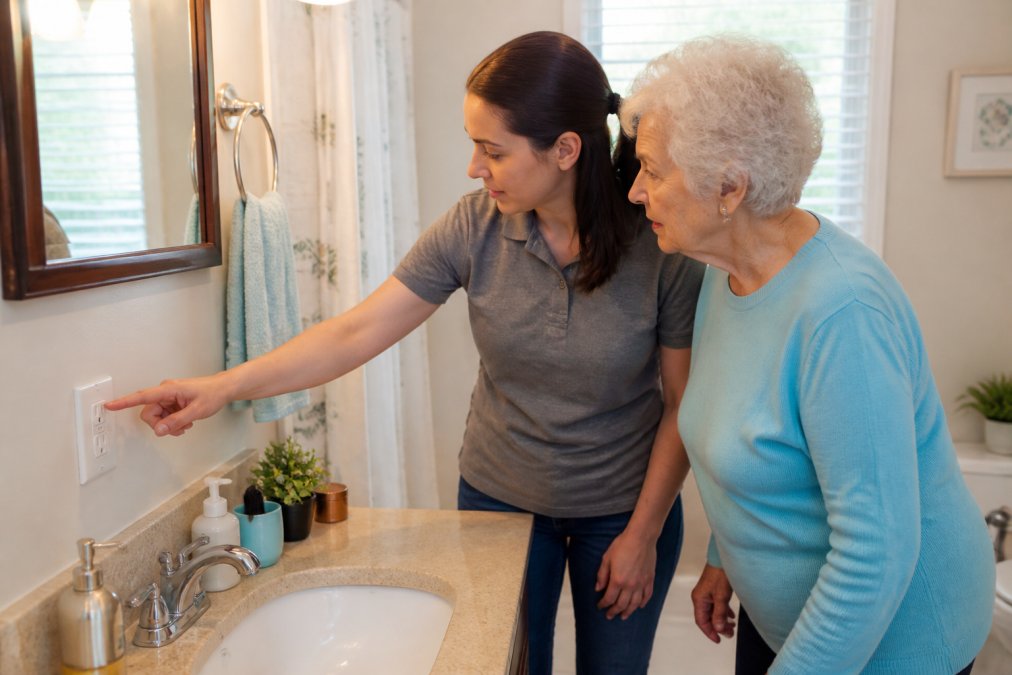
Bathroom basics:
- Keep all outlets at least a few feet from the sink and tub
- Never use a hair dryer, curling iron, or radio near water
- Dry hands fully before touching any switch or plug
- Unplug small appliances when not in use
- Use only appliances with intact cords and plugs
- Never rest a plugged-in device on a wet counter
Kitchen basics:
- Keep cords away from the sink and stove
- Unplug appliances by the plug, not the cord
- Wipe counters dry before plugging anything in
- Avoid running several high-power appliances on one outlet
- Replace any cord that is frayed or cracked
- Keep a fire extinguisher rated for electrical fires nearby
Bathroom Safety Steps for Caregivers
Caregivers should check the bathroom on every visit. Start with the outlets. Confirm each one near water has a working GFCI, and test it.
Kitchen Safety Steps for Caregivers
The kitchen has more outlets and more appliances than any other room. That means more chances for an electrical shock hazard.
Check these items:
- Test GFCIs near the sink and on the counter
- Look for overloaded outlets and power strips
- Confirm appliance cords are not pinched behind the fridge or stove
- Move small appliances away from the sink edge
- Replace any cracked or taped-up cords
Assistive Technology and Accessibility Upgrades That Reduce Shock Risk
Most safety guides stop at "be careful." That misses a big opportunity. Smart home devices and simple accessibility changes cut shock risk while making daily tasks easier for older adults.
A few upgrades worth considering:
- Smart plugs for lamps and small appliances
- Outlets raised to a comfortable height
- Motion-sensor lights so no one reaches for a switch in the dark
- Ground-fault protection on every circuit near water
When to Call a Licensed Electrician for an Inspection
Call a licensed electrician when you see warning signs, when a home has old wiring, or when it has been years since the last inspection. Do not wait for a failure to force the issue.
Book an inspection if you notice any of these:
- Warm outlets, burning smells, or scorch marks
- Breakers that trip often
- No GFCI protection near water
- A home built before modern safety codes
- Plans to renovate a kitchen or bathroom
- A recent flood, leak, or water damage
Frequently Asked Questions
What are the most common causes of electrical shocks in senior homes?
The most frequent causes are missing GFCI protection in bathrooms and kitchens, deteriorated wiring in older homes, loose connections at outlets, and appliances used near water with wet hands. Extension cords running across wet countertops and damaged cord insulation also contribute. Because seniors may have reduced sensation in their hands or slower reaction times, even a brief shock can cause a fall or more serious injury. A home electrical inspection can identify these hazards before an accident happens.
How can I tell if my home's electrical system is outdated?
Warning signs include two-prong outlets with no grounding, a fuse box instead of a circuit breaker panel, flickering lights when appliances run, warm or discolored outlet covers, and repeated tripped breakers. If your home was built before the 1980s and has not had an electrical panel upgrade, the wiring may not handle modern power demands. An electrician can test voltage and amperage at key points and check wiring insulation for deterioration.
Are there specific electrical safety devices recommended for seniors?
GFCI outlets are the most important device for bathrooms and kitchens because they cut power when current leakage is detected. Smart plugs with automatic shutoff, outlet covers with child-resistant features (useful for anyone with limited dexterity), and ground-fault protection on major appliances add extra layers. For reachability, consider moving frequently used outlets higher on the wall or adding remote-controlled switches so seniors avoid bending or reaching behind appliances.
How often should an electrician inspect a home for safety compliance?
The Electrical Safety Foundation recommends a professional inspection every 10 years for typical homes, but senior households should consider one every 5 years or after any major renovation or appliance upgrade. If you notice signs of faulty wiring in older homes, such as burning smells or frequently tripped breakers, schedule an inspection immediately. A licensed electrician will check grounding, GFCI function, panel condition, and code compliance.
Preventing electrical shocks in senior bathrooms and kitchens comes down to a few proven steps: working GFCIs, safe habits, and wiring that holds up. Mister Volts can handle the technical side for you. Our licensed electricians install and test GFCI outlets, inspect older wiring, and upgrade panels to meet current code. We provide competitive quotes and clear answers before any work begins. Get started with Mister Volts and make every room in the home safer.