 how-to
Small Electrical Repairs for Residential Homes
Table of Contents
- Safety Precautions and Electrical Hazards
- Essential Tools and Equipment for Small Electrical Repairs
- Electrical Troubleshooting Tips for Homeowners
- Common Small Electrical Repairs You Can Handle
- Cost of Residential Electrical Repairs and Budget Planning
- When to Call a Licensed Electrician
- NEC Electrical Code Requirements for Repairs
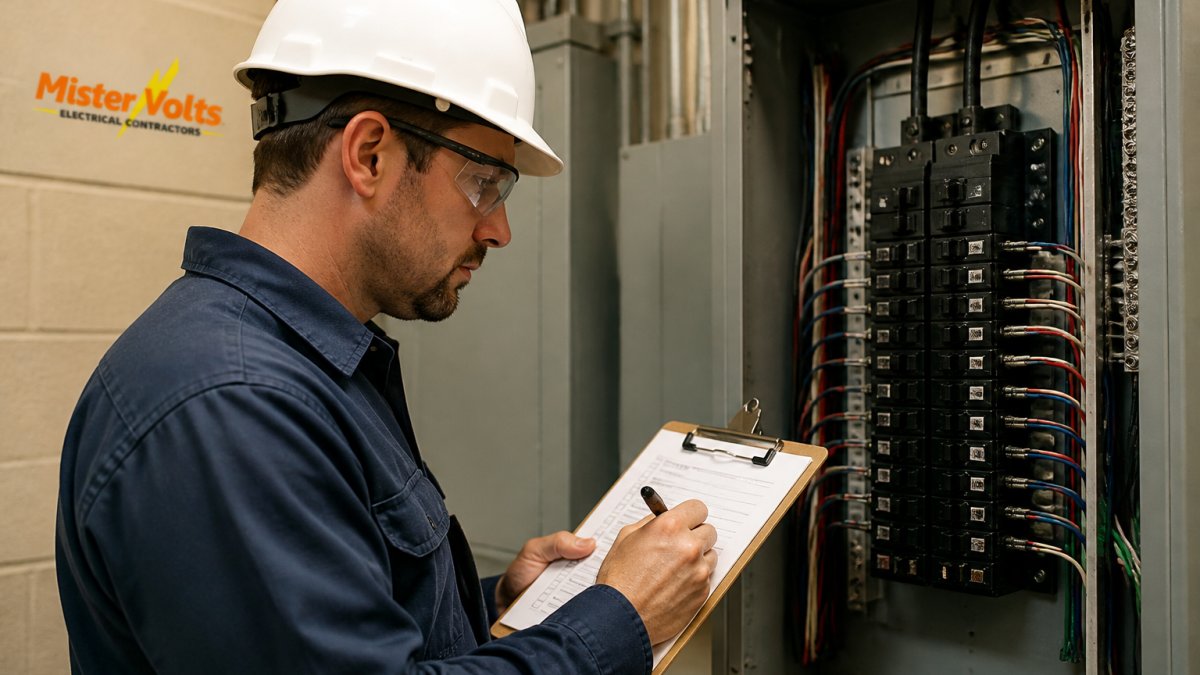
- Understanding Your Electrical Panel and Circuit Breakers
- Frequently Asked Questions
Last Updated: August 29, 2026
Safety Precautions and Electrical Hazards
Working with electricity demands respect. A single mistake can result in serious injury or death. Electrical shock occurs when your body becomes part of a circuit, contact with 120 volts can cause muscle contractions that prevent you from releasing, while higher voltages cause severe burns and cardiac arrest (the CDC). Arc flash, when electricity jumps across a gap, creates intense heat and light that can cause severe burns in fractions of a second.
Water conducts electricity exceptionally well, which is why bathrooms and kitchens demand extra caution. Ground fault circuit interrupter (GFCI) outlets are installed in these areas to detect moisture and cut power instantly. Electrical fires start when wiring overheats due to damaged insulation, loose connections, or circuits carrying too much amperage.
Before you touch anything:
- Turn off power at the circuit breaker
- Verify the power is actually off using a voltage tester
- Never assume a breaker is off without testing
- Keep one hand in your pocket when testing to prevent current from crossing your chest
- Wear rubber-soled shoes on dry flooring
- Never work in wet conditions
Essential Tools and Equipment for Small Electrical Repairs
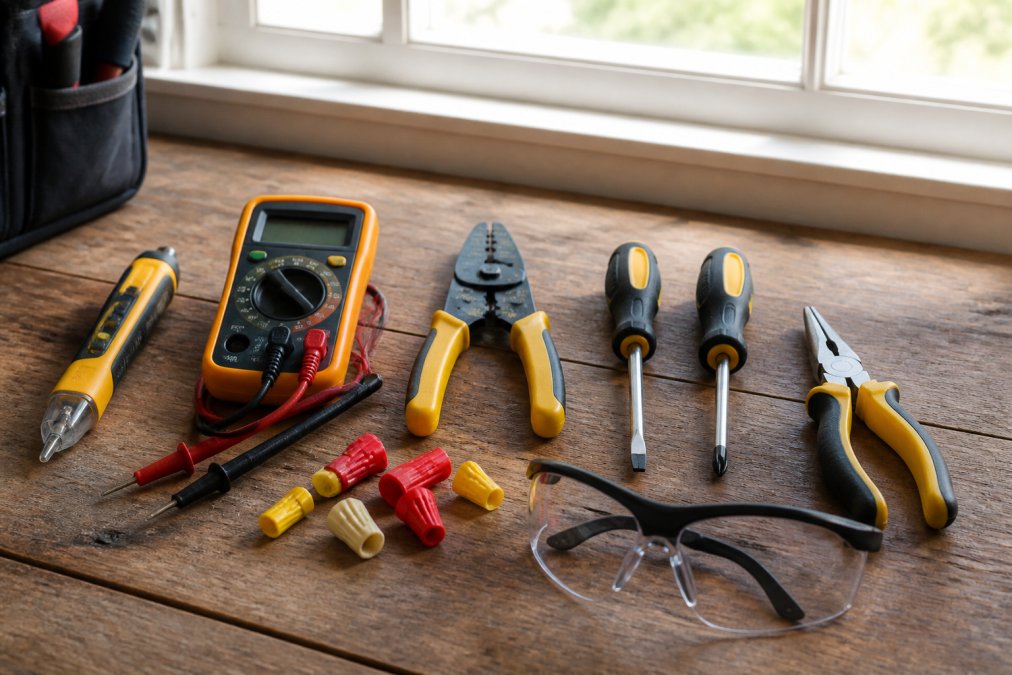
A voltage tester is non-negotiable, this device detects whether a wire or outlet is live. Digital multimeters are versatile, measuring voltage, amperage, and continuity to diagnose problems.
Wire strippers remove insulation without damaging the conductor underneath. Using a knife or scissors creates nicks that weaken wires and create fire hazards. Screwdrivers in both Phillips and flathead types are essential, with insulated handles adding safety. Wire nuts connect two wires safely and are the standard for insulating connections.
Pliers serve multiple purposes, needle-nose pliers help you reach tight spaces, while lineman's pliers cut wire and strip insulation. A flashlight is essential since electrical panels and outlets are often in dim corners. Safety glasses protect your eyes from debris and sparks, and rubber gloves rated for electrical work provide insulation.
Electrical Troubleshooting Tips for Homeowners
Start with the obvious: is the breaker tripped? Look for any breaker in the middle position, not fully on or off. Flip it fully off, then back on. If it trips again immediately, the circuit has a serious problem, do not keep resetting it. Call a licensed electrician.
Check for loose connections. Over time, terminal screws loosen due to heat expansion and contraction. A loose connection creates resistance that generates more heat and can start a fire. Open outlets and switches (with power off) and tighten all terminal screws.
Test outlets with a voltage tester. If it doesn't show power when it should, the outlet is dead. Flickering lights indicate intermittent contact and arcing, which can damage the fixture, tighten all connections in the circuit. Burning smells mean immediate danger: turn off the breaker and call a licensed electrician. A tripped GFCI outlet in a bathroom or kitchen is usually caused by moisture; dry the area and reset it. If it keeps tripping, water is entering the outlet and needs professional attention.
Common Small Electrical Repairs You Can Handle
Replacing Wall Receptacles and Outlets
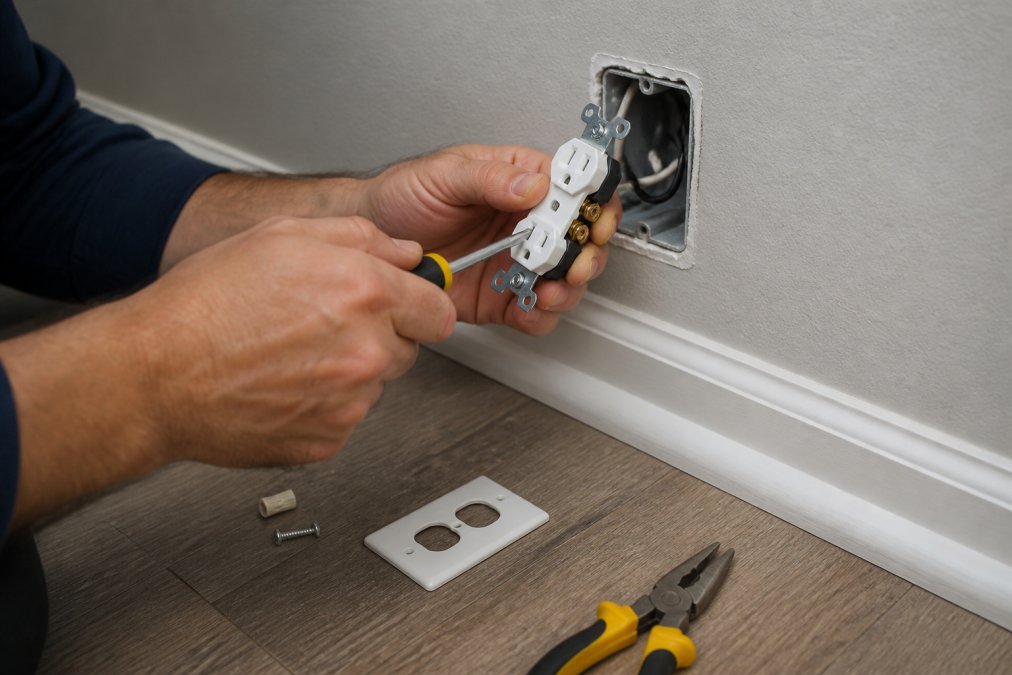
A standard wall receptacle wears out over time. Outlets that no longer grip plugs firmly, spark when you insert a plug, or don't hold power need replacement.
Step 1: Turn Off Power Find the breaker controlling that outlet and flip it off. Use a voltage tester to confirm the outlet is dead.
Step 2: Remove the Old Outlet Unscrew the outlet from the wall box and gently pull it out. The black wire (hot) connects to the brass screw, the white wire (neutral) to the silver screw, and the bare copper or green wire (ground) to the green screw.
Step 3: Disconnect the Wires Loosen each terminal screw and remove the wire. If damaged, trim it back and strip about half an inch of insulation.
Step 4: Connect the New Outlet Insert each wire into the correct terminal, hooking it clockwise around the screw. Tighten firmly.
Step 5: Secure and Test Push the outlet back into the box and screw it in place. Attach the cover plate. Turn the breaker back on and use a voltage tester to confirm power.
Rewiring Lamps and Small Appliances
Damaged lamp cords are safety hazards. If insulation is cracked, frayed, or melted, replace the cord immediately.
Step 1: Unplug the Lamp Always work on unplugged devices to eliminate shock risk.
Step 2: Remove the Old Cord Open the base and disconnect the cord from both the plug and internal terminals. Note which wire connects to which terminal.
Step 3: Install the New Cord Feed the new cord through the device body and connect each wire to the correct terminal. Black and red wires are hot; white is neutral.
Step 4: Reassemble Close the base, plug in, and test.
Tightening Loose Connections
Loose connections generate resistance that creates heat and can melt insulation. Inspect every outlet and switch you can access. With power off, use a screwdriver to tighten terminal screws clockwise. If a screw spins freely, the terminal may be stripped, replace that outlet or switch. Check your electrical panel as well; loose connections here are serious fire hazards.
Cost of Residential Electrical Repairs and Budget Planning
Simple repairs like replacing an outlet or tightening connections are inexpensive, parts cost only a few dollars if you do the work yourself. If you hire someone, labor typically starts at a service call fee plus hourly rates.
More complex repairs like rewiring circuits, upgrading outlets to GFCI, or replacing breakers cost more and may require permits. Panel upgrades and major rewiring can run into thousands of dollars and always require a licensed electrician and permits.
When you get quotes, ask what's included, whether the price covers permits and inspection fees, and what warranty or guarantees apply to the work.
When to Call a Licensed Electrician
Call a licensed electrician immediately if a breaker keeps tripping after you reset it, you smell burning or see scorch marks, you're unsure whether power is actually off, work involves the main electrical panel or service entrance, you need to upgrade service or add new circuits, you're working in walls or concealed spaces, the job requires permits or inspections, or you're uncomfortable with any part of the work.
Licensed electricians understand electrical code requirements. The National Electrical Code (NEC) sets safety standards for all electrical work. Code violations create fire hazards and make homes uninsurable. Mister Volts has the experience to handle residential electrical work safely and efficiently, ensuring work meets code and your home is protected.
NEC Electrical Code Requirements for Repairs
The National Electrical Code (NEC) is the standard for electrical installation in the United States and is updated every three years (nfpa.org). Your local jurisdiction adopts a version of the NEC and may add local amendments.
Code requirements cover everything from outlet spacing to wire gauge to grounding. When you replace an outlet, the new outlet must meet current code. When you add a circuit, the wire size must match the breaker amperage. Permits exist because code violations create hazards, an undersized wire on a 20-amp breaker can overheat and cause a fire.
Small repairs like replacing an outlet, tightening connections, or rewiring a lamp typically don't require permits. Adding circuits, upgrading service, or rewiring rooms during renovation do require permits. If you're uncertain whether your repair needs a permit, ask your local building department or call a licensed electrician.
Understanding Your Electrical Panel and Circuit Breakers
Power enters your home through a meter that measures electricity usage. From the meter, power goes to the main breaker in your electrical panel, which controls all power to your home. Individual breakers branch off from the main breaker, each controlling a separate circuit. This separation is intentional, if one circuit overloads, only that circuit loses power.
A breaker trips when a circuit draws too much amperage, a safety feature that cuts power before heat damages insulation or starts a fire. A short circuit occurs when hot and neutral wires touch, creating a path of almost zero resistance that causes current to surge and the breaker to trip instantly. A ground fault occurs when current escapes to ground; a GFCI outlet detects this and trips at much lower current levels, protecting you from shock.
Most homes have 100-amp or 200-amp service, referring to the main breaker amperage (energy.gov). Modern homes typically have 200-amp service, while older homes may have 100 amps or less. If you're planning major upgrades, you may need to increase service.
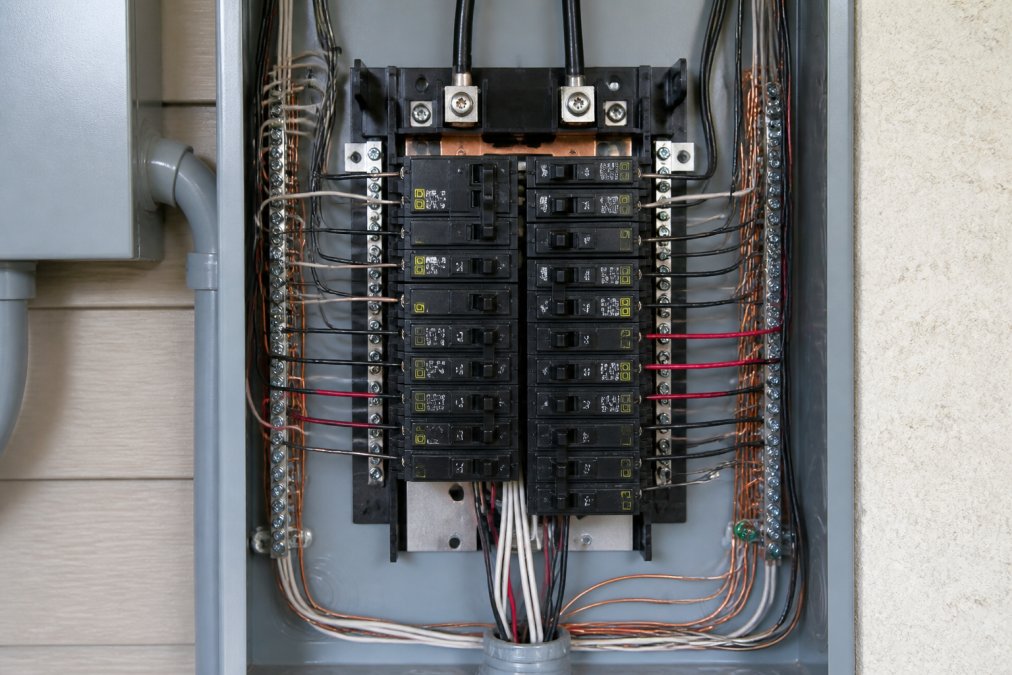
The bus bars are live even if individual breakers are off, and the main breaker is live unless the utility company disconnects it. If you're not comfortable working in your panel, don't. A licensed electrician can safely inspect it, diagnose problems, and make necessary upgrades.
Electrical work demands caution and respect. Small electrical repairs for residential homes are manageable when you understand the hazards and follow proper procedures. Knowing your limits is equally important. When you're uncertain, when the work involves your main panel, or when you smell danger, call a licensed electrician. Mister Volts provides professional electrical services throughout Macon, Perry, Warner Robins, and surrounding Georgia communities, from simple repairs to complete panel upgrades. We handle every job with the safety, precision, and code compliance your home deserves. Contact us for a quote on your next electrical project.
Frequently Asked Questions
How do I know if I can handle a small electrical repair myself or need a licensed electrician?
Simple repairs like replacing outlets, light switches, or rewiring lamps are generally safe for homeowners. However, if the repair involves the electrical panel, circuits showing signs of short circuits, GFCI receptacles in wet areas, or any work requiring permits, contact a licensed electrician. When in doubt, prioritize safety and call a professional. A licensed electrician can assess the work and ensure it meets NEC electrical code requirements.
What tools do I absolutely need for small electrical repairs at home?
Essential tools include a voltage tester to confirm power is off, a multimeter for testing continuity and voltage, wire strippers for preparing wire ends, screwdrivers (both flathead and Phillips), wire nuts for connecting wires safely, and insulation tape. A voltage tester is critical, it prevents electrical shock by confirming circuits are de-energized before you work. Never attempt repairs without verifying power is off first.
What's the cost of residential electrical repairs, and how is pricing determined?
Pricing for residential electrical repairs depends on several factors: the complexity of the repair, whether permits are required, local labor rates, and whether the work involves your electrical panel or circuit breaker system. Simple outlet replacements cost less than rewiring or panel upgrades. For an accurate quote reflecting your specific repair needs and local conditions, contact a licensed electrician who can assess the work and provide transparent pricing.
How do I troubleshoot a flickering light or dead outlet in my home?
Start by checking if the issue affects one outlet or multiple outlets. For a single outlet, test it with a voltage tester to confirm power is reaching it. Check the circuit breaker panel to see if the breaker has tripped. Tighten any loose terminal screws on the receptacle. If multiple outlets are affected, the problem may be at the main panel or involve a loose neutral wire, this requires a licensed electrician. Always turn off power at the breaker before investigating.