 How-to
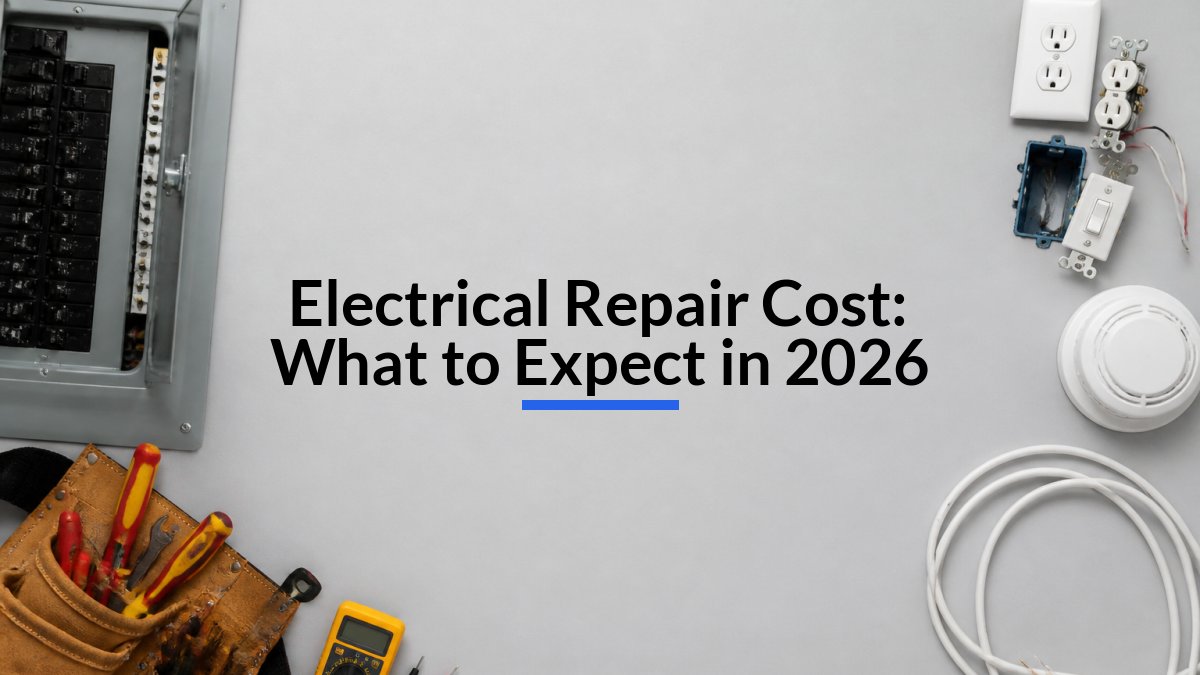
Electrical Repair Cost: What to Expect in 2026
Table of Contents
- What Drives Electrical Repair Costs
- Outlet Repair Cost and Replacement Pricing
- Electrical Troubleshooting Cost: Diagnostic Fees and Service Calls
- Common Repairs and Their Typical Price Ranges
- Getting an Electrical Repair Estimate: What to Compare
- When to Call an Electrician vs. DIY Troubleshooting
- Frequently Asked Questions
Last Updated: October 7, 2026
What Drives Electrical Repair Costs
Your electrical repair cost depends on labor, materials, complexity, and urgency. At Mister Volts, we help homeowners understand these drivers so they can budget accurately.
Several elements shape your final bill:
- Service call fee, Many electricians charge a diagnostic fee just to assess the problem
- Labor time, How long the repair takes, measured in hours
- Parts and materials, The cost of replacement components or supplies
- Emergency timing, After-hours or weekend work costs more than standard business hours
- System age, Older homes with outdated wiring may require additional work
- Permit and inspection, Code compliance work adds to the total
Complexity matters too: a simple outlet replacement takes 30 minutes, while a full circuit rewiring takes days. Experience level and location affect pricing, though quality workmanship is worth the investment.
Outlet Repair Cost and Replacement Pricing
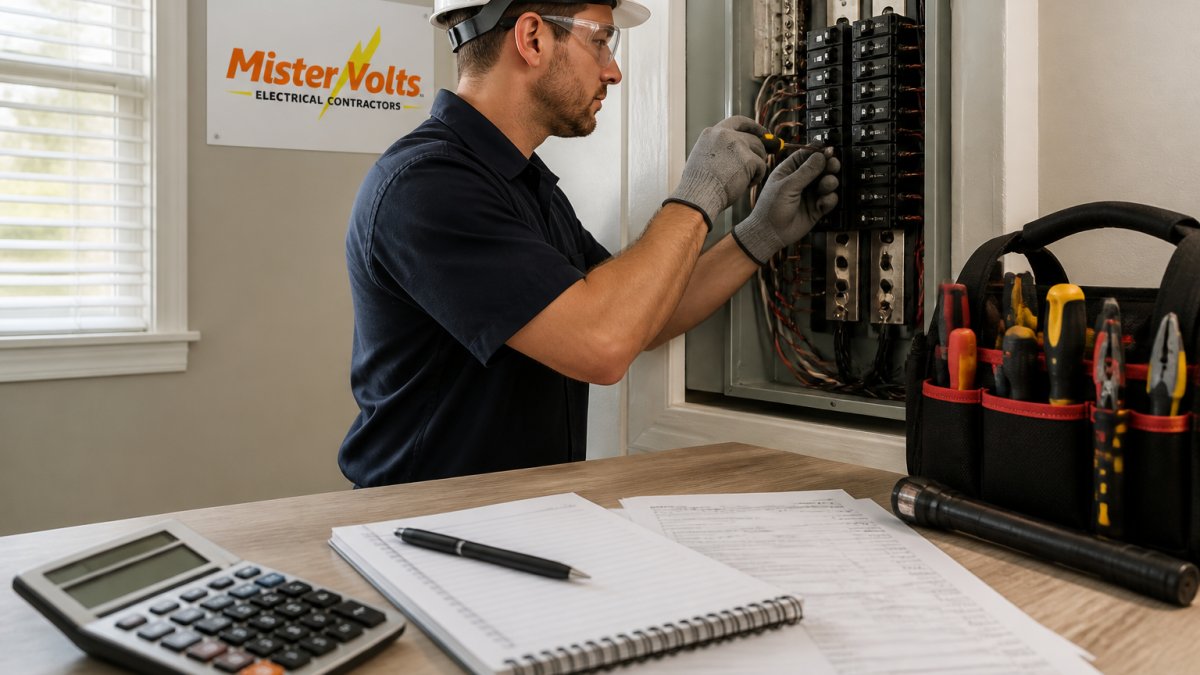
An outlet repair cost estimate usually covers fixing an existing outlet or swapping it for a new one. Most outlets fail because they're worn out, damaged, or unsafe, and standard replacement is one of the more straightforward electrical repair jobs.
The work typically involves:
- Turning off power to that circuit
- Removing the old outlet
- Installing the new outlet and testing it
- Restoring power and confirming operation
Specialized outlets cost more. GFCI outlets protect against shock in kitchens and bathrooms, and AFCI devices prevent fires from faulty wiring. Both are required by code in specific locations.
If the outlet is damaged but the circuit is sound, repair may be cheaper. If the outlet itself is failing, replacement is safer. Older homes sometimes have outdated outlet types that need upgrading.
Electrical Troubleshooting Cost: Diagnostic Fees and Service Calls
Before fixing anything, your electrician must find the problem. This diagnostic phase, called electrical troubleshooting, has its own cost, and many electricians charge a service call fee to assess the issue.
The diagnostic process typically includes:
- Inspecting the electrical panel and circuits
- Testing outlets, switches, and fixtures with a multimeter
- Identifying tripped breakers or blown fuses
- Checking for signs of damage or code violations
- Providing a written estimate for repairs
Some waive the diagnostic fee if you hire them for the repair, others credit it toward your bill, and a few charge a flat fee regardless. Ask upfront.
Troubleshooting time depends on the problem: a tripped breaker takes 10 minutes, while a hidden wiring issue can take an hour or more.
Emergency calls cost significantly more than standard appointments. Nights, weekends, and holidays carry premium pricing that reflects availability and urgency.
Common Repairs and Their Typical Price Ranges
Understanding what falls into each repair category, and how the bill is built, helps you anticipate costs and compare quotes.
How a Real Estimate Is Built
A transparent electrical estimate is a stack of line items, not one number. A typical residential service call breaks down like this:
- Diagnostic or service call fee, a flat charge to arrive, troubleshoot, and identify the fault. Many contractors waive it if you approve the repair on the same visit; others apply it as a credit toward the final invoice. Always ask which policy applies before you book.
- Labor, billed either hourly or as a flat rate for the job. Flat-rate pricing is increasingly common because it protects you from a clock that keeps running.
- Materials, the device, wire, breaker, or fixture itself, usually marked up modestly over the contractor's cost.
- Permit and inspection fees, pass-through charges when the jurisdiction requires a permit for the scope of work.
- Minimum charge, the floor a contractor bills for any visit, even a 15-minute job. This is why a "small" repair rarely costs less than the trip itself.
The diagnostic fee plus minimum labor charge sets the floor for any visit, with the repair added on top. That's why two quotes for the "same" outlet replacement can differ, one bundles the diagnostic into a flat rate, the other itemizes it.
What Each Repair Type Typically Involves
Light fixture installation and repair ranges from swapping a bulb or ballast to hanging a new fixture.
Switch replacement is straightforward.
Circuit breaker and fuse issues need prompt attention. A tripped breaker usually signals an overloaded circuit; repeated tripping means something is wrong.
Wiring repair and whole-house rewiring are major projects. Damaged wiring poses fire risk and must be replaced.
Outlet repair and replacement is covered in detail above, but the cost driver to remember is whether the box and wiring behind the outlet are sound. If they are, replacement is quick.
Why the Same Job Costs Different Amounts
Three variables explain most of the spread between quotes:
- Access, a device on an interior wall with a crawlspace or attic above is fast to reach; a device behind finished plaster or in a slab floor is not.
- System condition, aluminum branch wiring, cloth-insulated wire, or a panel with no spare capacity all add scope.
- Code triggers, once a permit is pulled, the inspector may require related corrections (grounding, GFCI/AFCI protection, box fill) that were not part of the original complaint.
Getting an Electrical Repair Estimate: What to Compare
When you contact electricians for quotes, you're asking for an electrical repair estimate.
A complete estimate should include:
- Detailed description of the work to be performed
- Materials and parts that will be used
- Labor hours and hourly rate (or flat fee for the job)
- Service call or diagnostic fee, if applicable
- Timeline for completion
- Warranty or guarantee on the work
- Payment terms and methods accepted
Red flags include vague descriptions ("electrical work"), unusually low prices, or refusal to provide written details. Legitimate electricians explain what's wrong, why it needs fixing, and what it will cost.
Ask each electrician how they handle unexpected issues. A trustworthy one will call you before proceeding with extra work and explain why it's necessary.
Compare at least two or three estimates to gauge fair pricing in your area, but don't choose solely on the lowest price.
When to Call an Electrician vs. DIY Troubleshooting
Not every electrical issue needs a professional, and not every visit is equally urgent. The useful skill is triage: sorting a symptom into "watch it," "schedule it," or "call now." Emergency rates are higher, and some symptoms are early warnings of a fire hazard.
Safety Triage: Three Tiers
Call immediately, do not wait, do not DIY:
- Burning or acrid smell near an outlet, switch, fixture, or the panel
- Visible sparking, arcing, or scorch marks
- Smoke of any kind from an electrical device
- A shock felt when touching an appliance or fixture
- Buzzing, sizzling, or crackling from a wall, switch, or panel
- A breaker that will not reset, or a panel that is warm to the touch
These are fire and electrocution precursors. Shut off the affected circuit at the panel if you can do so safely, and call a licensed electrician.
Schedule a prompt appointment, days, not weeks:
- A breaker that trips more than once a month
- Lights that flicker throughout the house (not just one fixture)
- Outlets or switches that are warm but not hot
- A GFCI that will not reset
- Two-prong outlets in rooms where electronics are used
Safe to investigate yourself:
- Resetting a tripped breaker (flip it fully off, then back on)
- Confirming an outlet is dead by testing with a lamp or plug-in tester
- Replacing a light bulb with the power off
- Visual inspection for obvious damage, no poking, no probing
Anything involving the main panel, new circuits, or rewiring is not a DIY job. Electrical work is one of the few trades where a mistake can be fatal and unpermitted work can complicate a future sale.
Permits, Inspections, and Code Compliance
Whether a repair needs a permit depends on scope and jurisdiction. Like-for-like replacement of a device (an outlet, a switch, a light fixture) often doesn't require one, while new circuits, panel changes, service upgrades, and whole-house rewiring almost always do. Local rules vary, so the contractor should tell you what your jurisdiction requires before work begins.
Why this matters to your bill: a permit adds a fee and an inspection step, and the inspector may require corrections to bring the work up to current code, grounding, GFCI/AFCI protection in specified locations, proper box fill, and correct wire sizing.
Insurance and Warranty Coverage
Homeowners insurance generally covers sudden, accidental damage, a fire from a failed device or surge damage, but excludes gradual deterioration, worn-out wiring, and code upgrades, which count as maintenance. A home warranty may cover specific systems, including electrical, subject to a service fee and exclusions. Before assuming a repair is out of pocket, read the policy's exclusions and call your provider with the specific symptom.
How to Evaluate and Compare Electrician Quotes
Use this checklist on every quote you receive:
- License and insurance, ask for the license number and confirm it, and ask for a certificate of insurance.
- Scope in writing, what exactly will be replaced or repaired, and what is excluded.
- Labor basis, hourly rate or flat rate, and whether the diagnostic fee is waived or credited.
- Parts, brand and grade of devices, and whether the price is a pass-through or marked up.
- Permit responsibility, who pulls it and who pays the fee.
- Warranty, how long the workmanship is guaranteed and what the parts warranty covers.
- Change-order process, how the contractor handles a surprise discovered mid-job, and whether you approve in writing before extra work proceeds.
Red flags: a quote that says only "electrical work," a price far below the others with no explanation, refusal to put terms in writing, and pressure to decide on the spot. The lowest bid is not the best bid if it omits the permit, uses builder-grade parts, or leaves the warranty undefined.
Frequently Asked Questions
Do electricians charge a service call or diagnostic fee?
Many licensed electricians charge a service call fee to visit your home and diagnose the problem. This fee typically covers the electrician's time to assess the issue and provide a repair estimate. Some electricians will apply this fee toward the final repair cost if you hire them for the work. Always ask about diagnostic fees upfront when scheduling, it helps you understand the total expense and compare estimates fairly.
What factors affect the cost of an electrical repair?
Several factors influence electrical repair costs: the type of repair (outlet replacement, wiring, circuit breaker work), the complexity of the job, your home's electrical system age and condition, whether permits and inspections are required, emergency or after-hours timing, and regional labor rates. Older homes with outdated wiring may require additional troubleshooting. Licensed electricians factor in materials, labor hours, and travel time when providing an estimate.
How can I tell whether an electrical problem needs immediate attention?
Call a licensed electrician immediately if you notice burning smells, visible sparks, outlets that are hot to the touch, frequent circuit breaker trips, flickering lights throughout your home, or any signs of electrical fire. These are safety hazards that require urgent professional attention. Non-emergency issues like a single dead outlet can be scheduled during regular business hours, which typically costs less than emergency or after-hours service calls.
When should I hire a licensed electrician instead of attempting a repair myself?
Hire a licensed electrician for any work involving your main electrical panel, circuit breakers, permanent wiring, or if you're unsure about the problem. Electrical work carries serious safety risks, improper repairs can cause fire, electrocution, or code violations that affect your home's insurance or resale value. Licensed electricians understand NEC compliance and local building codes. DIY troubleshooting (like resetting a breaker) is safe, but installation and repair work should always be done by a professional.