 How-to
How to Choose Electrical Safety Upgrades for Seniors
Last Updated: November 1, 2026
Quick Summary
Choose electrical safety upgrades for seniors by starting with a professional inspection from a licensed electrician to find hidden hazards. Then prioritize fire and shock risks, add GFCI protection in wet areas, improve lighting on stairs and night routes, and reduce cord use with permanent outlets.
- Older adults ages 65 and up face a higher risk of dying in fires caused by electrical equipment.
- Schedule a licensed electrician's inspection before buying any new equipment.
- Install GFCI outlets in bathrooms, kitchens, garages, laundry rooms, and outdoor areas.
- Layer ambient, task, and path lighting, focusing on stairs, hallways, and the bedroom-to-bathroom route.
- Add permanent outlets beside the bed, in the kitchen, and near the scooter charging spot.
Table of Contents
- Why Electrical Safety Matters More as You Age
- Step 1: Schedule an Electrical Safety Inspection for Seniors
- Step 2: Install GFCI Outlet Protection for Older Adults
- Step 3: Improve Lighting for Seniors at Home
- Step 4: Make Outlets and Cords Safer to Use
- Step 5: Prioritize Upgrades and Plan the Budget
- Booking Your Electrical Safety Assessment with Mister Volts
- Frequently Asked Questions
Why Electrical Safety Matters More as You Age
Electrical hazards pose a bigger threat to older adults than to most of the population. Older adults ages 65 and up have a higher risk of dying in fires caused by electrical distribution and lighting equipment, according to the Electrical Safety Foundation International public service announcement on electrical hazards for seniors.
Mister Volts works with homeowners who want to make their homes safer as they age. This guide shows you how to choose electrical safety upgrades for seniors, step by step.
Aging changes how we move, see, and react. Slower reflexes and weaker eyesight make small hazards more dangerous.
- Reaction time and balance often decline with age
- Eyesight changes make dim lighting harder to navigate
- Mobility aids like walkers and scooters add charging needs
- Medications can affect alertness and judgment
A systematic review of home modification interventions found that structural and electrical changes are critical for supporting aging in place.
Step 1: Schedule an Electrical Safety Inspection for Seniors
Start with a professional inspection. A licensed electrician can find hidden problems that most homeowners cannot see. The inspection gives you a clear list of what to fix first.
Ask the electrician to check these items:
- The electrical panel and circuit breakers
- Outlets for signs of heat, scorching, or loose fit
- Older wiring that may not meet modern demands
- Light switches and fixtures that are hard to reach
Schedule the inspection before buying any new equipment. The results will shape your upgrade plan. Pricing depends on the size of the home and the work needed, so request a written quote from Mister Volts.
Step 2: Install GFCI Outlet Protection for Older Adults
Ground-fault circuit interrupters (GFCIs) shut off power in a fraction of a second when they sense a fault. They are a key upgrade for bathrooms, kitchens, garages, and outdoor outlets, where water raises the shock risk.
Install GFCI protection in these areas:
- Bathrooms, including near sinks
- Kitchens, especially near the sink
- Garages and outdoor outlets
- Laundry rooms and basements
Replacing an outlet with a GFCI is a practical upgrade. Our guide to preventing electrical shocks in senior bathrooms and kitchens explains where these protections matter most.
Step 3: Improve Lighting for Seniors at Home
Good lighting is one of the more valuable electrical upgrades for older adults because it reduces the risk of falls and of fumbling in the dark. Aging eyes often need more light than younger eyes to see the same detail, and they adapt more slowly when moving between bright and dim spaces. That is why a single overhead bulb that felt fine at 50 often feels inadequate at 75.
Layer the light instead of relying on one fixture
A common pattern among electricians and aging-in-place specialists is to layer three kinds of light in each room:
- Ambient light, ceiling fixtures or recessed lights that fill the room
- Task light, under-cabinet lights in the kitchen, a lamp beside the reading chair, brighter light over the bathroom sink
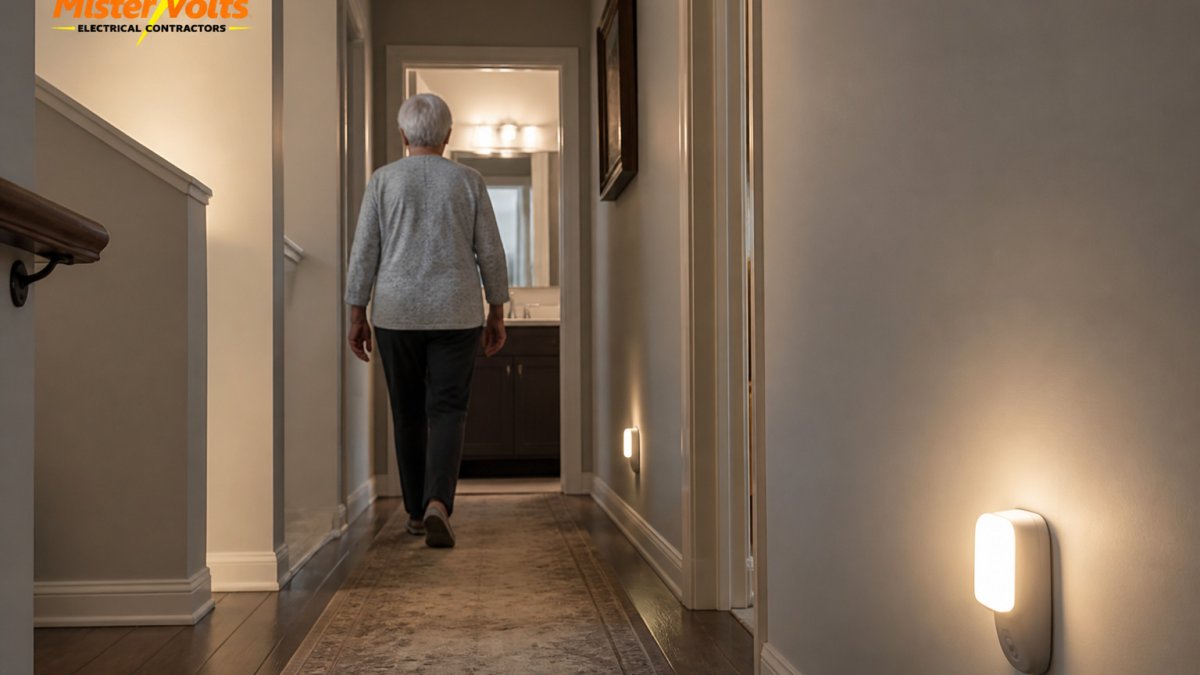
- Path light, low-level night lights and motion-activated lights along the route from bed to bathroom
Layering matters because glare from a single bright source can be as disabling as dim light. Diffused fixtures, frosted shades, and dimmable LEDs reduce glare while keeping brightness high.
Focus on the routes people actually walk
Prioritize lighting where falls happen most:
- Stairways, a light at the top and bottom, with a switch at each end so no one has to walk a dark stair to find the switch
- Hallways, especially the night route between bedroom and bathroom
- Entryways and outdoor paths, motion-sensor lights at doors and along walkways
- Bathrooms, bright, even light over the sink and a night light that does not require reaching for a switch
- Bedrooms, a lamp or switch within reach of the bed so no one stands up in the dark
Choose controls that match vision, grip, and reach
Lighting controls are where senior-specific design diverges most from a standard installation:
- Large rocker switches are easier to operate than small toggle switches for hands with reduced grip or arthritis.
- Lighted switches glow in the dark so they can be found without turning on a room light.
- Motion-sensor switches turn lights on automatically in hallways, closets, and bathrooms, useful for anyone with limited reach or memory concerns.
- Dimmers let a person set brightness to the task and reduce glare at night.
- Smart or voice-controlled lighting can help someone with limited mobility turn lights on and off without crossing a room, and can be scheduled to come on at dusk.
Place switches at a height and location reachable from a seated position or from a walker, and keep them clear of furniture that blocks access.
Pick bulbs and fixtures that last
LED bulbs use far less electricity, run cooler, and last years longer than incandescent bulbs, which matters when changing a bulb means climbing a ladder.
Mister Volts can walk the home, map the night routes, and place fixtures and controls for the best coverage and the easiest reach.
The article's lighting guidance comes down to a few concrete choices, summarised below.
| Lighting layer | Where it goes | Main purpose |
|---|---|---|
| Ambient light | Ceiling or recessed fixtures | Fills the whole room |
| Task light | Under-cabinet, reading lamp, sink area | Brightens specific activities |
| Path light | Night lights, motion-activated lights | Lights the route at night |
| Lighted switch | Switch that glows in the dark | Easy to find without light |
| Motion-sensor switch | Hallways, closets, bathrooms | Turns on automatically |
| LED bulb | Living spaces and task areas | Uses less power, lasts longer |
Step 4: Make Outlets and Cords Safer to Use
Cords and overloaded outlets can create electrical fire and trip hazards, particularly for older adults. The fix is not just better habits, it is designing the room so cords are not needed in the first place.
Understand why overloads happen
Every circuit is rated for a maximum load. When too many devices draw power from one circuit, often through a power strip plugged into a power strip, the wiring heats up. Breakers are designed to trip before the wiring fails, but a breaker that trips repeatedly is a warning, not a nuisance. Common overload patterns in senior households include:
- Space heaters and electric blankets on the same circuit as a television or computer
- Multiple power strips daisy-chained behind a single outlet
- Charging a scooter, wheelchair, or medical device on a general-purpose circuit not rated for continuous draw
If a breaker trips more than occasionally, have an electrician evaluate the circuit and the panel capacity before adding more devices.
Reduce the need for cords entirely
The most effective cord-safety upgrade is adding permanent outlets where devices are actually used:
- Beside the bed, for a lamp, phone charger, and any medical device
- In the kitchen, near the counter where small appliances sit
- Beside the favorite chair, for a lamp and phone
- Near the scooter or wheelchair charging spot, on a dedicated circuit sized for the charger
A licensed electrician can add outlets and, where needed, a dedicated circuit. This eliminates extension cords and power strips that cross walkways or run under rugs, both of which are trip and fire hazards.
Make outlets easier to reach and use
Standard outlets sit low on the wall, which is hard on backs, knees, and anyone using a walker or wheelchair. Options worth discussing with an electrician:
- Raised outlets, installed higher on the wall so they can be reached without bending
- Tamper-resistant outlets, helpful in homes with visiting children
- USB-integrated outlets, reduce the need for separate chargers and cords
- Outlet covers or plates with larger openings, easier to plug into for hands with reduced dexterity
Keep appliances away from water
GFCIs protect against shock, but they do not make it safe to use a hair dryer next to a full sink or a radio beside a bathtub. Keep small appliances on dry counters, unplug them when not in use, and never run a cord across a wet floor.
Plan for outages and backup power
Older adults often depend on powered medical equipment, mobility devices, and lighting during an outage. A safe plan includes:
- A dedicated circuit or transfer switch for essential medical equipment, installed by a licensed electrician
- Battery backup for medical devices and phones, charged and tested regularly
- Battery-powered or rechargeable lighting kept in each room and beside the bed
- A safe charging routine for scooters and wheelchairs that keeps cords out of walkways
Never run a generator indoors or in a garage, carbon monoxide kills. If a generator is part of the plan, have a transfer switch installed so it connects safely.
Mister Volts can assess your outlets, add dedicated circuits where needed, and help you plan for outages so essential devices keep running.
Step 5: Prioritize Upgrades and Plan the Budget
Not every upgrade is equally urgent. Rank your projects by risk.
A simple priority order:
- Fix any fire or shock hazards the inspection found
- Add GFCI protection in wet areas
- Improve lighting on stairs and night routes
- Add outlets and reduce cord use
- Upgrade switches and controls for ease of use
Build a budget around these priorities. Our article on what upgrading old electrical wiring involves outlines the typical scope of that work.
Plan for maintenance too. Test GFCI outlets monthly and replace smoke detectors that are more than 10 years old, as recommended by general electrical safety guidance for seniors.
Booking Your Electrical Safety Assessment with Mister Volts
Ready to start? Mister Volts is a licensed electrical contractor serving Macon, Perry, Warner Robins, and surrounding Georgia communities.
Our licensed electricians handle everything from outlet and GFCI work to panel upgrades and lighting. We follow NEC-compliant installation practices to keep your home safe.
Contact us to schedule your assessment and get a written quote: start a conversation with Mister Volts.
Frequently Asked Questions
What electrical upgrades can make a home safer for seniors?
The upgrades with the greatest safety return are usually GFCI protection in kitchens, bathrooms, and outdoor areas, better lighting in hallways and stairways, motion-sensor lights, and updated or relocated outlets and switches that are easier to reach. A licensed electrician can also check the electrical panel for outdated wiring or overloaded circuits. Start with the areas where an older adult spends the most time, and where a fall or shock would be hardest to recover from. Mister Volts can assess your home and recommend a sequence that fits your budget and needs.
Are GFCI outlets important for seniors?
Yes. Ground-fault circuit interrupters cut power within a fraction of a second when they detect current leaking along an unintended path, such as through a person or a wet appliance. This matters most in bathrooms, kitchens, laundry areas, and outdoor locations, where water is present. Older adults may have less mobility to get away from a faulty appliance, and their homes may have older wiring without this protection. Having a qualified electrician install GFCI outlets where the National Electrical Code requires them is one of the most direct safety steps you can take.
Should a licensed electrician inspect a senior's home?
A licensed electrician is the right person for this job. An inspection can identify outdated wiring, overloaded circuits, missing GFCI protection, damaged outlets, and panels that show signs of wear. Many of these issues are not visible to a homeowner or family member. Ask for a written summary of findings and a prioritized list of recommended repairs so you can decide what to address first. Mister Volts provides electrical safety assessments for homes in the Macon and Perry area.
What should I ask an electrician before approving safety upgrades?
Ask whether the work will follow current National Electrical Code requirements and whether the electrician is licensed and insured. Request a written estimate that explains each item, and ask what is included in any warranty or guarantee. Find out whether the electrician will explain which upgrades are urgent and which can wait. Ask about the expected timeline so you can plan around the household's schedule. Pricing varies with the scope of work, so contact Mister Volts for a quote tailored to your home.