 How-to
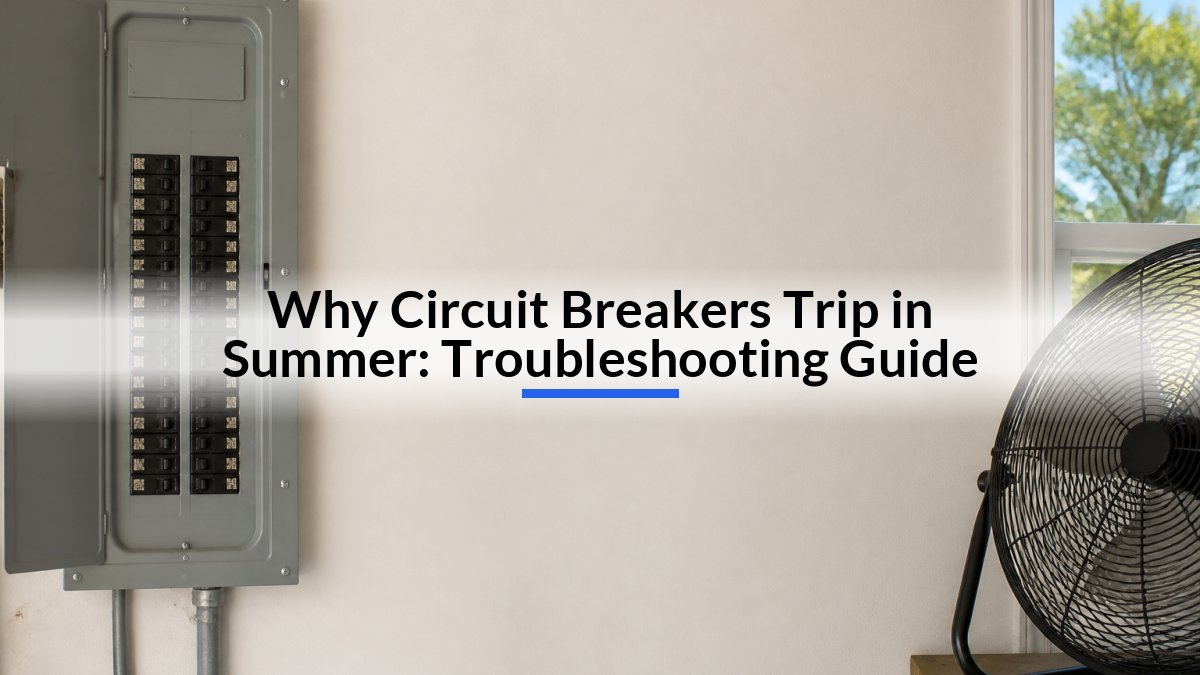
Why Circuit Breakers Trip in Summer: Troubleshooting Guide
Table of Contents
- Why Circuit Breakers Trip More Often During Summer
- How to Troubleshoot a Tripping Circuit Breaker
- When Your Air Conditioner Breaker Keeps Tripping
- Signs of a Bad Circuit Breaker
- When to Call an Electrician for a Tripping Breaker
- Preventing Summer Breaker Trips
- Conclusion
- Frequently Asked Questions
Last Updated: October 9, 2026
Why Circuit Breakers Trip More Often During Summer
Summer heat and increased electrical demand create the perfect storm for why circuit breakers trip summer after summer. Air conditioners run longer, refrigerators cycle more, and fans spin continuously.
The reason circuit breakers trip summer is straightforward: demand spikes while heat reduces the breaker's tolerance.
Understanding the mechanics behind summer breaker trips helps you troubleshoot safely and know when to call a professional electrician. We'll cover the most common causes and how to identify whether the problem is overload, heat sensitivity, or a failing breaker.
Electrical Demand Spikes from Air-Conditioning
Your air conditioner is the single largest consumer of electricity in most homes.
Once the AC is cooling, the running load remains substantial. In hot weather, extended cooling cycles build heat inside your electrical panel, making circuit breakers more likely to trip at lower amperages than in cooler conditions.
Beyond air conditioning, summer brings increased use of:
- Ceiling fans and portable fans
- Refrigerators working overtime to maintain cool temperatures
- Water heaters during peak usage hours
- Outdoor lighting and pool equipment
Each adds incremental load. Combined with an AC system running eight to twelve hours per day, the total demand can exceed what your electrical panel was designed to handle safely.
Heat and Breaker Sensitivity
Circuit breakers are temperature-sensitive devices. The internal mechanism relies on a bimetallic strip that bends when current flows through it.
On a 95-degree day, your electrical panel temperature can exceed 120 degrees, especially if it's in direct sunlight or in an attic.
Older breakers are particularly vulnerable. As they age, internal components degrade and the mechanism becomes sluggish. A 15-year-old breaker that tolerated borderline loads in cooler months may fail entirely when summer heat arrives.
Direct sunlight accelerates this problem.
How to Troubleshoot a Tripping Circuit Breaker
Before calling an electrician, you can safely identify which circuit is causing the problem and what's connected to it, helping you understand whether you're facing an overload, a failing breaker, or a dangerous fault.
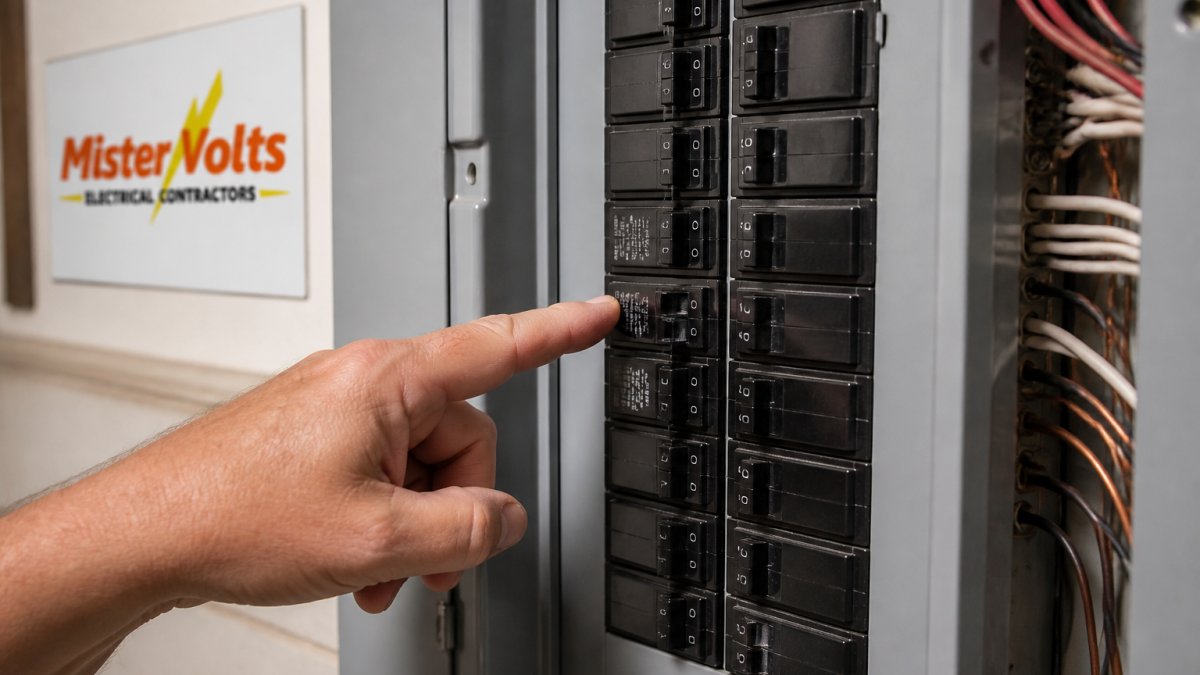
Step 1: Identify Which Breaker Is Tripping
Open your electrical panel and look at the breaker switches. A tripped breaker sits between the ON and OFF positions, offset from the others. Some have a red indicator window showing they've tripped.
Write down the breaker's amperage rating (usually 15, 20, or 30 amps) and its position. If the label is unclear, photograph it with your phone.
If the breaker trips again immediately after you reset it, do not reset it a third time. Repeated immediate trips indicate a short circuit or ground fault, a serious electrical hazard.
Step 2: Determine What's on That Circuit
Most residential panels have a directory inside the door showing which outlets, fixtures, and appliances connect to each breaker. If it's blank or unclear, trace the circuit manually.
Turn off the breaker you identified, then walk through your home to see which outlets and lights go dead. Plug a lamp into each outlet to confirm, and list everything on that circuit.
Common summer culprits include:
- Kitchen outlets (where you might plug in a blender, toaster, or coffee maker)
- Bedroom air conditioning units
- Bathroom exhaust fans
- Outdoor outlets (for fans, lighting, or pool equipment)
- Laundry room outlets
Step 3: Check for Overloaded Circuits
An overloaded circuit draws more current than the breaker is rated to handle. It's the most common cause of summer breaker trips and the easiest to fix.
Examine what's plugged into the circuit.
Unplug devices from the affected circuit one at a time, then reset the breaker. If it holds, you've found your culprit.
If the breaker trips even with everything unplugged, move to the next step.
Step 4: Look for Signs of Damage or Overheating
Inspect the wiring visible in your panel for:
- Discolored or blackened insulation
- Melted plastic around wire connections
- Burn marks on breaker housing
- Loose connections or corrosion
Do not touch any wires or breaker components. If you see burn marks, discoloration, or melting, stop and call an electrician; these signal a serious electrical fault.
Also check the outlets and switches on the affected circuit. If any outlet feels warm, looks discolored, or smells like burning plastic, it's failing. Unplug everything from it and call a professional.
When Your Air Conditioner Breaker Keeps Tripping
If your AC breaker trips repeatedly, one of two problems is at play: the startup surge is too high for your electrical system, or the AC unit draws excessive current during normal operation.
AC Startup Amperage and Running Load
Air conditioner compressors draw enormous current at startup.
If your AC breaker trips only when the unit first turns on, the startup surge is exceeding your breaker's capacity, especially common in older homes with undersized panels or long wire runs to the outdoor unit.
Once running, the compressor should draw steady current within the breaker's rating. If the breaker trips after several minutes, the problem is the sustained running load, not the startup surge.
Check your AC unit's nameplate on the outdoor condenser for the maximum running amperage, and compare it to your breaker's rating.
Extended Cooling Cycles in Hot Weather
In extreme heat, your AC compressor runs almost continuously and gets hotter the longer it runs.
This is why your breaker might trip on the hottest days but not milder ones: cumulative heat from outdoor temperature, direct sunlight, and the compressor itself pushes the system past its safe limits.
The breaker is doing its job, protecting the wiring from overheating. The real problem is that your AC system is too large for your electrical service, or your panel needs an upgrade for modern cooling demands.
Signs of a Bad Circuit Breaker
Sometimes the breaker itself is failing. A bad breaker may trip when the circuit isn't overloaded, or refuse to stay in the ON position after you reset it.
Visual and Physical Warning Signs
Open your panel and look at the breaker carefully. A failing breaker may show:
- Burn marks on the plastic housing
- A loose or wobbly switch that doesn't click firmly into place
- Discoloration or darkening of the breaker body
- Rust or corrosion on the metal contacts
- Heat to the touch (sense it from a distance with the back of your hand; do not touch directly)
If you see any of these signs, the breaker needs replacement. Unless you're a licensed electrician, call a professional to handle the swap.
Behavioral Red Flags
A failing breaker exhibits distinct patterns:
- Trips repeatedly with nothing plugged in. You reset it, and it trips again within minutes with no load.
- Trips at much lower loads than its rating. A 20-amp breaker trips at only 10-15 amps.
- Refuses to reset. You push it to ON, and it snaps back to the middle.
- Trips only in hot weather. It holds in winter but fails consistently in summer with the same load.
These patterns indicate a degraded internal mechanism. Heat sensitivity is more pronounced in a failing breaker than a healthy one: the bimetallic strip may be warped or the calibration off.
If your breaker shows these signs, replacement is the only reliable fix. Mister Volts can evaluate your breaker and panel to determine whether the breaker is bad or the circuit is genuinely overloaded.
When to Call an Electrician for a Tripping Breaker
Knowing the boundary between safe homeowner troubleshooting and work requiring a licensed electrician is critical for your safety.
Safety Boundaries: What You Can Check Yourself
You can safely:
- Identify which breaker is tripping
- Reset a tripped breaker (once)
- Unplug devices to test for overload
- Read your panel directory
- Inspect visible wiring for damage or discoloration
- Sense outlets for warmth without touching them
- Note the breaker's amperage rating
You should NOT:
- Touch wires, breaker contacts, or bus bars inside the panel
- Remove a breaker yourself
- Modify wiring or connections
- Work inside a wet or water-damaged panel
- Ignore repeated immediate trips, which indicate a fault
When Professional Inspection Is Required
Call an electrician immediately if:
- The breaker trips immediately after reset, repeatedly
- You see burn marks, melting, or discoloration inside the panel
- An outlet feels warm, smells like burning plastic, or looks charred
- The breaker trips with nothing plugged in
- The breaker won't stay in the ON position
- You suspect the AC unit is failing (different compressor sound, refrigerant smell, water pooling)
- Your panel is over 30 years old and you're seeing new trips
These situations indicate electrical faults, failing components, or capacity issues only a licensed electrician can safely diagnose and repair. DIY fixes risk electrical shock, fire, or damage to your home's electrical system.
A professional inspection typically includes:
- Visual examination of the panel, breakers, and wiring
- Testing breaker functionality and sensitivity
- Measuring current draw on the affected circuit
- Checking for loose connections or corrosion
- Evaluating whether panel capacity matches your home's demand
- Recommending upgrades if needed
Preventing Summer Breaker Trips
Once you've fixed the immediate problem, take steps to prevent future trips.
Spread your electrical load. Avoid running your AC, water heater, and dryer simultaneously.
Add dedicated circuits for high-draw appliances. Modern code requires dedicated circuits for AC units, water heaters, and major appliances.
Replace aging breakers. If your home is 25+ years old and you're seeing new trips, the breakers may be failing. Modern replacements improve safety and reliability.
Conclusion
Circuit breakers trip in summer because heat and increased electrical demand create conditions your system wasn't designed to handle. Identifying the cause, overload, heat sensitivity, or a failing breaker, tells you whether the fix is simple load management or a professional panel upgrade.
Start by checking which breaker trips and what's connected to it. Unplug high-demand devices and see if the breaker holds; if so, you've found your overload. If it keeps tripping with nothing plugged in, or you see burn marks or damage, call a licensed electrician immediately.
At Mister Volts, we help homeowners across Georgia understand why their breakers trip and what it takes to fix the problem safely. Whether you need a circuit addition, breaker replacement, or full panel upgrade, our licensed electricians provide honest diagnostics and code-compliant solutions. Contact Mister Volts today to schedule an inspection and keep your home's electrical system safe and reliable all summer long.
Frequently Asked Questions
Why does my circuit breaker trip in hot weather?
Circuit breakers trip more often in summer because of two main factors: increased electrical demand from air-conditioning units and heat sensitivity of the breaker itself. Air conditioners draw high startup amperage and run continuously during hot weather, pushing circuits closer to their limit. Additionally, ambient temperature and direct sunlight on your electrical panel can cause breakers to overheat, making them trip at lower electrical loads than they would in cooler months.
Can running the air conditioner cause a breaker to trip?
Yes. Air-conditioner startup amperage is significantly higher than its running current, and this surge can trip a breaker if the circuit is already near capacity or if the breaker is aging. Extended cooling cycles during hot weather also mean the AC runs longer, generating continuous heat. If your AC breaker trips repeatedly, the unit may be on an undersized circuit, or the breaker itself may be failing and need replacement by a licensed electrician.
What are signs of a bad circuit breaker?
A failing breaker may trip repeatedly even after you reset it, feel hot to the touch, show visible burn marks or discoloration, or emit a burning smell near the panel. Some breakers trip without any appliance running, or they fail to reset properly. If you notice any of these signs, stop using that circuit and contact a licensed electrician immediately. A bad breaker is a safety hazard and must be replaced.
When should I call an electrician for a tripping breaker?
Call an electrician immediately if a breaker trips repeatedly, shows physical damage, feels hot, or if you smell burning. Also call if you cannot identify what's on the circuit, if multiple breakers trip, or if resetting the breaker does not restore power. Never ignore a breaker that trips regularly, this indicates either an overloaded circuit, a dangerous electrical fault, or a failing breaker. A licensed electrician can diagnose the root cause and ensure your electrical system is safe.