 How-to
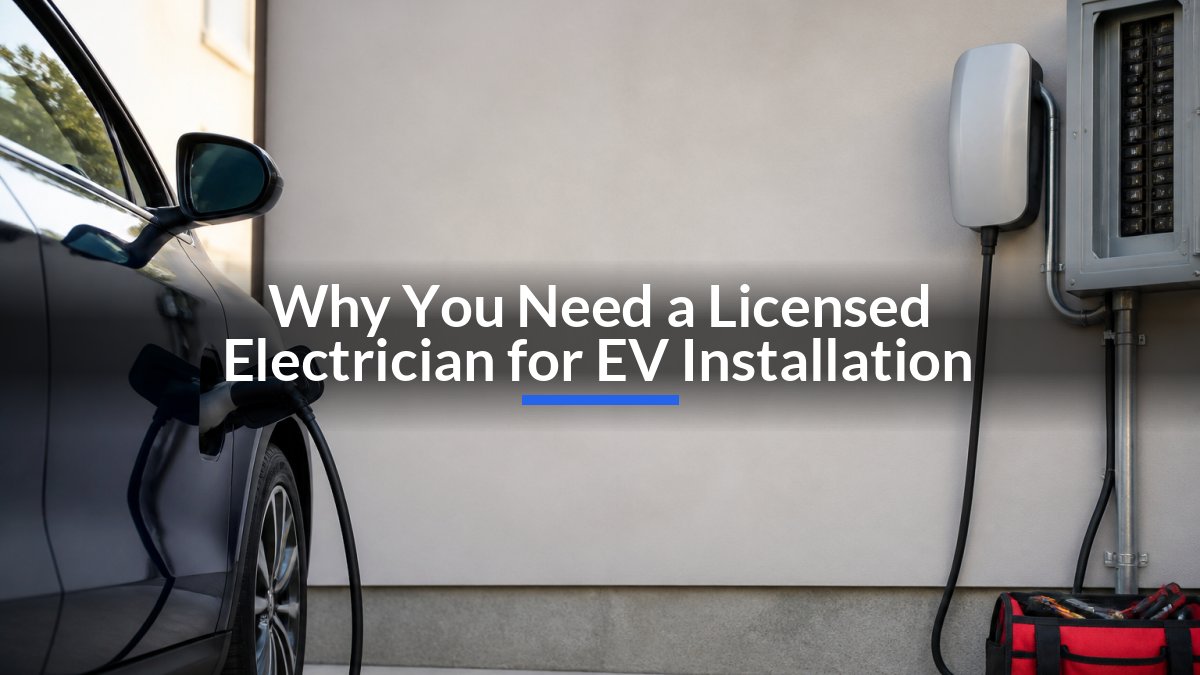
Why You Need a Licensed Electrician for EV Installation
Table of Contents
- Why Professional Installation Matters for EV Chargers
- Home EV Charger Installation Requirements: What Your Electrician Must Know
- EV Charger Electrical Panel Capacity: Can Your Home Handle It?
- EV Charger Installation Permit and Inspection Requirements
- Electrical Safety and Fire-Risk Prevention in EV Charger Setup
- How to Choose an EV Charger Installer: Vetting Qualifications and Credentials
- The Risks of DIY, Handyman, and Unlicensed Installation
- Frequently Asked Questions
Last Updated: October 10, 2026
Why Professional Installation Matters for EV Chargers
Installing an electric vehicle charger at home isn't a DIY project.
Improper installation can cause electrical fires, damage your home's panel, or void your warranty. Most jurisdictions require a licensed electrician to install EV charging equipment, it's the law, not just best practice.
This is why you need a licensed electrician for EV installation: they assess your home, upgrade what's needed, and ensure everything works correctly from day one, avoiding the expensive repairs and fire hazards that result from shortcuts.
Home EV Charger Installation Requirements: What Your Electrician Must Know
EV charger installation requires understanding electrical codes, panel capacity, grounding requirements, and local permitting rules.
The National Electrical Code (NEC) sets minimum safety standards for EV charger installations (Importance of Using the Latest NEC for EV Charger Installations). Your electrician must know proper grounding and bonding, overcurrent protection sizing, wire gauge requirements, dedicated circuit requirements, and conduit routing standards. Licensed electricians have formal training in these codes and understand local amendments that many jurisdictions add beyond the NEC.
EV Charger Electrical Panel Capacity: Can Your Home Handle It?
Your electrician must assess your electrical panel's available capacity, the single most important factor in determining whether installation is straightforward or requires a panel upgrade.
Understanding Your Home's Electrical Service
Most homes have either 100-amp or 200-amp electrical service, representing the maximum total current your home can draw at any moment. Circuit breakers distribute power to different areas: kitchen, bedrooms, heating, air conditioning, and water heater.
An EV charger typically requires 40-60 amps of dedicated power, depending on the charger's power rating:
- Level 1 charger (standard 120V outlet): 12-16 amps (rarely requires panel work)
- Level 2 charger (240V): 30-60 amps (most common for home installation; usually requires dedicated circuit and often panel assessment)
- DC fast charger (commercial/rare for residential): 100+ amps (requires panel upgrade in nearly all cases)
Most homeowners install Level 2 chargers, which is where the panel-capacity question becomes critical.
How Electricians Assess Available Capacity
A licensed electrician performs a detailed load calculation: reviewing utility bills to understand peak demand, applying NEC Article 220 demand factors to different circuits, subtracting calculated demand from total service rating to identify available capacity, and accounting for future needs like additional chargers or appliances.
Panel Upgrade Decision Tree
Do you need a panel upgrade?
Scenario 1: You have 200-amp service and your calculated demand load is under 150 amps.
- Likely outcome: No upgrade needed. Your electrician installs a new 50-60 amp breaker and dedicated circuit.
Scenario 2: You have 200-amp service and your calculated demand load is 160-180 amps.
- Likely outcome: Borderline. Your electrician may recommend a panel upgrade or install with load management (e.g., scheduled charging during off-peak hours).
Scenario 3: You have 100-amp service.
- Likely outcome: Panel upgrade is almost always necessary. A 100-amp service is typically insufficient for both your home's existing needs and a 50-amp EV charger.
Scenario 4: You have 200-amp service and your calculated demand load is already at or above 180 amps.
- Likely outcome: Panel upgrade required. Your home is already drawing near its maximum capacity.
What a Panel Upgrade Involves
A panel upgrade involves service entrance replacement, new breaker panel installation, meter replacement, utility company coordination, multiple building department inspections, and temporary power interruption during switchover.
Panel upgrades are complex, code-intensive work that absolutely requires a licensed professional. They also require utility company approval and coordination, which adds time and cost.
Alternatives to Panel Upgrade
Alternatives to panel upgrade include installing a lower-amperage 30-amp Level 2 charger, scheduling charging during off-peak hours, or using load management systems that reduce charging power when other high-demand appliances activate.
These alternatives don't eliminate the need for a dedicated circuit and proper installation, but they may allow you to avoid a full panel upgrade.
Getting a Clear Answer
Ask your electrician: "Do I have available capacity for a 50-amp Level 2 charger?" "If a panel upgrade is needed, what does that involve and what's the timeline?" "What's the total estimate?" "Are there alternatives to avoid a panel upgrade?"
A professional electrician will provide a written assessment that explains their findings and recommendations. This gives you clarity and helps you make an informed decision about moving forward.
EV Charger Installation Permit and Inspection Requirements
Every EV charger installation requires a permit in most jurisdictions. The permit process involves submitting plans, paying fees, scheduling pre-installation and final inspections, and completing the work. Your licensed electrician handles all permit paperwork, knows local requirements, and schedules inspections.
Unpermitted work risks insurance claim denials and creates problems when selling your home, as buyers discover the installation and demand removal or remediation.
Electrical Safety and Fire-Risk Prevention in EV Charger Setup
EV chargers pull significant electrical current continuously. Improper installation creates fire risk from overheated wires, loose connections, and inadequate grounding. A licensed electrician prevents these hazards through proper wire sizing, correct breaker selection, solid grounding and bonding, appropriate conduit protection, safe disconnect switches, and weatherproof installation. Code compliance prevents fires, the NEC's safety requirements exist because past installations failed catastrophically.
Unlicensed installers cut corners with cheaper materials and skipped steps, creating long-term fire risk.
How to Choose an EV Charger Installer: Vetting Qualifications and Credentials
Not every electrician has EV charger experience. You want someone who understands EV-specific requirements and can guide you from assessment to final inspection.
Step 1: Verify Active Electrical License and Disciplinary History
Confirm they hold a current, active electrical license in your state by visiting your state's licensing board website. Verify license status (active and in good standing), license type (Journeyman or Master Electrician), disciplinary history, and scope of work covering residential electrical work in your county.
If you cannot find them in your state's licensing database, do not hire them. Operating without a license is illegal and leaves you unprotected.
Step 2: Confirm Insurance Coverage
A licensed electrician carries two critical insurance policies:
- General liability insurance: Covers damage to your home or property during installation
- Workers' compensation insurance: Covers injuries to the electrician or their crew on your property
Request a current Certificate of Insurance for both. Verify the policy is active and covers electrical work and EV charger installation specifically. If they cannot provide proof of insurance, move on. Uninsured work puts you at financial and legal risk.
Step 3: Assess EV-Specific Experience and Training
EV charger installation is specialized. Ask these direct questions:
- How many Level 2 chargers have you installed in the past 12 months? (Look for at least 5-10 recent installations; this shows active, current experience)
- Which charger brands and models have you worked with? (Tesla, Wallbox, Clipper Creek, ChargePoint, etc., familiarity with multiple brands is a plus)
- Have you handled electrical panel upgrades for EV installations? (This is a complex, high-value skill)
- Are you familiar with our local permitting process and building department? (Local knowledge saves time and prevents permit rejections)
- Do you hold EV Infrastructure Training Program (EVITP) certification? (Not required everywhere, but it signals formal EV training and commitment to the field)
Electricians without EV experience may be competent, but they'll spend time learning your project, and that often means delays and higher costs. Prioritize someone with proven EV installation history.
Step 4: Request and Check References
Ask for at least three references from EV charger installations completed in the past 12 months. Contact them directly and ask:
- Did the electrician complete the work on time and on budget?
- Did they handle all permitting and inspection coordination?
- Did the charger pass final inspection on the first attempt?
- Would you hire them again?
- Did they explain the work clearly and answer your questions?
A reluctance to provide references is a red flag. Good installers are proud of their work and happy to have you verify it.
Step 5: Get Written Quotes and Compare Line Items
Obtain written quotes from at least two licensed electricians. A complete quote should itemize:
- Site assessment and load calculation (often $100-$300)
- Permit application and fees (varies by jurisdiction; typically $50-$300)
- Labor for installation (hourly rate or flat fee for the charger installation itself)
- Materials (wire, conduit, breaker, disconnect switch, labor for any panel work)
- Panel upgrade labor and materials (if needed; this is often the largest line item)
- Final inspection coordination (some electricians include this; others charge separately)
- Warranty on workmanship (typically 1-5 years)
Compare the quotes side by side. The cheapest option is not always the best, you're paying for expertise, insurance, and accountability. A quote that's significantly lower than others may indicate corners being cut or hidden costs.
Red Flags to Avoid
- Refuses to provide proof of license or insurance
- Cannot or will not provide references
- Quotes a price far below others (suggests inexperience or cost-cutting)
- Discourages you from obtaining a permit ("We can skip it" or "It's not necessary")
- Cannot explain why your home might need a panel upgrade
- Rushes you into a decision without a thorough site assessment
- Offers to do the work "off the books" or without permits
The Risks of DIY, Handyman, and Unlicensed Installation
DIY EV charger installation is dangerous and illegal in most places. Your home's electrical system is complex.
Handymen can handle simple tasks, replacing outlets, installing fixtures. EV charger installation is beyond their scope.
Unlicensed electricians operate outside the law. They don't carry insurance. If something goes wrong, a fire, an injury, you have no recourse.
The consequences of unpermitted installation include:
- Failed home inspections when selling
- Insurance claims denied
- Expensive removal and rework by a licensed electrician
- Potential fines from your building department
- Liability if someone is injured
Mister Volts recommends working with a licensed electrician every time. The upfront cost is reasonable compared to the risk and liability of shortcuts.
Installing an EV charger safely requires expertise, proper permits, and code compliance. We manage permits, coordinate inspections, and handle panel upgrades when required. Contact Mister Volts for a consultation and see how we can safely bring EV charging to your home.
Frequently Asked Questions
Do I need a licensed electrician to install a home EV charger?
Yes. EV charger installation involves high-voltage electrical work that must meet National Electrical Code (NEC) standards and local building codes. A licensed electrician ensures your installation is safe, legally compliant, and properly permitted. Unlicensed installation creates fire hazards, voids warranties, and may violate local ordinances. Your homeowner's insurance may also deny claims if non-licensed work caused damage.
What does an electrician check before installing an EV charger?
A qualified electrician performs a site assessment that includes evaluating your electrical panel's available capacity, calculating your home's total electrical load, determining if a panel upgrade is needed, assessing wiring requirements and routing, checking grounding systems, and verifying local code requirements. This assessment ensures your system can safely support the charger's power demands without overloading circuits or creating fire risks.
Does EV charger installation require a permit and inspection?
Yes. Most jurisdictions require electrical permits and inspections for EV charger installation. A licensed electrician handles permit applications, ensures the work meets local electrical codes, and coordinates with inspectors. Permits protect you by verifying the installation is safe and properly documented. Skipping permits can result in fines, insurance complications, and difficulty selling your home.
How do I verify an electrician's qualifications for EV charger work?
Ask for proof of current state electrical licensing, general liability and workers' compensation insurance, and EVITP (Electric Vehicle Infrastructure Training Program) certification or equivalent EV-specific training. Request references from recent EV installations, verify their license status through your state's licensing board, and confirm they understand local permitting requirements. A qualified installer should be transparent about credentials and willing to provide documentation.