 How-to
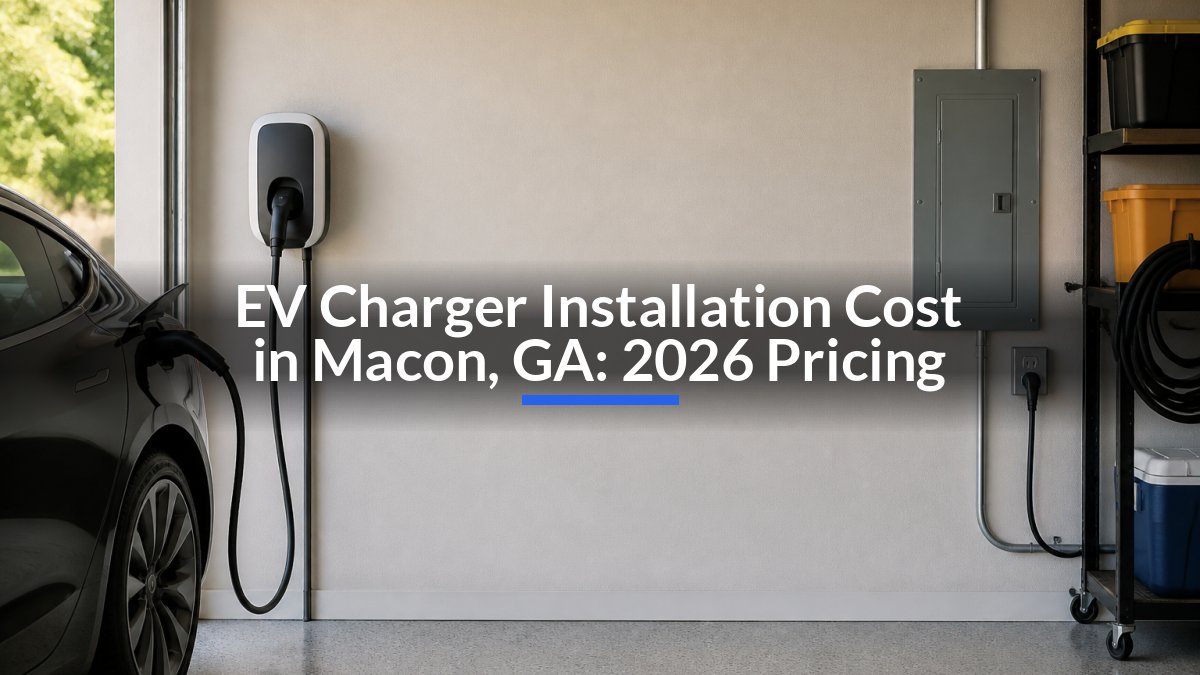
EV Charger Installation Cost in Macon, GA: 2026 Pricing
Last Updated: October 23, 2026
Quick Summary
The ev charger installation cost in Macon, GA typically runs between $800 and $3,000 for a home Level 2 setup, with the national average near $1,400. That price covers the charger, wiring run, labor, and permit fees, though panel capacity and wire distance can push your total higher.
- Level 2 chargers use a dedicated 240-volt circuit with its own breaker, which is a safety requirement.
- Reported permit costs range from $45 to $720 and average $297, according to EnergySage data.
- A quote should itemize the charger model, circuit amperage, wire run length, permit, and labor separately.
- Panel upgrades are priced separately and become necessary when your service lacks open slots or capacity.
- Macon's public charging mix is 54% Level 2 ports, per ChargeHub, matching the home standard.
Table of Contents
- What EV Charger Installation Cost in Macon, GA Actually Includes
- Level 2 EV Charger Installation: The 240V Circuit Behind the Price
- When an EV Charger Electrical Panel Upgrade Changes the Total
- EV Charger Installation Permit Costs and Code Compliance in Georgia
- How to Read an EV Charger Installation Quote
- Installation Cost Scenarios for Macon Homeowners
- Frequently Asked Questions
What EV Charger Installation Cost in Macon, GA Actually Includes
The EV charger installation cost in Macon, GA usually lands somewhere between $800 and $3,000 for a home Level 2 setup, and the national average for adding the outlets and charger sits near $1,400. That figure comes from the U.S. Department of Transportation ITS Knowledge Resources estimate, and it is a starting point, not a quote. At Mister Volts, we quote these jobs from the panel out, because two houses on the same street can need very different work.
A Level 2 charger is a 240-volt unit that adds meaningful range overnight instead of the trickle a standard wall outlet delivers. The price you pay covers four things: the equipment, the wiring run, the labor to install it, and any permit or inspection fee your jurisdiction requires.
Most homeowners fixate on the box on the wall. The box is rarely the expensive part.
Materials and Labor: Where the Money Goes
Materials include the charger itself, the circuit breaker, the wire, conduit, and mounting hardware. Labor covers the electrician's time to run a dedicated circuit from your panel to the parking spot, mount the unit, and test it.
The distance from panel to charger drives much of the labor cost. A garage wall twenty feet from the panel is a simple run. A detached carport across a driveway is not.
Here is the split that matters when you compare bids:
| Cost Component | What Drives It | Why It Varies |
|---|---|---|
| Charger unit | Amperage and features | Basic vs. smart/wifi models |
| Wiring and conduit | Distance from panel | Long or outdoor runs cost more |
| Circuit breaker | Panel capacity | May need a new breaker slot |
| Labor | Installation complexity | Finished walls, crawlspaces, attics |
| Permit and inspection | Local jurisdiction | Fees vary by state and city |
Level 2 EV Charger Installation: The 240V Circuit Behind the Price
Level 2 EV charger installation is the work of adding a dedicated 240-volt circuit, breaker, and outlet or hardwired connection for a home charging unit.
A dedicated circuit means the charger gets its own breaker, not a shared slot. That is a safety requirement, not an upsell.
This is also where panel capacity enters the picture. Your existing service has to carry the new load alongside everything already running.
If your home is already near its limit, our guide to an electrical system upgrade explains how modern loads like EV chargers affect panel capacity and when an upgrade becomes necessary.
When an EV Charger Electrical Panel Upgrade Changes the Total
An EV charger electrical panel upgrade becomes necessary when your service panel has no open breaker slots or lacks the capacity to carry the new 240V load safely.
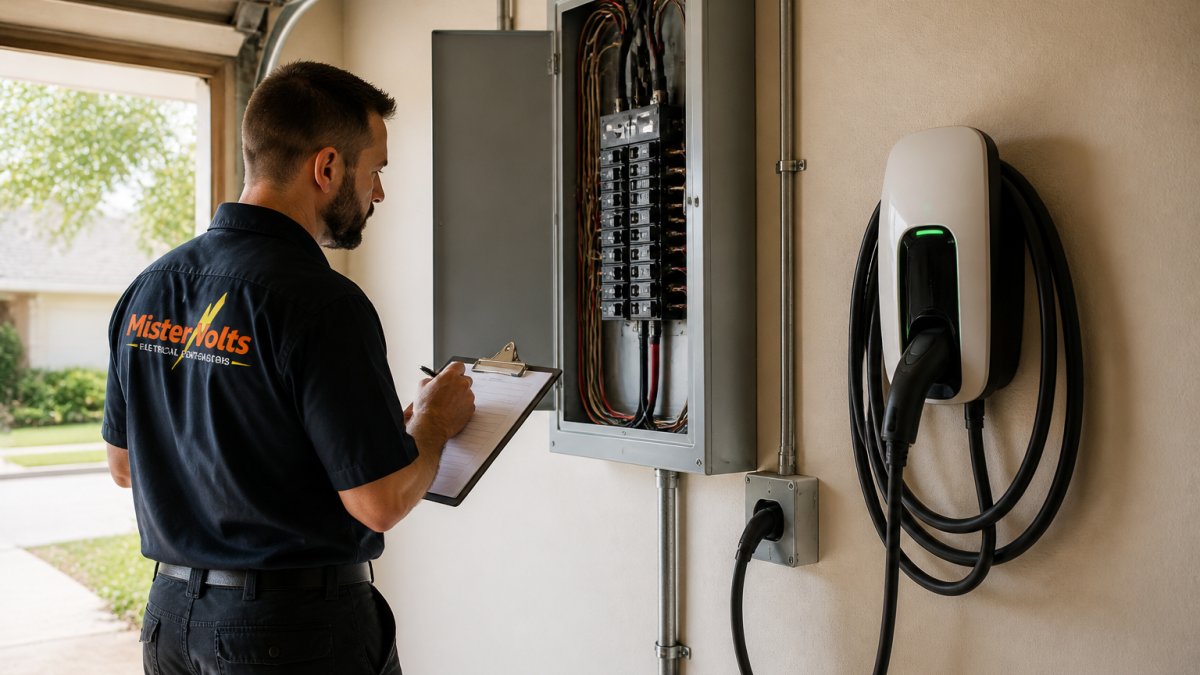
Older homes are the usual candidates. A panel that was adequate for the appliances of its era may not have room for a charger pulling continuous current overnight.
Panel work is priced separately from the charger install, and it depends on the service size and what has to be replaced. For the full breakdown of what panel work involves, see our guide to electrical panel upgrade cost, which covers labor, permits, and service sizes from 100-amp to 200-amp.
EV Charger Installation Permit Costs and Code Compliance in Georgia
An EV charger installation permit is the approval your local building authority issues before electrical work begins, and skipping it creates real problems at resale and inspection. Permit requirements and code rules vary by state, and reported permit costs range from $45 to $720, averaging $297, according to EnergySage's 2026 installation cost data. That range is broad on purpose. It reflects state-level differences, not a quote for any single address. Your jurisdiction sets its own fee and its own inspection process.
How Permitting Actually Works
In most jurisdictions, the electrician files the permit application, pays the fee, and schedules the inspection. The permit is tied to the address and the scope of work, so a quote that lists "permit included" should also state who pulls it and whether the fee is passed through at cost or marked up. Ask that question before you compare bids.
The inspection usually happens in two stages: a rough-in inspection after the wiring is run but before the walls are closed, and a final inspection after the charger is mounted and energized. Some jurisdictions allow a single final inspection for simple residential EV circuits. The electrician should tell you which applies to your job, because a two-stage inspection adds a scheduling step and can affect the timeline.
What the Code Requires
The National Electrical Code (NEC) is the model code most states and local jurisdictions adopt, sometimes with amendments. For EV charging, the relevant provisions cover the dedicated branch circuit, conductor sizing for continuous load, grounding, and ground-fault protection.
Code compliance means the installation meets current electrical code: correct wire size, proper grounding, GFCI protection where required, and a circuit rated for continuous load.
Common Reasons an Inspection Fails
Most failed inspections trace back to a handful of issues: undersized wire for the breaker, missing or improper grounding, a circuit tapped off an existing run instead of dedicated, or a charger mounted without the required clearance and disconnecting means.
Ask for the permit line on every bid. A quote that omits it is either incomplete or planning to skip it.
How to Read an EV Charger Installation Quote
An EV charger installation quote should list the charger model, the circuit amperage, the wire run length, the permit, and the labor as separate line items. If you cannot tell what is included, you cannot compare bids. Most competitors stop at that advice. The useful part is knowing what to do when two bids for the same job come back hundreds of dollars apart.
The Line Items That Must Appear
Use this checklist when you review each estimate:
- Charger make and model named, or "customer-supplied" stated
- Circuit amperage and breaker size listed
- Wire run length in feet, with conduit type
- Permit and inspection fees itemized
- Panel assessment included or noted as separate
- Labor described by task, not lumped together
- Written estimate with a scope of work, not a verbal number
- License number and insurance shown
How to Compare Two Bids Side by Side
Put the bids next to each other and match them line by line. The first thing to check is whether both quotes cover the same wire run length. A bid for a 20-foot run and a bid for a 60-foot run are not competing prices; they are different jobs. The second is whether both include the permit.
A common pattern is that the lower bid excludes one of three things: the permit, the panel assessment, or the disposal and cleanup. None of those are optional in a complete job, so add their cost back in before you decide which bid is actually lower. A bid that looks cheaper on the first page often is not cheaper once the exclusions are priced.
Exclusions and Change Orders
Every written estimate should state what is excluded. Typical exclusions include drywall repair after a wire run, landscaping restoration for trenching, and panel replacement if the assessment finds the service cannot carry the load. Those exclusions are not automatically a red flag, but they should be visible before you sign.
A change order is the written document that authorizes work beyond the original scope and states the added cost. Ask each electrician how they handle change orders and whether they require your signature before proceeding.
Warranty and Licensing Checks
Ask what workmanship warranty the electrician offers and how long it runs. A one-year workmanship warranty is common; anything shorter deserves a question. Confirm the license number on the estimate matches the state license lookup, and confirm general liability insurance is current. A written estimate protects you.
Before you sign with anyone, run through our electrician vetting guide to confirm you are hiring a licensed, insured professional.
Installation Cost Scenarios for Macon Homeowners
Three realistic scenarios show how the same job lands at different prices. These are illustrations of what drives cost, not quotes.
Scenario 2: Older home, full panel, detached carport. The panel is full and the charger goes on a detached structure.
Scenario 3: Mid-range home, panel has capacity, long interior run. The panel can carry the load but the charger is across the house.
Macon's public charging mix leans heavily on Level 2 ports, with ChargeHub listing 54% of local charging ports as Level 2, which tells you home Level 2 is the standard most drivers match. When you are ready to schedule, our residential electrical services in Middle Georgia cover charger installs, panel work, and the wiring in between.
The range of quotes you get will be wide, and that is normal. Get a clear, itemized quote before work begins. Start with a conversation with Mister Volts and get your charger installed right the first time.
Frequently Asked Questions
What affects the cost of EV charger installation in Macon, GA?
The biggest variables are your home's electrical capacity, the distance from your panel to the charger location, whether a panel upgrade is needed, permit fees, and the charger you choose. A simple install near an existing 240V circuit costs far less than a project that requires a new dedicated circuit, trenching, or a service panel upgrade. Georgia permit costs range widely by jurisdiction, so always request a written, itemized estimate before work begins.
Do I need a permit to install an EV charger in Georgia?
In most Georgia jurisdictions, yes. A permit is typically required for new 240V circuits and any panel work. Permit costs vary by state and municipality. Your licensed electrician should pull the permit and schedule the inspection. Skipping the permit can complicate insurance claims and future home sales, so confirm permit handling is included in your EV charger installation quote.
Does installing a home EV charger require a panel upgrade?
Not always. An electrician performs a load calculation to see whether your existing service panel has capacity for the added 240V circuit. If capacity is tight or the panel is outdated, an EV charger electrical panel upgrade may be necessary, which adds to the project cost. A panel assessment is the single most important step in getting an accurate estimate, so have it done before comparing quotes.
How long does Level 2 EV charger installation take?
A straightforward Level 2 EV charger installation with an existing available circuit can often be completed in a few hours. Projects that require a new dedicated circuit, longer wiring runs, or a panel upgrade can take a full day or more, and panel upgrades may extend into a second visit. Permit approval and inspection timelines also affect scheduling, so ask your electrician for a realistic timeline alongside the written estimate.