
 How-to
7 Steps to Find a Qualified Electrician for Old House Rewiring
Last Updated: October 24, 2026
Quick Summary
A qualified electrician old house rewiring professional must be licensed, insured, and willing to pull permits for inspections. Verify their credentials, ask about experience with older wiring types like knob-and-tube and cloth-insulated wiring, and compare detailed written estimates from at least three candidates before hiring.
- Verify the electrician's license, general liability insurance, and workers' compensation coverage before hiring.
- Ask specific questions about experience removing knob-and-tube wiring, handling aluminum wiring, and performing load calculations.
- Compare at least three written estimates that break down scope, materials, labor, permits, and warranty terms separately.
- Check references from previous older-home rewiring projects and review online ratings on Google and the Better Business Bureau.
- Watch for red flags like reluctance to discuss permits, pressure for large upfront payments, or vague answers about licensing and insurance.
Table of Contents
- Why Finding the Right Electrician Matters for Older Homes
- Step 1: Verify Licensing, Insurance, and Permits
- Step 2: Ask the Right Questions Before Hiring
- Step 3: Compare Electrical Rewiring Estimates Carefully
- Step 4: Check References and Customer Reviews
- Step 5: Understand the Home Rewiring Project Timeline
- Step 6: Identify Red Flags and Warning Signs
- Step 7: Review the Written Proposal and Warranty
- Frequently Asked Questions
Why Finding the Right Electrician Matters for Older Homes
Finding a qualified electrician old house rewiring professional isn't just about getting the job done, it's about protecting your home and family. Older homes often have electrical systems that are outdated, unsafe, or simply unable to handle modern power demands. Learn the critical signs your home needs electrical rewiring to identify hazards before they become dangerous.
The challenge is knowing which electrician to trust with such a critical project. Not all electricians have experience with the unique demands of older homes. Some may rush through the work.
At Mister Volts, we understand these concerns. Our licensed electricians have worked on countless older homes throughout the service area. We know the difference between a quick fix and a proper, code-compliant solution that a qualified electrician old house rewiring project demands.
The National Electrical Code (NEC) standards for residential wiring
Step 1: Verify Licensing, Insurance, and Permits
Before you hire anyone, verify their credentials. A licensed electrician has passed exams and meets state requirements.
Ask to see the electrician's license. In most states, electricians must display their license number.
Check for general liability insurance and workers' compensation coverage. If an electrician gets injured on your property, their workers' comp should cover it, not your homeowner's policy.
Permits matter more than most homeowners realize. A qualified electrician will pull permits for your rewiring project.
LINK: How to Find Reliable Electricians: A Vetting Guide
Step 2: Ask the Right Questions Before Hiring
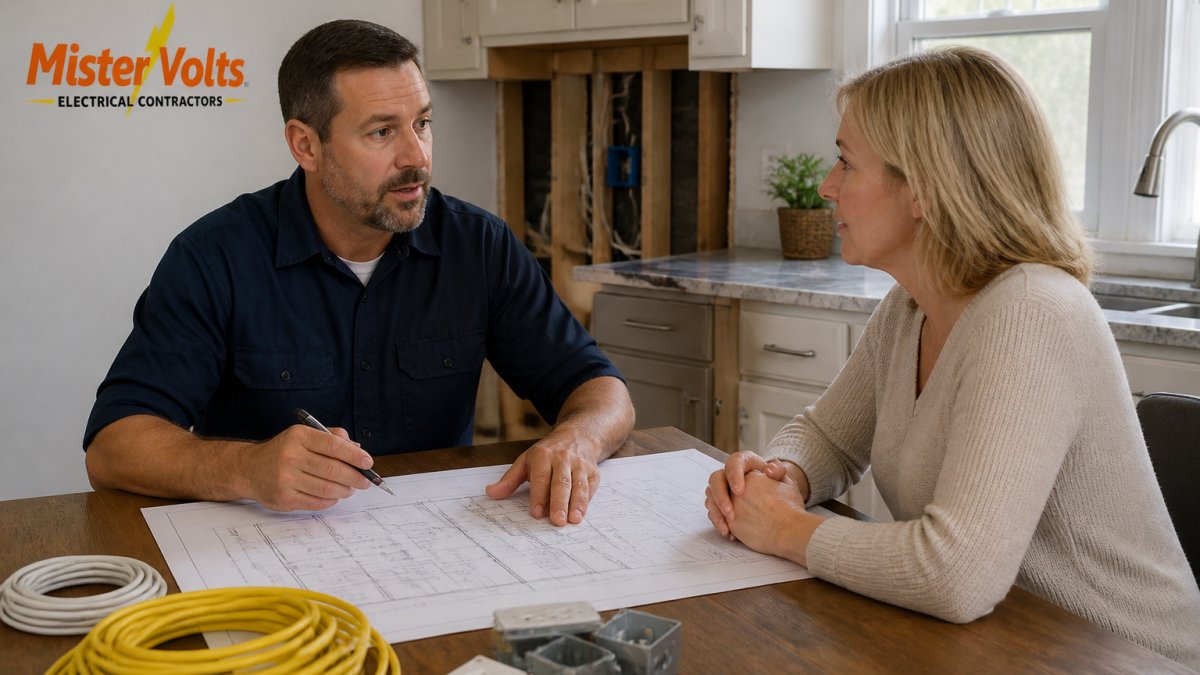
The questions you ask reveal whether an electrician truly understands your project. A qualified electrician will give you detailed, confident answers. Vague or rushed responses are red flags. Use the script below as a practical interview framework, and take notes so you can compare candidates side by side.
Critical questions about experience with older homes
Ask directly: "How many older home rewiring projects have you completed in the last two years, and what wiring types did they involve?" Experience matters. Older homes have different challenges than new construction. Knob-and-tube wiring, cloth-insulated wiring, and aluminum wiring all require specific knowledge and different handling.
Follow up with targeted probes:
- "Have you removed knob-and-tube wiring before? How do you handle the abandoned runs and the attic and wall penetrations?"
- "How do you identify and treat aluminum branch-circuit wiring? Do you use approved connectors, pigtails, or rewire those circuits?"
- "How do you test for and address cloth-insulated wiring that crumbles when disturbed?"
Ask about the scope of work. Will they replace just the wiring, or also upgrade the service panels? Will they handle grounding? Will they address receptacles, switches, and fixtures, or is that a separate line item? These details affect both cost and timeline.
Understanding their approach to code compliance
Code compliance is not optional; it is the law.
Ask how they handle inspections. A qualified electrician welcomes inspections. They know their work will pass. If an electrician seems reluctant to discuss permits or inspections, that is a warning sign.
Ask about their warranty or guarantee on the work. Most qualified electricians stand behind their installation. They should offer a written electrical warranty covering workmanship for at least one year.
A practical interview script
Use these questions in order during a phone call or site visit, and note the answers:
- "What is your license number, and which state or local board issued it?"
- "Can you provide a certificate of insurance for general liability and workers' compensation?"
- "How many full rewires of homes built before 1950 have you completed?"
- "What is your process for handling knob-and-tube, cloth-insulated, or aluminum wiring?"
- "Will you pull the permit, and what inspections will be required?"
- "What is included in your bid, and what is excluded?"
- "How do you handle change orders if hidden damage is found?"
- "What warranty do you provide, and what does it cover?"
- "Who will be on site, and are they employees or subcontractors?"
- "Can you provide three references from older-home rewiring projects?"
Red flags in the answers
Watch for evasive answers about licensing, insurance, or permits. Be cautious if the electrician cannot name the code edition enforced locally, dismisses inspections as unnecessary, or pressures you to skip the permit. A qualified electrician will answer these questions directly and welcome the scrutiny.
Use this practical interview script to evaluate each electrician candidate and compare their responses side by side.
| Question | Purpose | What to Listen For |
|---|---|---|
| What is your license number and issuing state or board? | Verify credentials | Direct answer with specific number |
| Can you provide a certificate of insurance? | Confirm coverage | General liability and workers' compensation proof |
| How many full rewires of homes built before 1950 have you completed? | Assess old-home experience | Specific number and recent projects |
| What is your process for handling knob-and-tube or cloth-insulated wiring? | Evaluate technical knowledge | Detailed explanation of approach |
| Will you pull the permit and attend inspections? | Ensure code compliance | Commitment to rough-in and final inspections |
| What is included in your bid and what is excluded? | Clarify scope | Specific line items, not vague descriptions |
| What warranty do you provide and what does it cover? | Understand protection | Written warranty of at least one year |
| Can you provide three references from older-home rewiring projects? | Verify track record | Names and contact information provided |
Step 3: Compare Electrical Rewiring Estimates Carefully
Never hire based on price alone. Compare at least three written estimates from different electricians. A written estimate should include:
- Scope of work (what is being replaced or upgraded)
- Materials and labor broken down separately
- Timeline for completion
Normalize the bids before you compare
Bids are rarely written in the same format, so normalize them first. Create a simple comparison sheet with one column per electrician and one row per scope item. Include rows for:
- Removal of existing wiring and disposal
- New branch circuits and home runs
- Panel replacement or upgrade and service amperage
If a bid omits a row, mark it as "not included" rather than assuming it is covered. This is where the lowest bid often loses its advantage.
Compare scope, materials, and exclusions
Look for consistency across estimates. If one estimate is dramatically lower than the others, ask why. Lower prices sometimes mean the electrician is cutting corners, using cheaper materials, skipping inspections, or underestimating the work required.
Ask each electrician to specify:
- Wire type and gauge (for example, copper versus aluminum, and the gauge used for each circuit)
- Device grade (builder-grade versus specification-grade receptacles and switches)
- Whether patching and painting are included or excluded
Understand change-order terms
Older homes often reveal hidden damage once walls are opened. Ask each electrician how change orders are priced and approved. A fair bid will state the hourly rate or unit pricing for additional work and require written approval before proceeding. Avoid any bid that leaves change-order pricing open-ended.
Red flags in estimates
- Vague descriptions ("electrical work" instead of specific tasks)
- No mention of permits or inspections
- No warranty or guarantee stated
A detailed estimate protects both you and the electrician. It shows exactly what you are paying for and prevents disputes later.
Step 4: Check References and Customer Reviews
Ask for references, real customers who can speak to the electrician's work. A qualified electrician will provide at least three references. Call them. Ask about:
- Quality of workmanship
- Whether the project stayed on schedule
- How the electrician handled problems or changes
Online reviews offer additional perspective. Check Google, Better Business Bureau, and local review sites. Look for patterns. One negative review might be an outlier. Multiple complaints about the same issue suggest a real problem.
Pay attention to reviews mentioning older homes specifically. If customers praise an electrician's work on older homes, that's valuable information for your decision.
Step 5: Understand the Home Rewiring Project Timeline
Rewiring an older home takes time. The timeline depends on the home's size, the extent of the work, and how accessible the wiring is. Most full-house rewiring projects take one to two weeks, but some take longer.
The process typically involves:
- Initial inspection and assessment
- Permit application and approval
- Rough-in work (running new wiring through walls and ceilings)
Ask your electrician for a realistic timeline before work begins. Understand that unexpected problems, hidden damage, structural issues, or code violations, can extend the schedule.
LINK: Prepare Your Home for Electrical Rewiring: 7 Steps
Step 6: Identify Red Flags and Warning Signs
Certain behaviors signal that an electrician isn't qualified or trustworthy. Watch for:
- Reluctance to discuss licensing, insurance, or permits
- Pressure to start work immediately without a written contract
- Unwillingness to provide references
An electrician who avoids these topics may be cutting corners or operating without proper credentials. Trust your instincts. If something feels off, move on to another electrician.
Also watch for red flags during the work itself. A qualified electrician will:
- Keep the work area reasonably organized
- Explain what they're doing and why
- Address your questions directly
If an electrician seems careless, ignores safety, or avoids answering questions during the job, address it immediately.
Step 7: Review the Written Proposal and Warranty
Before work begins, you should have everything in writing. The written proposal should match the estimate and include:
- Exact scope of work
- Materials to be used
- Labor costs and timeline
Read it carefully. Ask for clarification on anything unclear. A qualified electrician will take time to explain the proposal and answer your questions.
The warranty is critical. It protects you if problems arise after the work is complete. Most electricians offer one-year warranties on workmanship. Understand what's covered. Does the warranty include parts?
LINK: Trusted electricians for your home
Finding a qualified electrician for old house rewiring requires careful research and clear communication. Start by contacting Mister Volts for a detailed assessment of your rewiring needs and a written proposal.
Frequently Asked Questions
What qualifications should an electrician have for old house rewiring?
A qualified electrician for old house rewiring must hold a current state license, carry liability insurance, and have specific experience with older homes and legacy wiring systems like knob-and-tube or cloth-insulated wiring. Ask about their familiarity with code compliance for older properties and whether they've completed similar projects. Licensed electricians understand the unique challenges of older electrical systems and can identify safety hazards that newer homes don't have.
What questions should I ask an electrician before hiring them?
Ask about their experience with homes built in your property's era, whether they pull permits for rewiring work, how they handle unexpected issues during the project, and what warranty they provide on labor. Request references from similar projects, clarify the project timeline, and ask how they'll minimize disruption to your home. Understanding their process for inspecting old wiring before quoting and their approach to code compliance protects you from costly mistakes.
How can I compare electrical rewiring estimates from different contractors?
Request written estimates from at least three licensed electricians that detail the scope of work, materials, labor costs, timeline, and warranty terms. Compare not just the total price but what's included, some estimates may omit permit costs or inspection fees. Look for consistency in project scope; if estimates vary widely, ask why. Ensure each estimate addresses specific issues in your older home, such as panel capacity or outdated wiring replacement.
How long does a typical home rewiring project take?
A full old house rewiring project typically takes one to three weeks, depending on the home's size, the complexity of existing wiring, and whether walls must be opened. Partial rewiring of specific circuits or areas may take several days. Your electrician should provide a realistic timeline upfront and explain factors that could cause delays, such as discovering additional hazards during inspection or waiting for permit approval.