 How-to
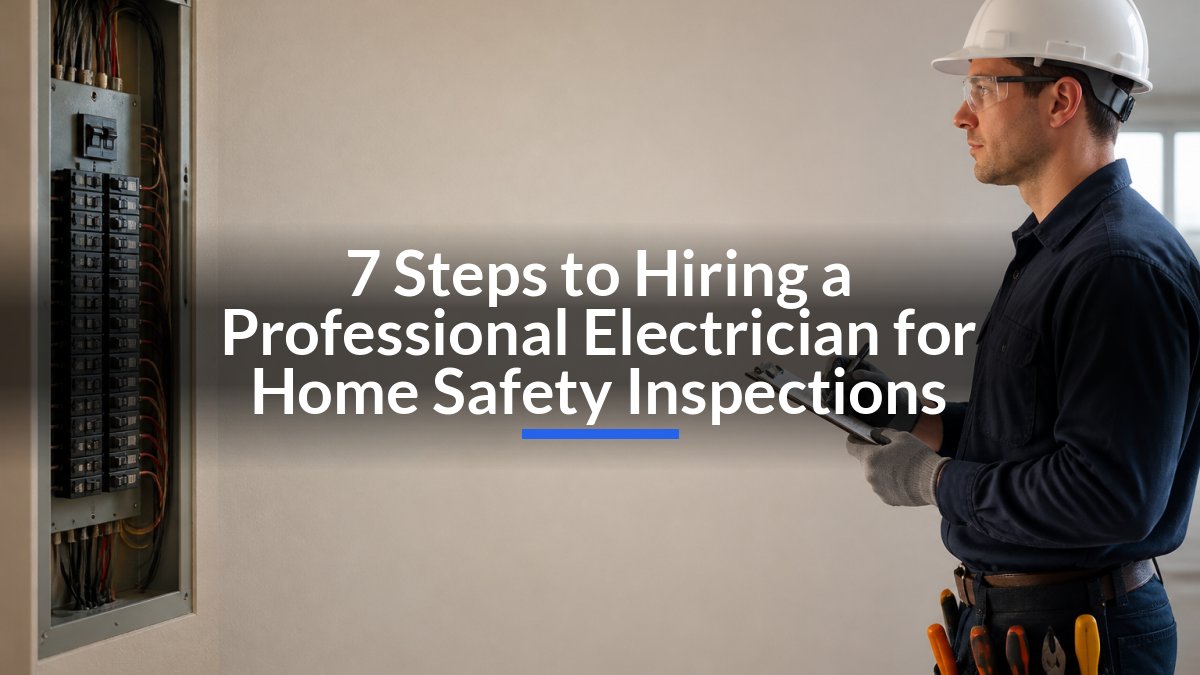
7 Steps to Hiring a Professional Electrician for Home Safety Inspections
Last Updated: October 27, 2026
Quick Summary
Hiring a professional electrician for home safety inspections means verifying their license and insurance, confirming the inspection scope in writing, and comparing itemized quotes. A standard inspection covers the service panel, branch wiring, grounding, outlets, switches, fixtures, and smoke and carbon monoxide alarms.
- Check the electrician's license number with the board and confirm liability insurance and workers' compensation are current.
- Ask what the inspection covers and leaves out, and whether you get a written report with photos.
- Inspection pricing depends on home size, panel condition, and how much of the system needs testing.
- A quote should itemize base scope, add-on testing, report format, repair handling, and any trip charge.
- Repair exposed wiring, burning smells, or a hot panel immediately; schedule GFCI and grounding fixes within weeks.
Table of Contents
- Why Hiring a Professional Electrician for Home Safety Inspections Matters
- What Does an Electrical Inspection Include? A Room-by-Room Breakdown
- Your Home Electrical Safety Inspection Checklist
- Electrical Inspection Preparation: What to Do Before the Electrician Arrives
- Questions to Ask an Electrician Before Hiring
- How to Verify a Licensed Electrician's Credentials and Insurance
- Inspection Pricing and What Affects the Final Cost
- What Happens After the Inspection: Prioritizing Repairs and Next Steps
- Frequently Asked Questions
Why Hiring a Professional Electrician for Home Safety Inspections Matters
Hiring a professional electrician for home safety inspections can help identify electrical hazards. The work is steady: the U.S. Bureau of Labor Statistics projects 9% growth in electrician employment from 2025 to 2035, with about 72,700 openings each year, which tells you demand for qualified hands is not fading.
What Does an Electrical Inspection Include? A Room-by-Room Breakdown
An electrical inspection is a systematic evaluation of your home's wiring, panel, outlets, and grounding, performed to identify hazards and code issues. A standard inspection covers three areas: the service panel, the wiring throughout the home, and every device connected to it.
Panel, Wiring, and Grounding Checks
The panel is where most serious problems live. Your electrician will check breaker sizing, look for signs of overheating, verify that the grounding and bonding are intact, and confirm the panel can carry the load your home actually draws. Wiring gets inspected for age, damage, and improper connections. Grounding matters because it is the path that sends stray current safely away instead of through you.
Outlets, Switches, and Fixtures
Outlets and switches get tested for proper polarity, loose connections, and heat damage. Fixtures are checked for correct wattage and secure mounting. This room-by-room pass catches the small stuff: a warm outlet plate, a switch that crackles, a light fixture hanging from the wrong box.
Your Home Electrical Safety Inspection Checklist
A home electrical safety inspection checklist keeps the visit organized and makes sure nothing gets skipped. The list below is organized by system, with a short note on what the electrician is actually looking for and why it matters. Use it to follow along during the visit and to sanity-check the written report afterward.
Service Panel and Main Disconnect
- Breaker labels are legible and match the circuits they control
- No signs of overheating: scorch marks, melted insulation, or a burning smell near the panel
- Breaker sizing matches the wire gauge on each circuit (an oversized breaker on undersized wire is a fire risk)
- No double-tapped breakers (two wires under one lug) unless the breaker is rated for it
- Main disconnect operates freely and the panel cover is secure
- Panel has working clearance and is not obstructed by shelving or storage
Grounding and Bonding
- Grounding electrode conductor is intact at the panel and meter
- Bonding jumpers are present at the water service and gas piping
- No loose or corroded ground connections
Grounding is the path that sends stray current safely away instead of through a person.
Branch Wiring
- Visible wiring is free of cracked insulation, rodent damage, and improper splices
- No knob-and-tube or aluminum branch wiring without approved remediation
- Junction boxes are covered and accessible, not buried behind drywall
- Wire gauge is appropriate for the circuit's breaker and load
Outlets and Receptacles
- Polarity is correct (hot and neutral not reversed)
- No loose plugs, cracked plates, or heat discoloration
- GFCI protection is present and tripping correctly in kitchens, bathrooms, laundry, garage, and outdoor locations
- AFCI protection is present where required for bedroom and living-area circuits
- Tamper-resistant receptacles in areas required by current code
Switches and Lighting
- Switches operate smoothly with no crackling or heat
- Fixtures are mounted to boxes rated for the fixture weight
- Bulb wattage does not exceed the fixture rating
- No flickering that points to a loose neutral or overloaded circuit
Smoke and Carbon Monoxide Alarms
- Smoke alarms on every level and inside each sleeping area
- Carbon monoxide alarms near sleeping areas and on each level with fuel-burning appliances
- Alarms are interconnected where required and within their service life (most manufacturers recommend replacement every 10 years)
- Test buttons function and batteries are fresh
Outdoor, Garage, and Specialty Circuits
- Exterior receptacles are weatherproof and GFCI-protected
- Garage circuits are GFCI-protected where required
- Pool, hot tub, and irrigation circuits have proper bonding and GFCI protection
- EV charger and large-appliance circuits are sized and protected correctly
Electrical Inspection Preparation: What to Do Before the Electrician Arrives
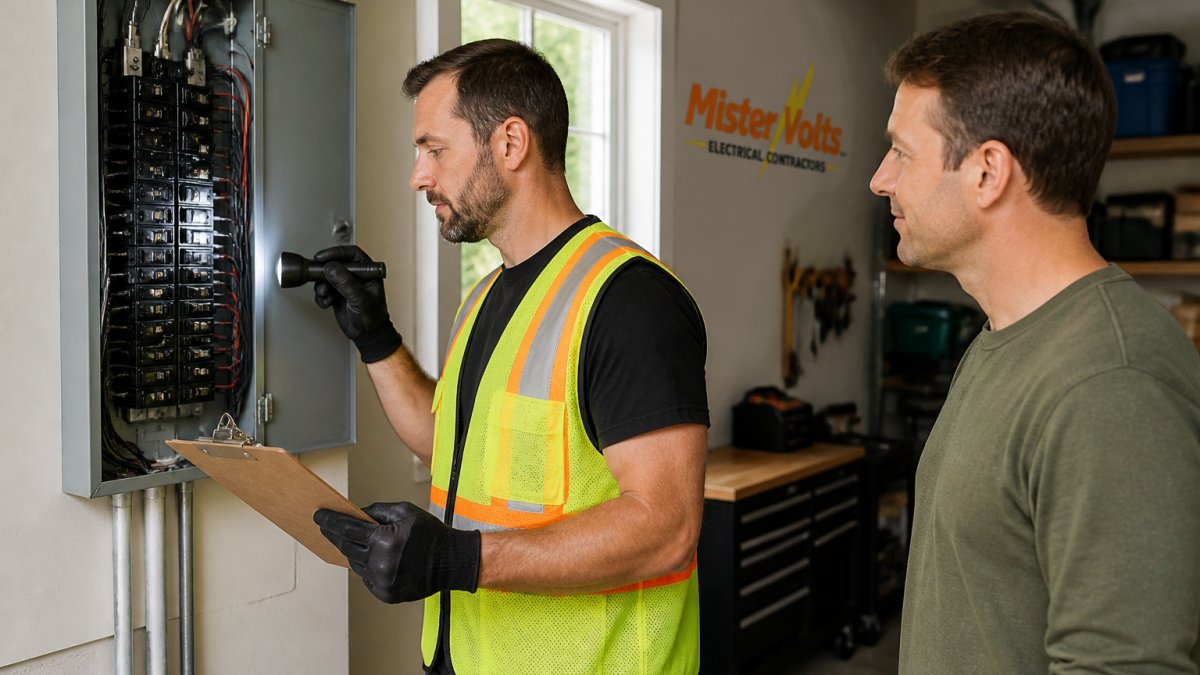
Our guide on how to prepare for an electrical safety inspection covers this in more detail if you want a step-by-step version.
Questions to Ask an Electrician Before Hiring
- Are you licensed, and what is your license number?
- Do you carry liability insurance and workers' compensation?
- What exactly does your inspection cover, and what does it leave out?
- Will I get a written report with photos?
- How do you handle repairs you find during the inspection?
How to Verify a Licensed Electrician's Credentials and Insurance
A license number is easy to check. Call the board or use its online lookup. For insurance, ask for a certificate of insurance and confirm it is current. References matter too: ask for customers who had work similar to yours, then actually call them. Our vetting guide for reliable electricians walks through the full process.
Inspection Pricing and What Affects the Final Cost
Inspection pricing depends on home size, panel condition, and how much of the system needs testing. There is no single flat fee that fits every house, so treat any quote given without questions as a red flag. The useful move is to understand the cost drivers before you call, so you can compare quotes on equal terms.
The Main Cost Drivers
- Square footage and circuit count. A larger home with more circuits takes longer to walk, test, and document. Expect the quote to scale with both.
- Panel age and accessibility. A clean, labeled panel is quick to inspect. A crowded panel with unlabeled breakers, rust, or a history of tripping adds time and may require the electrician to schedule a follow-up.
- Attic and crawlspace access. Inspecting branch wiring in unconditioned spaces is slower and sometimes requires protective equipment. If either space is difficult to enter, say so when you book.
- Add-on testing. Thermal imaging, AFCI/GFCI trip testing on every protected circuit, and load calculations are commonly priced as add-ons rather than included in a base inspection.
- Report format. A written report with photos and prioritized findings takes more time to produce than a verbal walkthrough. Ask which one the quote covers.
What a Quote Should Itemize
- Base inspection scope (which systems and how many circuits)
- Add-on testing priced separately
- Report format and delivery timeline
- Whether repair work found during the inspection is quoted separately or bundled
- Trip or service-call charge, if any, and what it covers
How to Compare Two Quotes
For a closer look at the factors behind the number and how to read a written estimate, see our home electrical inspection cost breakdown.
What Happens After the Inspection: Prioritizing Repairs and Next Steps
| Priority | Finding Type | Action |
|---|---|---|
| 1 | Exposed wiring, burning smell, hot panel | Repair immediately |
| 2 | Missing GFCI protection, bad grounding | Schedule within weeks |
| 3 | Outdated panel, undersized service | Plan upgrade |
| 4 | Minor code corrections, worn outlets | Bundle with next service call |
When you are ready for repairs, our team handles panel upgrades, outlet work, and code corrections for homes across the region.
Electrical problems rarely announce themselves. Mister Volts provides licensed electricians, code-compliant work, competitive quotes, and services ranging from minor repairs to major panel and meter upgrades. Contact Mister Volts about your electrical service needs.
Frequently Asked Questions
What does an electrician check during a home safety inspection?
A professional electrician inspects the service panel for overheating or double-tapped breakers, tests outlets and switches for proper wiring, checks grounding and bonding, and looks for damaged insulation or exposed wiring. They also examine smoke and carbon detectors, GFCI protection in kitchens and baths, and the condition of fixtures. The goal is to catch fire hazards and code violations before they become expensive repairs.
How do I choose a qualified electrician for a home inspection?
Start by confirming the electrician holds a current state license, carries liability insurance, and has experience with residential safety inspections. Ask for references from customers with similar homes, and check reviews for punctuality and clear explanations. Get a written scope of work and a flat-fee quote before the visit. A qualified professional electrician will welcome these questions and explain what the inspection covers.
What should I do before an electrician arrives for an inspection?
Clear access to the electrical panel by moving stored items, note any flickering lights or warm outlets, and write down questions about past renovations. Secure pets and make sure someone is home to walk the property. If you have prior inspection reports or permits, have them ready. These electrical inspection preparation steps help the electrician work efficiently and give you clearer answers.
What happens if an electrician finds an electrical safety issue?
The electrician will explain the finding, show you the evidence, and rank it by urgency. Immediate fire hazards, like a scorched panel or exposed wiring, should be repaired before the circuit is used again. Lower-priority items, such as missing outlet covers, can be scheduled. Ask for a written estimate and a timeline, and confirm whether any repair requires a permit and follow-up inspection.