 How-to
How to Prepare Your Home for Panel Replacement
Last Updated: October 30, 2026
Quick Summary
Before a panel replacement, clear the area around the electrical panel, move furniture at least three feet back, and walk the path the crew will use. Confirm outage length, permit responsibility, and the electrician's arrival plan several days ahead. Unplug sensitive electronics and plan food, device charging, and backup power for the time the power is off.
- Confirm the appointment window, outage length, and who pulls the permit three to five days before.
- Pull furniture back at least three feet from the panel wall to create a safe work zone.
- Unplug computers, TVs, and other electronics the day before the shutoff.
- Plan food storage, device charging, and backup power for any medical equipment before the outage.
- Photograph the panel and surrounding area before anything is moved.
Table of Contents
- What Happens During a Panel Replacement and Why Preparation Matters
- Electrical Panel Replacement Preparation Checklist
- What to Expect During Electrical Panel Replacement
- How Long Does Electrical Panel Replacement Take?
- Questions to Ask an Electrician About Panel Replacement
- Household Planning for Medical Devices, Remote Work, and Security Systems
- Booking Your Panel Replacement with Mister Volts
- Frequently Asked Questions
What Happens During a Panel Replacement and Why Preparation Matters
Preparing your home before a panel replacement can make the job faster, safer, and less stressful. A new electrical panel replaces the main box that feeds power to every circuit in your house.
Most of the work happens in one area of the house. The crew needs open floor space, clear access, and time to work safely. Preparation keeps that work area clear and protects your belongings.
- The main power is turned off for part of the job.
- The old panel is removed and the new one is mounted.
- Circuits are reconnected and tested before power returns.
Electrical Panel Replacement Preparation Checklist
This checklist is organized around what you actually do in the days before the crew arrives. For a broader look at getting your home ready for an electrical inspection, the guide covers clearing access and documenting the panel location. Work through it in order; the earlier items give you time to solve problems before installation day.
Three to Five Days Before
- Confirm the appointment window, the expected outage length, and whether the electrician will pull the permit or expects you to. Ask who schedules the inspection.
- Walk the path from your front door (or the service entrance the crew will use) to the panel. Note every doorway, stair, and turn that a cart or tool bag must clear.
- Identify what shares a wall or closet with the panel. Shelving, coat racks, water heaters, and stored boxes are the usual obstructions.
- List household needs that depend on power: medical devices, work-from-home equipment, sump pumps, security and internet gear, and any refrigerated food you cannot replace easily.
- Ask the electrician whether the utility must disconnect service and whether that adds a separate appointment to the schedule. If your home has older components, it's also worth asking whether a service panel upgrade is needed at the same time, so the work can be scheduled once.
One to Two Days Before
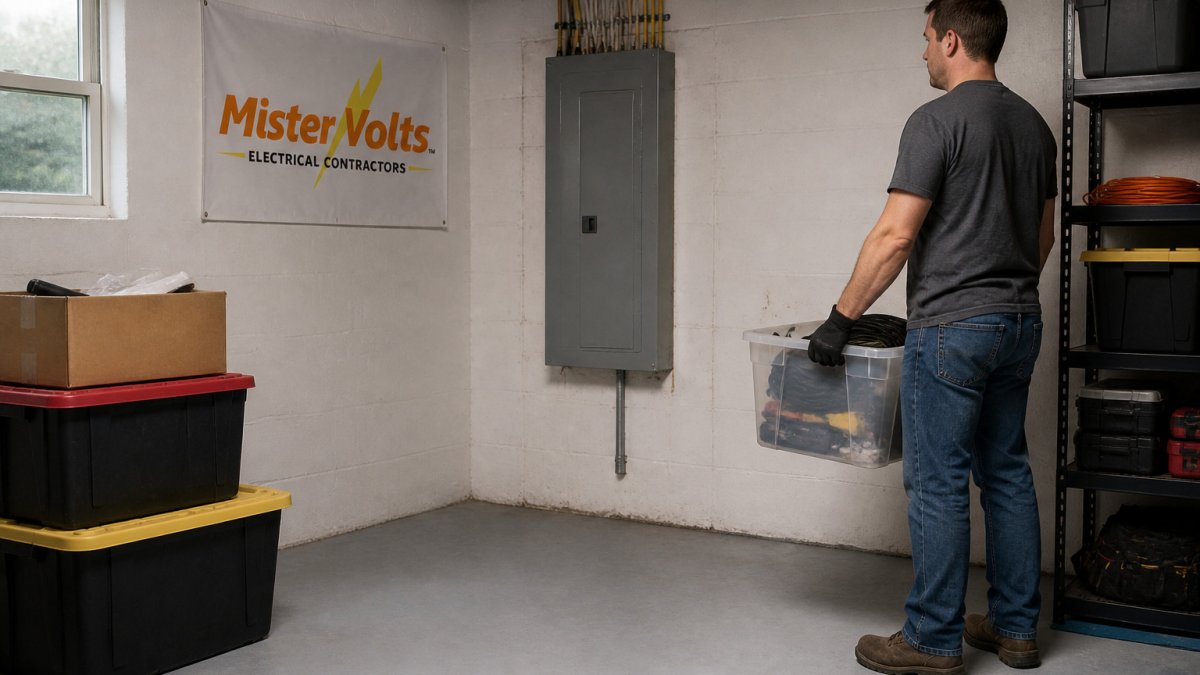
- Empty the closet or utility area around the panel. Move boxes, tools, and seasonal storage to another room, not just to the floor in front of the panel.
- Pull furniture back at least three feet from the panel wall. A clear zone in front of the panel also lets the electrician set down tools and a ladder safely.
- Clear a second path for the electrician to reach the meter or service entrance if it is in a different location.
- Confirm parking and gate access. If the panel is in a garage, basement, or utility room, make sure the door opens fully and the light works.
- Charge phones, laptops, and any backup batteries. Fill water bottles and prepare meals that do not need the oven or microwave.
The Day Before
- Unplug sensitive electronics: computers, TVs, game consoles, printers, and anything with a motor or a control board. A surge protector helps, but unplugging is the reliable step when the main is switched off and on.
- Move perishables you will need to a cooler with ice, or plan to keep the refrigerator and freezer closed. A closed refrigerator holds temperature for several hours; a full freezer holds longer than a half-empty one.
- Set up a quiet space for pets and children away from the work area. Tools, wire cuttings, and open panels create hazards, and the noise can upset animals.
- Tell your security monitoring provider about the planned outage if you have one, and confirm how the system behaves when power is cut.
- Put away or cover items on the floor near the panel. A drop cloth protects flooring, but only if the floor is clear first.
Room-by-Room Quick Pass
- Kitchen: clear the counter nearest the panel if it shares a wall; move small appliances off that counter.
- Garage: park outside or leave space for the electrician to open the panel door fully; move bikes and ladders.
- Basement or utility room: clear the floor, check the light, and move laundry supplies away from the panel wall.
- Home office: save files, shut down and unplug equipment, and note any router or modem you will need to restart.
What to Confirm with the Electrician Before Installation Day
A short pre-job call prevents most surprises. Confirm arrival time, the expected outage window, who pulls the permit and who meets the inspector, how the work area will be protected, and how cleanup will be handled. Ask what the electrician needs from you on arrival and whether the utility disconnect is already scheduled. Write the answers down so you are not reconstructing them on installation morning.
The checklist is organized by timing, so the work can be planned in order before installation day.
| Timing | What to do | Why it matters |
|---|---|---|
| Three to five days before | Confirm appointment window, outage length, and permit responsibility | Gives time to solve scheduling problems early |
| Three to five days before | Walk the path from entrance to panel | Shows whether tools and carts can clear each doorway |
| One to two days before | Empty the area around the panel | Keeps the electrician's work zone clear |
| One to two days before | Pull furniture back at least three feet | Creates a safe zone for tools and a ladder |
| The day before | Unplug sensitive electronics | Protects equipment when power is switched off and on |
| The day before | Plan food storage and charge devices | Covers the period when power is off |
What to Expect During Electrical Panel Replacement
On installation day, the crew will usually start by confirming the plan and the shutoff schedule. They will then turn off power at the main, remove the old panel, and install the new one. Circuits are reconnected, checked, and labeled before power is restored.
Expect some noise, dust, and temporary disruption. Plan to stay nearby in case the electrician has questions about your home's circuits or labels.
How Long Does Electrical Panel Replacement Take?
Most panel replacements take a full working day, though the exact time depends on the size of the panel and the condition of the wiring. Our panel upgrade cost guide explains the scope and pricing behind a panel upgrade and what drives the timeline. Simple swaps may finish sooner, while older homes or added circuits can take longer.
Power will be off for part of the job. Plan for that time so you can cover food storage, work, and device charging.
Questions to Ask an Electrician About Panel Replacement
A panel replacement involves permits, a utility disconnect, an inspection, and a multi-hour outage. Before deciding how urgent the work is, you can review the warning signs that point to a panel needing attention. The questions below are grouped so you can use them as a pre-job script rather than a scattered list. Ask them when you schedule, not on installation morning.
Licensing, Insurance, and Permits
- Are you licensed and insured for electrical work in this state, and can you provide the license number and a certificate of insurance?
- Will you pull the permit, or is that my responsibility?
- Who schedules the inspection, and what happens if the inspector finds an issue?
- Does the work require a utility disconnect, and who coordinates that appointment?
Scope and Schedule
- What amperage and panel model are you installing, and why is that the right fit for my service entrance and load?
- How long will the power be off, start to finish? Ask for the outage window, not just the total job length.
- Will you replace the meter base, the service mast, or the grounding electrode conductor, or is this a panel-only swap?
- Are any circuits being added, combined, or moved, and will those changes be labeled? Ask too whether new circuit breakers are being matched to the new panel.
Access, Protection, and Cleanup
- What access do you need, and how much clearance in front of the panel?
- How will you protect floors, walls, and nearby belongings?
- What cleanup is included, and how do you handle old panel disposal?
- Will you need to shut off water or gas for any part of the work?
After the Work
- Will every circuit be labeled in the new panel, and will I get a copy of the labeling?
- What documentation do I receive: permit record, inspection sign-off, warranty terms, and manufacturer paperwork?
- What is the warranty on labor and on the panel itself, and what voids it? Ask whether an electrical warranty or a maintenance contract is available to cover the new equipment over time.
- Who do I call if a circuit does not work after power is restored?
How to Verify the Answers
Ask for the license number and check it against the state licensing board's lookup. For more guidance on vetting electricians, including licensing, experience, and credentials, see our vetting guide. Request the certificate of insurance and confirm the policy is current. Ask for the permit number once it is issued, and keep the inspection record with your home documents.
Household Planning for Medical Devices, Remote Work, and Security Systems
Some household needs require extra planning. If anyone in your home relies on a medical device, plan for backup power or let the electrician know the schedule in advance. Medical equipment that depends on electricity needs a clear plan before the shutoff.
If you work from home, plan to save your files and charge your laptop before the outage. Security systems and internet routers may also need backup power or a reset after the work is finished.
Booking Your Panel Replacement with Mister Volts
Mister Volts provides licensed electrical services for homes and businesses in Middle Georgia, including breaker panel replacements and service upgrades. You can reach out to the team to discuss scheduling and get a quote for your panel replacement.
For a quote tailored to your home, visit contact Mister Volts.
Thanks for reading. Mister Volts is here to help you prepare for a safe, well-run panel replacement.
Frequently Asked Questions
What should I do before an electrical panel replacement?
Clear the path to the panel and the surrounding floor space, move valuables and stored items out of the work area, and back up important electronics. Plan for a power outage of several hours, charge devices and medical equipment ahead of time, and confirm with your electrician what they need from you before installation day, including access, parking, and whether anyone must be home.
How long does an electrical panel replacement take?
Timing depends on the size of the home, the number of circuits being moved, and how much coordination the utility company needs for disconnection and reconnection. Ask your electrician for a schedule that covers the main work, inspection, and restoration of power, and plan your day around that window.
Will my power be shut off during an electrical panel replacement?
Yes, power will be shut off while the old panel is removed and the new one is connected. Plan for refrigerated food to stay cold in a closed refrigerator for a few hours, and have flashlights and battery backups ready. Confirm with your electrician when the outage will start and when power is expected to return.
What should I ask an electrician before replacing my electrical panel?
Ask whether the work requires a permit and who pulls it, whether the electrician is licensed and insured, what the panel size and amperage will be, and what happens to your existing circuits. Also ask how the utility disconnection is handled, what the cleanup includes, and how you will be notified before the outage. Get answers in writing before work begins.