 How-to
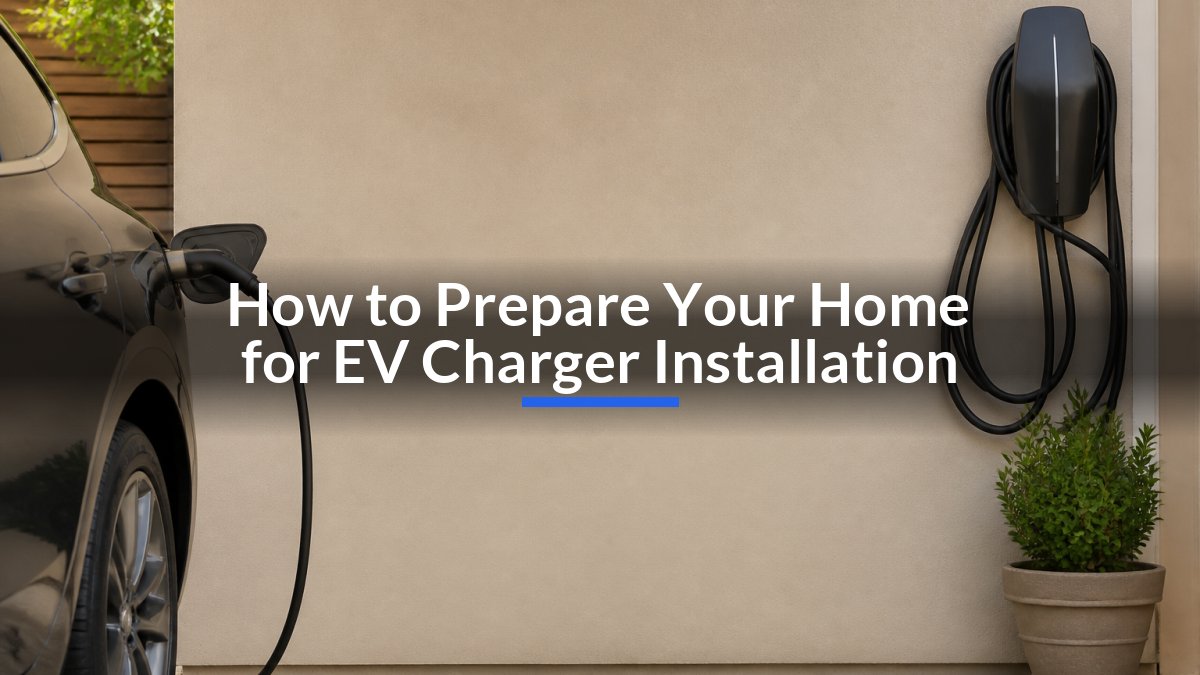
How to Prepare Your Home for EV Charger Installation
Last Updated: November 2, 2026
Quick Summary
Preparing for EV charger installation starts with confirming your vehicle's connector type, choosing a Level 2 charger, and having a licensed electrician run a load calculation to verify your electrical panel has spare capacity for a dedicated 240-volt circuit. Most jurisdictions also require a permit and passing inspection before the circuit is energized.
- Most EVs use either a J1772 or NACS connector, so confirm your car's plug first.
- Experts recommend a 40- or 50-amp circuit for Level 2 home charging.
- A load calculation proves your panel can handle the new breaker.
- Load management devices can pause charging during demand spikes, avoiding a service upgrade.
- Photograph your panel and cable route to get faster, comparable electrician quotes.
Table of Contents
- What Do I Need to Install an EV Charger at Home?
- EV Charger Installation Requirements for Your Electrical Panel
- Home EV Charger Installation Permit and Inspection Basics
- Planning the Charger Location and Cable Route
- Load Management and Alternatives to a Service Upgrade
- Your Home EV Charger Installation Checklist
- Book Your EV Charger Installation with Mister Volts
- Frequently Asked Questions
What Do I Need to Install an EV Charger at Home?
Preparing for EV charger installation starts with three things: a compatible vehicle, the right charger, and an electrical panel that can carry the added load. Most homeowners already have the first two covered. The panel is where the real work begins.
Here is the short version: plan the electrical side before you buy hardware.
The numbers show why home charging matters so much. According to the International Energy Agency's Global EV Outlook 2026, roughly 75% of EV charging worldwide happens at home or at work, while only about 10% happens at public fast chargers. Your home is your main fueling station.
Vehicle Compatibility and Connector Type
Check your car's plug before anything else. Most EVs use one of two connectors:
- J1772 for most older and many current models
- NACS for Tesla and a growing list of newer vehicles
Adapters exist, but a hardwired setup matched to your car is simpler. Confirm your vehicle's onboard charger limit too. A car that accepts less power will not charge faster on a bigger unit.
Charger Type and Power Level
Level 1 charging uses a standard 120-volt outlet and adds only a few miles of range per hour. It works for low-mileage drivers.
Level 2 charging runs on a 240-volt circuit and is the practical choice for most households. According to Car and Driver's 2026 home charger guidance, experts recommend a 40- or 50-amp circuit to balance overnight charging speed against installation cost.
EV Charger Installation Requirements for Your Electrical Panel
Your panel needs spare capacity for a dedicated circuit. That is the core EV charger installation requirement, and it decides whether the job is simple or needs a service upgrade.
The EPA notes that many areas require permits and safety inspections for residential electrical work, including EV chargers (EPA guidance on home EV charging). A load calculation is how a licensed electrician proves the panel can handle the new breaker.
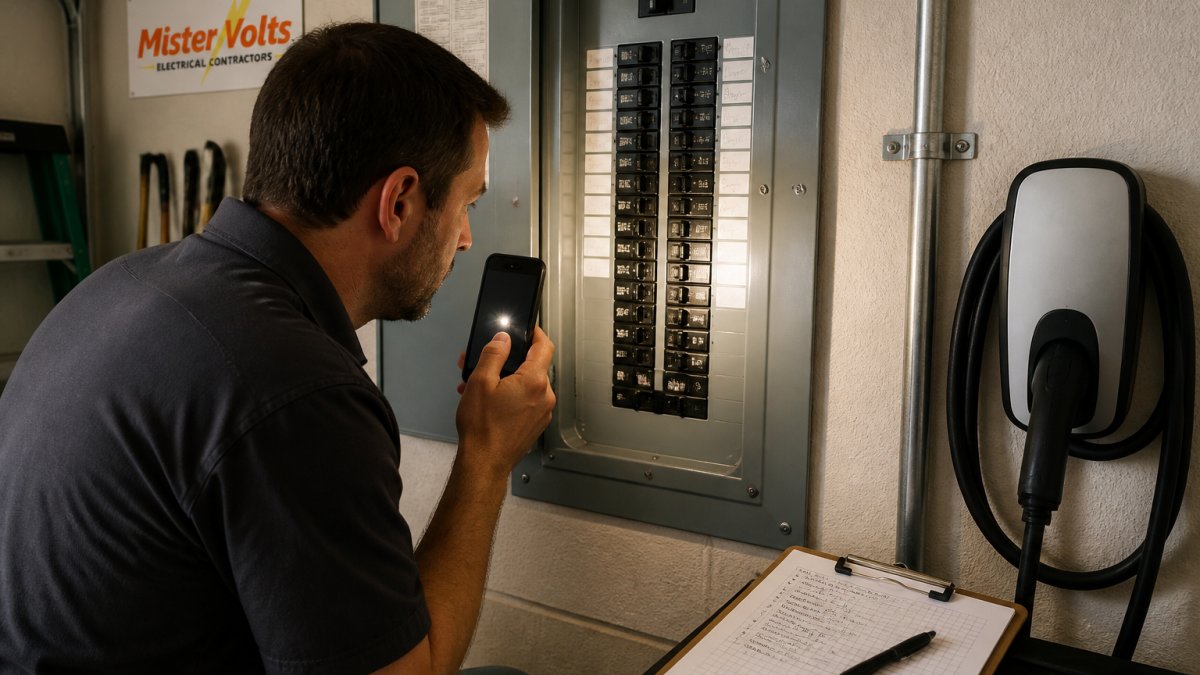
How to Document and Assess Your Panel
Take clear photos of the open panel with the breakers labeled. Note the main service size, the brand, and any double-tapped breakers. Write down the model numbers.
These details let an electrician quote faster and spot problems early. If you see rust, scorch marks, or a panel brand known for failures, learn which warning signs mean the panel needs replacement before adding load.
For a deeper look at when a service upgrade makes sense, our electrical system upgrade guide covers how modern appliances affect panel capacity.
Home EV Charger Installation Permit and Inspection Basics
A new 240-volt EV circuit is residential electrical work, and most jurisdictions require a permit and a passing inspection before the circuit is put into service. The sequence is usually the same everywhere: apply for the permit, install the circuit, request the inspection, then close the permit. What varies is who does each step, how long it takes, and what the inspector wants to see.
Who pulls the permit. In many jurisdictions the licensed electrical contractor pulls the permit, because the permit is tied to the license and the insurance behind the work. Some areas allow a homeowner to pull an owner-builder permit for work on their own primary residence, but that usually comes with the homeowner accepting inspection responsibility and can complicate insurance or a future sale if the work is not documented. Ask each electrician you interview who pulls the permit and whether the permit fee is included in the quote.
What the inspection typically covers. An electrical inspector generally verifies the breaker size and type, the wire gauge and conductor type, grounding and bonding, conduit and physical protection of the cable, working clearance at the panel, and the charger's listing and labeling. The inspector may also confirm the load calculation was performed. Keep the approved inspection record; it is the document that shows the work was done legally.
Utility requirements are separate. A building permit is not the same as utility approval. Some utilities require notification or a separate application before a new large 240-volt load is energized, and some offer managed-charging or time-of-use programs that affect how the charger should be set up. Confirm with the utility what, if anything, they need before the circuit is energized.
Where local rules diverge. Permit thresholds, inspection scheduling, required load calculation forms, and whether a final inspection must be scheduled within a set number of days all vary by jurisdiction. Some areas also have adopted local amendments to the electrical code. This is why a quote that says "permit included" without naming the jurisdiction is worth a follow-up question.
What to confirm before work begins. Get the permit number in writing, confirm who schedules the inspection, confirm what the electrician will leave behind (permit card, inspection record, charger manual), and ask what happens if the inspector requires a correction. A reputable contractor builds correction time into the schedule; a low quote that assumes a first-pass inspection can turn into a change order.
Requirements vary by location, so confirm local rules before work starts. If an inspection is coming, prepare with this electrical safety inspection checklist.
Planning the Charger Location and Cable Route
Put the charger where you actually park. Cable reach matters more than wall space. Measure from the planned mount to your car's charge port, and add slack.
Walk the route from the panel to the charger and note what blocks it: finished walls, concrete, attics, crawlspaces. Longer, harder runs raise labor cost. Outdoor mounts need weather-rated equipment.
Site Photos and Route Notes That Speed Up Quotes
Photograph the panel, the proposed charger spot, and every wall or ceiling the cable would cross. Note distances in feet and any obstructions. Send these with your quote request.
Good photos cut down on site visits and surprise fees. They also help you compare quotes on equal terms.
Load Management and Alternatives to a Service Upgrade
A service upgrade is not always required. Load management devices can pause EV charging when household demand spikes, letting you keep your existing service.
The EPA suggests lower-powered charging may avoid some electrical modifications, though the trade-offs depend on your situation. If you are weighing options, our panel upgrade cost guide explains what the work involves.
Here is how the main paths compare:
| Option | Best For | Trade-off |
|---|---|---|
| Standard Level 2 circuit | Spare panel capacity | Needs open breaker slots |
| Load management device | Tight panels | Slower charging at peak times |
| Panel or service upgrade | Older or full panels | Higher upfront cost |
| Lower-powered charging | Low daily mileage | Longer charge times |
Your Home EV Charger Installation Checklist
Use this timeline to stay organized:
Two to four weeks out
- Confirm your connector type and onboard charger limit
- Photograph the panel and label every breaker
- Choose indoor or outdoor mounting location
- Map the cable route and note obstructions
One to two weeks out
- Request quotes with photos attached
- Ask each electrician to include the load calculation
- Confirm who pulls the permit
- Compare scope of work line by line
Installation week
- Clear access to the panel and route
- Confirm the inspection date
- Test charging and note the charge rate
- Keep the permit and inspection paperwork
Book Your EV Charger Installation with Mister Volts
Getting the electrical side right the first time saves money and headaches. Our licensed electricians handle load calculations and NEC-compliant wiring for homes across Macon, Perry, and Warner Robins.
We install EV charging stations and service panels. Contact us for a quote tailored to your home.
Get started with Mister Volts and charge at home with confidence. See our residential electrical services or reach out for a quote today.
Frequently Asked Questions
Can my electrical panel support a Level 2 EV charger?
It depends on your panel's capacity and the results of a load calculation. A licensed electrician reviews your service size, the amperage of the main breaker, and the total draw of existing appliances before deciding. Many homes have enough headroom for a 40- or 50-amp circuit, which Car and Driver notes experts recommend to balance overnight charging efficiency with lower installation costs. If capacity is tight, load management devices or a panel upgrade may be needed. Mister Volts can assess your panel and confirm what your home can safely handle.
Do I need a home EV charger installation permit?
In many areas, yes. The EPA notes that many jurisdictions require permits and safety inspections for residential electrical work, including EV charger installations. Permit rules vary by city and county, so confirm the requirement with your local building department before work begins. Skipping the permit can create problems at resale and may void insurance coverage. Build permit time into your schedule so installation day does not get delayed.
How much does EV charger installation cost?
Final pricing depends on your panel capacity, the distance from the panel to the charger, whether the unit is hardwired or plug-in, and local labor rates. Homes needing a service upgrade or long conduit runs land at the higher end. Request an assessment from Mister Volts for accurate pricing based on your specific setup.
How long does home EV charger installation take?
A straightforward installation on an existing circuit with adequate panel capacity often takes a few hours. Jobs that require a new dedicated circuit, long conduit runs through finished walls, or a panel upgrade can stretch to a full day or more. Permit processing and inspection scheduling add time before and after the electrical work. To keep things moving, gather panel photos, charger specs, and your preferred mounting location before the electrician arrives.