 How-to
Grounded Outlets on Knob and Tube: What's Safe and What Isn't
Last Updated: November 16, 2026
Quick Summary
You can physically install grounded outlets on knob and tube wiring, but the outlet will not actually be grounded unless a continuous grounding conductor connects it back to the panel. Knob and tube has no ground wire, so a three-prong face alone provides no ground path.
- Knob and tube wiring carries only a hot and neutral wire, with no equipment ground anywhere in the run.
- A plug-in circuit tester from any hardware store shows an open ground in seconds.
- A GFCI outlet protects people from shock but does not create a ground path.
- An ungrounded GFCI-protected outlet must carry a label reading No Equipment Ground.
- A new grounded circuit from the panel is usually the cleanest fix for one or two locations.
Table of Contents
- Can You Install Grounded Outlets on Knob and Tube?
- How to Verify Whether an Outlet Is Actually Grounded
- Can You Ground Knob and Tube Wiring Without Rewiring?
- GFCI Outlet Protection on an Ungrounded Circuit
- Knob and Tube Outlet Replacement: What a Swap Can and Can't Fix
- When a New Grounded Circuit or Full Rewire Is the Right Call
- Choosing Your Next Step With Mister Volts
- Frequently Asked Questions
Can You Install Grounded Outlets on Knob and Tube?
Homeowners often ask this question. Someone swaps a two-prong receptacle for a three-prong outlet and assumes the job is done.
Knob and tube wiring is an early electrical system that runs individual hot and neutral wires through ceramic knobs and tubes, with no ground wire anywhere in the run.
The National Electrical Code treats the grounding conductor as a required part of a grounded circuit.
Below: why the ground is missing, how to check what you have, and which fix fits.
Why Knob and Tube Has No Grounding Conductor
Knob and tube wiring was designed before grounding was standard practice. The system carries only a hot wire and a neutral wire.
That missing grounding conductor is the whole problem. A ground wire gives electricity a low-resistance path back to the panel if something goes wrong.
The Electrical Safety Foundation International notes that older wiring systems often lack the safety features modern code requires. Grounding is one of them.
Want to know whether that missing ground affects the appliances you run every day? Our guide on whether knob and tube is safe for modern appliances breaks down what can and cannot run safely on these circuits.
The Difference Between a Three-Prong and a Grounded Outlet
A three-prong outlet and a grounded outlet are not the same thing. This trips up a lot of people.
A three-prong outlet is a receptacle with a third slot for the ground pin.
You can have the first without the second, exactly what happens when someone swaps a two-prong receptacle for a three-prong one on a knob and tube circuit.
Three things follow from that swap:
- The outlet looks modern and accepts grounded plugs
- The ground slot does nothing
- Surge protectors and sensitive electronics get false protection
How to Verify Whether an Outlet Is Actually Grounded
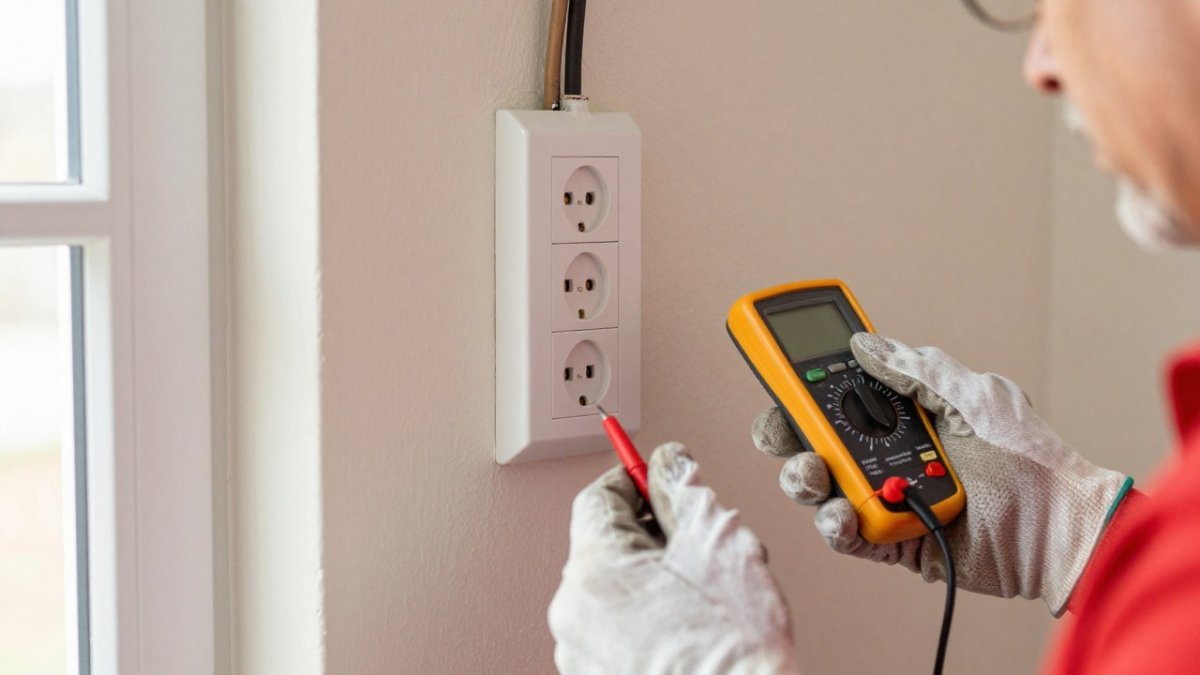
The fastest check is a plug-in circuit tester from any hardware store. It has three lights that tell you whether the outlet is wired correctly, open ground, or reversed.
Here is the process we walk homeowners through:
- Plug in the tester. Read the light pattern against the chart on the tester.
- Watch for "open ground." That reading means the ground slot is not connected.
- Test with a multimeter if you want certainty. Voltage between hot and ground with no reading between neutral and ground points to a problem.
- Check the panel. A licensed electrician traces the circuit to confirm whether a ground path exists at all.
- Do not trust the outlet face. A three-prong face tells you nothing about what is behind it.
A tester costs very little and takes seconds, the single most useful tool for this question.
Can You Ground Knob and Tube Wiring Without Rewiring?
Sometimes you can add a ground path without a full rewire, but only under specific conditions and only with an electrician's assessment.
A grounding retrofit means running a new grounding conductor from the outlet location back to the panel's grounding bus.
A retrofit is a wiring job, not an outlet job, and typically involves adding a conductor through walls, attics, or a basement.
If you are weighing a partial fix against a full rewire, our article on partially rewiring knob and tube explains how that middle path works in practice.
GFCI Outlet Protection on an Ungrounded Circuit
A GFCI outlet is the standard protective option for an ungrounded circuit. It monitors current on the hot and neutral wires and trips when the two differ, signaling current leaking somewhere it should not. That protection is real and saves lives, but it is not grounding, and that distinction is where most homeowners get misled.
What the GFCI Does and Does Not Provide
A GFCI protects people from shock. It does not create a ground path.
| What GFCI Protection Does | What It Does Not Do |
|---|---|
| Cuts power when current leaks to ground | Provide an equipment ground |
| Reduces shock risk at the outlet | Protect surge protectors that need a ground |
| Works on a two-wire circuit | Make a three-prong outlet grounded |
| Can be installed without a ground wire | Replace a grounding conductor |
A GFCI trips on a current imbalance, typically a few milliamps, fast enough to prevent a lethal shock in most household scenarios.
That is also why a surge protector plugged into a GFCI-protected, ungrounded outlet is not fully protected.
Watch out: a GFCI that trips repeatedly is telling you something.
Required Labeling for GFCI-Protected Ungrounded Outlets
An ungrounded outlet protected by a GFCI must carry a label that says so.
Labeling an ungrounded GFCI-protected outlet is required by code and should be followed on every installation.
A missing label is a common code issue on older homes and is generally straightforward to fix.
One more label deserves mention.
If you are weighing GFCI protection against a full rewire, our article on partially rewiring knob and tube explains how that middle path works in practice.
Knob and Tube Outlet Replacement: What a Swap Can and Can't Fix
Replacing a worn two-prong outlet with a new receptacle can fix a loose connection, a cracked face, or a plug that will not stay in.
It cannot fix grounding, deteriorating insulation on the wires behind the box, or an overloaded circuit.
Three things a swap will not solve:
- An open ground on the circuit
- Brittle or damaged wire insulation inside the wall
- A circuit that was never sized for modern loads
Watch out: knob and tube insulation becomes brittle with age.
If you are seeing other warning signs around the house, our guide on signs your home needs electrical rewiring covers what to check next.
When a New Grounded Circuit or Full Rewire Is the Right Call
GFCI protection, a new grounded circuit, and a full rewire solve different problems at different scopes, and choosing the right one depends on the wiring and the goal. Here is the decision path we walk homeowners through.
A Decision Path, Not a Menu
Start with what you actually need at the outlet, then work backward.
- Do you need a real ground at this location? If not, and the wiring is sound, GFCI protection with proper labeling is the proportionate fix.
- Do you need a real ground at one or two locations? A new grounded circuit run from the panel to those locations is usually the cleanest answer, provided the panel has capacity and the path is accessible.
- Is the knob and tube itself failing? Brittle insulation, flickering lights, warm cover plates, or a circuit that trips under normal load point to a rewire of the affected areas, not a patch.
- Is a major renovation or addition underway? Rewire the affected areas while the walls are open; doing it later costs more and disrupts more.
- Is the load high-amperage or continuous? A dedicated new circuit is the only correct answer. There is no workaround.
| Situation | Best Fit |
|---|---|
| One or two outlets, wiring in good shape, no grounded equipment | GFCI protection with proper labeling |
| Need a real ground at one location | New grounded circuit from the panel |
| Failing insulation, flickering lights, overloaded circuits | Full rewire |
| Major renovation or addition | Rewire the affected areas during the project |
| Higher-amperage devices like EV chargers | Dedicated new circuit, no exceptions |
Appliance-Specific Guidance and Load Planning
The appliance plugged in often decides the question before the wiring does. A few patterns are worth knowing.
- Sensitive electronics such as desktop computers, home theater equipment, and medical devices rely on a real ground for surge diversion and noise rejection. A GFCI-protected, ungrounded outlet keeps them running but does not give them the protection their manuals assume.
- Grounded appliances such as refrigerators, washing machines, and microwaves use the ground pin as a fault path. On an ungrounded circuit, the metal case can become energized if a fault develops inside the appliance.
- High-load equipment such as electric ranges, dryers, water heaters, and EV chargers draw enough current that a dedicated circuit is required regardless of grounding. These are never candidates for a GFCI workaround on an existing knob and tube run.
Load planning matters because knob and tube circuits were sized for the lighting and small appliances of their era.
Watch out: extending an ungrounded circuit to reach a new location is restricted. Adding outlets to a knob and tube circuit generally requires bringing that portion up to current standards, which usually means a new circuit rather than a tap off the old one.
Permits, Inspection, and Local Code Requirements
Electrical work generally requires a permit and an inspection. Rules vary by jurisdiction, but the sequence does not: permit first, inspection before the walls close, signed-off record for your files.
What we tell every homeowner:
- Ask the electrician who pulls the permit before work starts
- Confirm the inspection happens before the walls close up
- Get the signed-off inspection record for your files
Skipping the permit can complicate a future sale and may void insurance coverage on the work.
Scope and Cost Factors to Discuss With Your Electrician
Cost depends on scope, access, and the condition of what is already there. Cost depends on the specifics of the job, so contact Mister Volts for a quote.
Ask about these factors:
- How many outlets and circuits are involved
- Whether walls, attic, or basement access is available
- Condition of the panel and whether it can accept new circuits
For a fuller picture of what a rewire involves, our knob and tube replacement cost guide walks through the factors that drive the number.
Choosing Your Next Step With Mister Volts
Old wiring does not tolerate shortcuts.
Mister Volts is a team of licensed electricians serving homes and businesses across Middle Georgia.
If you are ready to stop guessing, reach our electricians for your home and get a straight assessment of what your wiring can and cannot support.
Old wiring does not fix itself, and a three-prong outlet on a two-wire circuit gives you a false sense of safety every time you plug something in.
Frequently Asked Questions
Can you add grounding to knob and tube wiring?
A grounding path can only be added if a continuous grounding conductor is run back to the panel's grounding bus. Because knob and tube wiring was installed without an equipment ground, adding one usually means running new cable to each receptacle or replacing the circuit. Simply installing a three-prong grounded outlet on the existing two-wire circuit does not create a ground. A licensed electrician should verify ground continuity at the panel before any outlet is changed.
Can you put a GFCI outlet on knob and tube wiring?
A GFCI outlet can be installed on an ungrounded knob and tube circuit, and it provides shock protection by sensing ground faults. It does not create an equipment ground, so it will not protect sensitive electronics that need a true ground path. The outlet must be labeled as ungrounded, and the GFCI test button should be checked monthly. Have an electrician confirm the circuit is otherwise sound before adding GFCI protection.
Can you replace a two-prong outlet with a three-prong outlet on knob and tube wiring?
You can physically install a three-prong receptacle, but it will not be grounded unless a grounding conductor connects back to the panel. A three-prong outlet on an ungrounded circuit gives a false sense of safety and can leave plugged-in equipment without a fault path. The safer options are GFCI protection with proper labeling or running a new grounded circuit. An electrician can test ground continuity to confirm what you actually have.
How can you tell whether an outlet is properly grounded?
A plug-in outlet tester with a ground indicator is the quickest check, but it can be fooled by a bootleg ground. A licensed electrician will test ground continuity back to the panel grounding bus and inspect the wiring method. Knob and tube circuits almost never have an equipment ground, so a three-prong outlet on that wiring should be treated as ungrounded until proven otherwise.