 blog
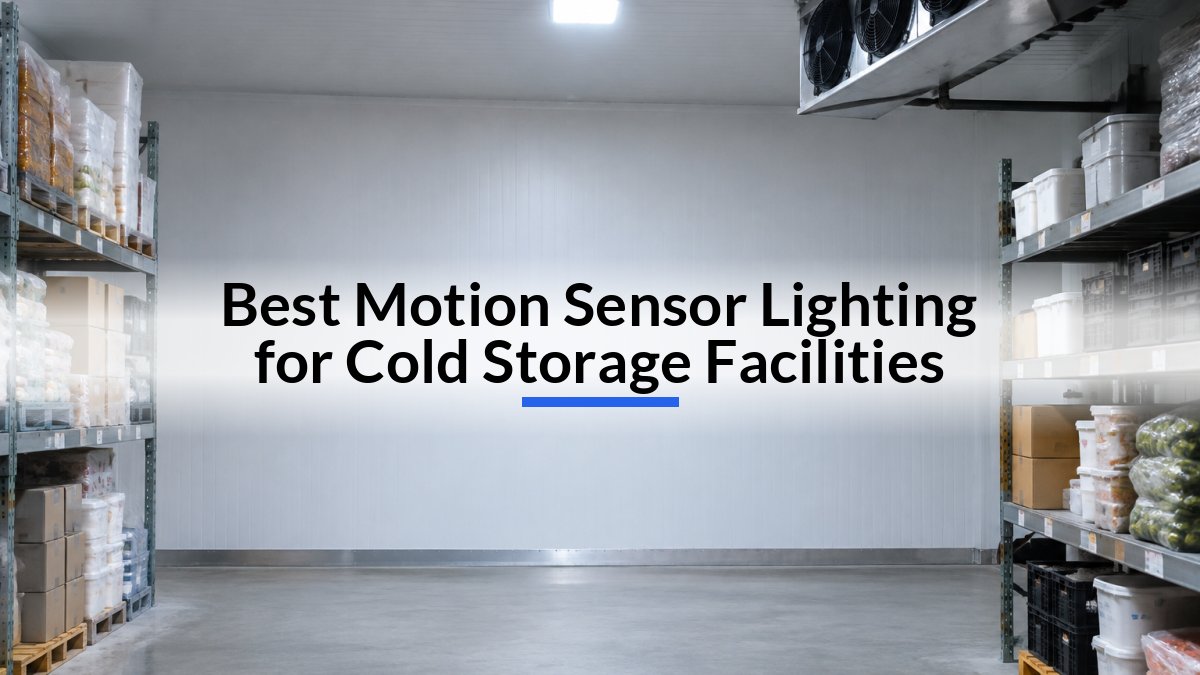
Best Motion Sensor Lighting for Cold Storage Facilities
Last Updated: November 4, 2026
Quick Summary
LED high bays with cold-rated motion sensors are the best motion sensor lighting for tall cold-storage areas when the fixture, sensor, and controls are selected together. Confirm the equipment’s temperature rating and sensor compatibility, then plan placement around aisles, shelving, and work areas to support reliable detection and useful illumination.
- Confirm the fixture’s stated operating temperature range and environmental rating.
- PIR sensors may be less sensitive in extreme cold because heat differences can be reduced.
- Map aisles, doors, picking areas, and equipment routes before choosing sensor positions.
- Test detection from likely approach directions and review installation with a qualified electrician.
Table of Contents
- Best Motion Sensor Lighting for Cold Storage: Compare the Main Options
- Cold Storage Lighting Requirements That Affect Fixture Choice
- LED Freezer Lighting Efficiency Depends on Controls and Use
- Choose a Motion Sensor That Works in Freezer Conditions
- Warehouse Motion Sensor Installation Needs Careful Placement
- Common Assumptions About Motion Sensor Lighting for Cold Storage
- Plan a Cold Storage Lighting Assessment with Mister Volts
- Frequently Asked Questions
Best Motion Sensor Lighting for Cold Storage: Compare the Main Options
LED high bays with cold-rated motion sensors are the best motion sensor lighting for cold storage when the fixture, sensor, and controls are selected as one system. This guide compares the main options so facility managers can avoid unreliable detection and unnecessary lighting use.
Motion sensor lighting switches fixtures on or off in response to detected occupancy. In cold storage, the right setup pairs fixtures rated for the environment with controls suited to the room’s layout.
| Option | Best fit | Main advantage | Main trade-off |
|---|---|---|---|
| LED high bays with motion sensors | Tall storage areas | Broad overhead coverage | Needs careful sensor placement |
| LED fixtures with ambient sensors | Areas with changing daylight | Adjusts to available light | Requires control setup |
| LED fixtures with integrated controls | Retrofit projects | Fewer separate components | Must verify cold rating |
Cold Storage Lighting Requirements That Affect Fixture Choice
Cold storage lighting requirements start with the lowest operating temperature, fixture sealing, and the light level needed for safe work. A fixture rated for cold conditions is a better starting point than a standard warehouse light, but the rating alone does not confirm that its sensor will perform well.
Research from Fanxstar cold-storage fixture guidance says cold-storage fixtures are often rated for performance at -40°C. Treat that as a selection benchmark, then confirm the actual temperature range and environmental rating on the specific fixture.
Check these details before choosing:
- Temperature rating: Confirm the fixture’s stated operating range.
- Housing protection: Match the enclosure to moisture and cleaning conditions.
- Light distribution: Check that shelves and work areas receive usable light.
- Sensor compatibility: Verify the sensor is rated for the same environment.
LED Freezer Lighting Efficiency Depends on Controls and Use
LED freezer lighting efficiency depends on matching the fixture output to occupancy and available light. LEDs can reduce energy use compared with legacy fluorescent lighting, while controls reduce the time lights stay on when areas are empty.
According to Fanxstar lighting comparison for cold storage, LED vapor-tight lights deliver 50-70% energy savings versus legacy fluorescent lighting in cold storage. A Flex case study also reports that an unnamed cold-storage facility saved 13 million kWh annually after installing LED high bays with motion and ambient sensors. Those results show why controls belong in the fixture decision, though a facility’s outcome depends on its own layout and operating patterns.
| Lighting choice | Control approach | Practical use |
|---|---|---|
| LED high bays | Motion sensing | Occupied aisles |
| LED fixtures | Ambient sensing | Areas with changing light |
| LED vapor-tight fixtures | Scheduled or sensor control | Cold, enclosed spaces |
For broader options, see our guide to energy-efficient warehouse lighting.
Choose a Motion Sensor That Works in Freezer Conditions
The best sensor for a freezer is one that detects the movement expected in that space at its actual operating temperature. Sensor type, mounting position, aisle geometry, and traffic patterns all affect performance, so verify the full setup rather than relying on a general product description.
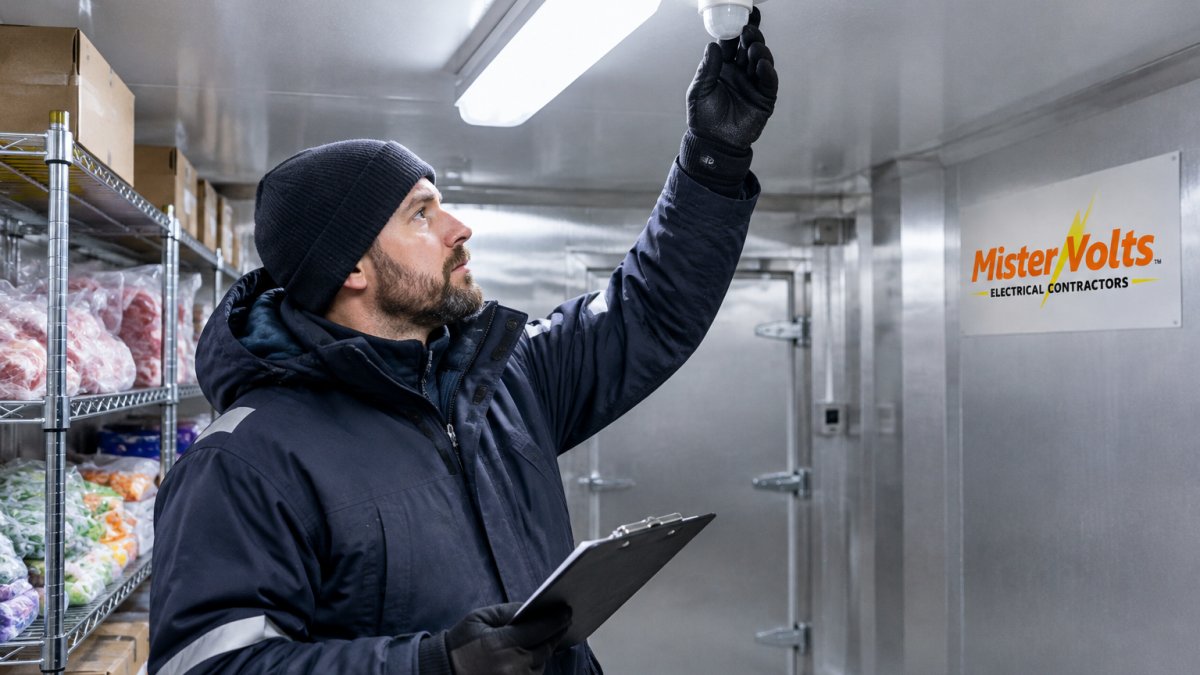
Passive infrared sensors detect heat signatures. Research from Rayzeek notes that extreme cold can reduce the temperature difference between a person and the surrounding environment, potentially affecting PIR sensitivity. That makes sensor testing and manufacturer confirmation especially important in freezer spaces.
The Department of Energy’s Better Buildings guidance on wireless lighting sensors explains that lighting sensors can be wired or wireless. Choose based on the building’s control layout and installation needs, then check the sensor’s cold rating. For more on sensor types and industrial safety, read our motion sensor lighting guide.
Warehouse Motion Sensor Installation Needs Careful Placement
Warehouse motion sensor installation works best when sensors cover the actual paths people use without triggering lights across empty zones. A fixture can meet its temperature rating and still disappoint if shelving blocks detection or the sensor points away from approaching workers.
Before installation, map the aisles, doors, picking areas, and equipment routes. Then confirm mounting positions and control settings with the fixture and sensor documentation. The LED Light Expert warehouse case study describes 72 LED high bays with motion sensors reaching a target of 80+ footcandles, showing that fixture count and placement should be planned around illumination needs, not guessed.
A practical installation checklist:
- Mark regular walking and picking routes.
- Check for shelving that blocks sensor coverage.
- Confirm the fixture and sensor temperature ratings.
- Test detection from likely approach directions.
- Review the installation with a qualified electrician.
For ongoing care after installation, see our guide to warehouse lighting maintenance. Electrical work in commercial facilities should be handled by qualified professionals.
Common Assumptions About Motion Sensor Lighting for Cold Storage
Motion sensors do not automatically cut energy use if the controls are poorly matched to the space. The savings depend on occupancy patterns, fixture choice, sensor reliability, and settings.
One assumption is that every motion sensor responds equally well in a freezer. PIR sensors rely on heat differences, so extreme cold can affect sensitivity. Another is that LEDs alone solve the problem: lighting efficiency improves, but sensors and scheduling determine when fixtures operate.
Research from SMUD’s freezer lighting report reports over 68% energy and electrical demand savings from LED freezer case lighting combined with motion sensors. The result supports using controls, but it should not be treated as a guaranteed outcome for every facility.
What most guides miss is the need to check the entire system together: fixture, sensor, mounting position, and controls. Our LED retrofit guide explains how to assess warehouse lighting changes.
Plan a Cold Storage Lighting Assessment with Mister Volts
A cold storage lighting assessment should document operating temperatures, fixture locations, sensor coverage, and the work areas that need reliable illumination. That information helps a facility compare options without assuming that one fixture or sensor type suits every room.
Mister Volts provides commercial electrical services, including electrical design and maintenance support for business facilities. For a broader view of available support, review our commercial electrical services.
The main challenge is balancing dependable detection with efficient lighting use in a harsh environment.
Frequently Asked Questions
What type of lighting is best for cold storage environments?
LED fixtures designed for cold storage are a practical choice because they can operate in low temperatures. Check the fixture’s rated operating temperature, enclosure rating, and suitability for the specific room before selecting it.
Do motion sensors work in walk-in freezers?
They can, but sensor selection and placement matter. Passive infrared sensors detect heat signatures, and the reduced temperature difference in an extremely cold room can affect sensitivity. Check the sensor’s operating-temperature rating and test detection across the actual routes people use. A lighting plan should also account for how long lights stay on and whether an occupant could be left in darkness.
What are the NEC requirements for lighting in cold storage?
The supplied research does not specify NEC provisions for cold-storage lighting, so it cannot support a clause-by-clause answer. Requirements depend on the installation and the code edition adopted by the local authority. Have a licensed electrician verify applicable NEC rules and local amendments before work begins.
How much energy can motion sensors save in a warehouse?
Savings depend on the lighting, occupancy, controls, and operating schedule.